

Is Anawangin Cove Worth Visiting?
Yes, Anawangin Cove is still worth visiting if you enjoy simple beach camping, mountain-backed scenery, boat trips, and a rustic Zambales escape that feels different from the usual resort beach. What makes Anawangin memorable is the mix of grayish volcanic-sand shoreline, agoho trees, mountain views, camping areas, and the feeling of being tucked away from the mainland.
But Anawangin Cove is not for everyone. If you expect luxury rooms, clean resort-style bathrooms, strong mobile signal, stable electricity, and a smooth all-inclusive beach setup, this may disappoint you. The cove is off-grid, highly commercialized in some areas, and dependent on boat timing, weather, campsite rules, and local fees.
From a traveler’s point of view, Anawangin Cove is best for barkadas, campers, hikers, photographers, and budget DIY travelers who are ready for basic facilities. For most first-timers, the boat from Pundaquit is the easier option. The hike through Mt. Pundaquit is more adventurous but requires a guide, heat preparation, and a pre-arranged boat exit.
Anawangin Cove Quick Facts
| Category | Details |
|---|---|
| Location | San Antonio, Zambales |
| Region | Central Luzon |
| Main jump-off | Barangay Pundaquit |
| Destination type | Beach-camping cove, boat-trip destination, hiking endpoint |
| Best for | Barkadas, campers, hikers, photographers, DIY travelers |
| Main highlight | Agoho trees, grayish shoreline, mountain-backed cove |
| Access | Boat from Pundaquit or hike via Mt. Pundaquit |
| Boat schedule | No fixed public schedule; on-demand charter only |
| Direct boat rate | ₱1,500–₱2,000, good for up to 4 pax |
| Day tour entrance fee | ₱80/person |
| Overnight entrance fee | ₱130/person |
| Environmental fee | ₱20/person |
| Camping | Allowed; tent pitching and tent rentals available |
| Tent pitching | ₱200/tent for personal tents |
| Tent rental | ₱400–₱500/night |
| Signal | No reliable Globe, Smart, or DITO signal |
| Power | No commercial power grid |
| Ideal stay | Day trip for quick visit; 2D1N for camping |
| Family-friendly? | Possible, but facilities are very basic |
Table of Contents
What Is Anawangin Cove Known For?
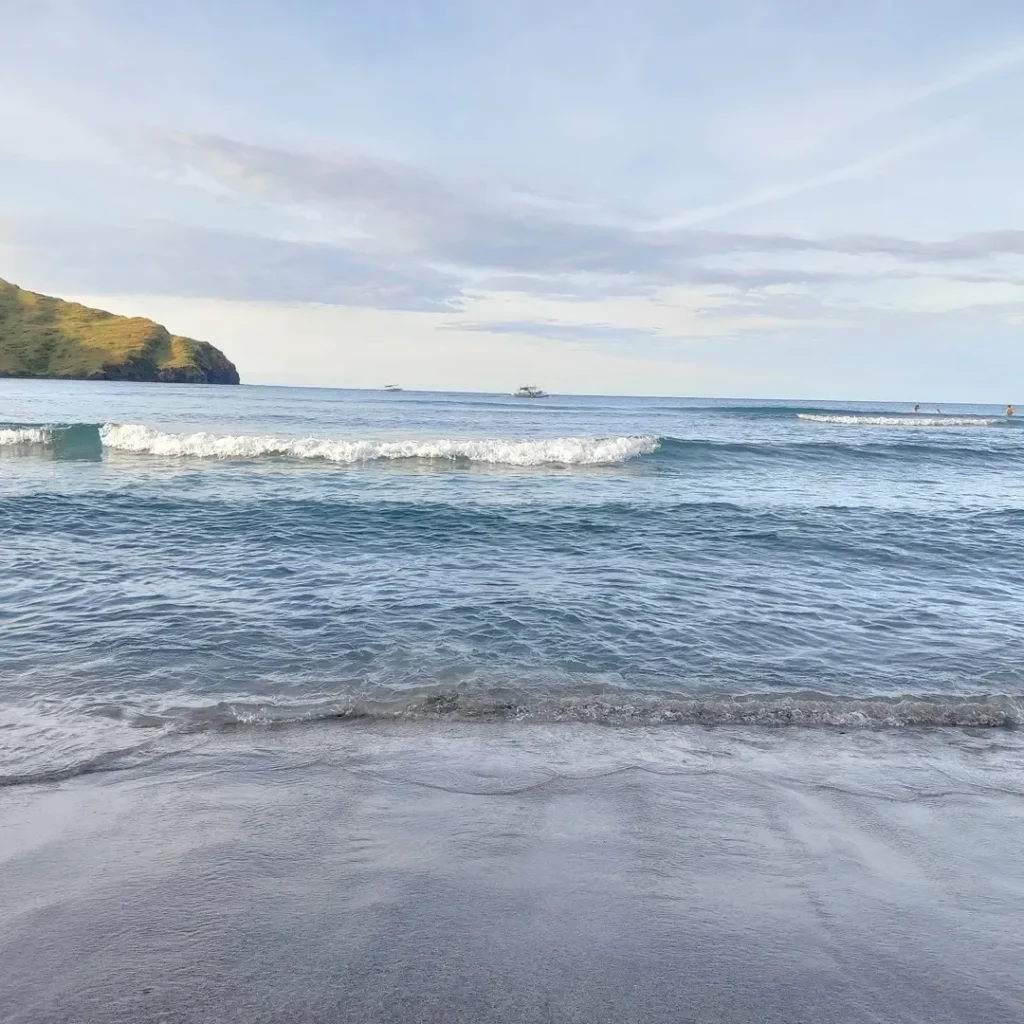
Anawangin Cove is known for its grayish volcanic-sand shoreline, agoho tree camping area, mountain-backed beach scenery, and boat access from Pundaquit in San Antonio, Zambales. It is one of the most recognized Zambales beach camping destinations because it combines a cove, campsite, boat trip, and possible hiking route in one weekend-friendly location.
Anawangin is often casually called “Anawangin beach,” but it is more accurate to call it Anawangin Cove. It is not an island. It is part of mainland Luzon, but because there is no normal road access, most visitors reach it by boat from Barangay Pundaquit. More adventurous travelers can also hike through the Mt. Pundaquit route.
The cove became popular among DIY travelers because it is one of the easier San Antonio coves to reach from Pundaquit. It has the kind of scenery that looks dramatic in photos: mountains behind the beach, agoho trees behind the shoreline, tents under the shade, and boats arriving from the West Philippine Sea side.
What makes Anawangin Cove different from a normal white-sand beach is its raw camping identity. The shoreline has a pale gray to ash-like tone, the trees create a forest-camping mood, and the place still feels outdoorsy even if it is now more commercialized than before.
Where Is Anawangin Cove Located?
Anawangin Cove is located in San Antonio, Zambales, with Barangay Pundaquit serving as the main jump-off point for boat transfers. It sits along the western coastal side of San Antonio and is part of the cove system usually paired with Capones Island, Camara Island, Nagsasa Cove, Talisayen Cove, and Silanguin Cove.
For most travelers coming from Manila, the travel chain is:
Manila → San Antonio town proper → Pundaquit → boat to Anawangin Cove
San Antonio town proper is where many DIY travelers buy supplies, eat, or meet their operator. Pundaquit is the actual beachside jump-off where boats, coordinators, life vests, registration, and charter arrangements usually happen.
Anawangin Cove is also connected to nearby transit points:
| Place | Travel Context |
|---|---|
| Pundaquit | Main boat jump-off |
| San Antonio town proper | Supply stop and local transfer point |
| Olongapo / Subic | Common transit hub before San Antonio |
| Iba | Bus route reference point north of San Antonio |
| Manila | Main origin point for weekend travelers |
| Capones and Camara | Common island-hopping add-ons |
| Nagsasa, Talisayen, Silanguin | Nearby coves for longer trips |
Google Maps is useful for locating San Antonio and Pundaquit, but do not expect to drive directly to Anawangin Cove. For most visitors, the final access is still by boat or by guided hike.

What Is the Anawangin Cove Experience Actually Like?
The Anawangin Cove experience is a mix of long land travel, Pundaquit boat coordination, sea-condition-dependent crossing, beach camping, basic facilities, and scenic cove views framed by agoho trees and mountains. It is beautiful, but it is not effortless. The trip becomes better when you understand what you are really signing up for.
The Road Trip to San Antonio and Pundaquit
The trip starts like a classic Luzon beach escape. From Manila, you head toward Zambales and aim for San Antonio. If you are commuting, the most direct route is the bus from Manila to San Antonio, with verified fares around ₱350–₱400. Another option is to go from Manila to Olongapo for around ₱306–₱320, then take another ride from Olongapo to San Antonio for around ₱80.
If you are coming from Clark, the route can go through Dau. The Clark Airport shuttle to Dau is around ₱75–₱150, then the bus to Olongapo is around ₱200. From there, continue toward San Antonio.
Once you reach San Antonio, the next move is the tricycle to Pundaquit. The standard/legal fare is ₱40 per person, but during twilight hours or peak surge, some operators may push it to ₱70. This is where having small bills helps.
The most important planning tip is to leave early. Anawangin Cove is not the kind of trip where you want to arrive at the jump-off late, negotiate a boat in a rush, and cross when the sea is already changing. Early arrival gives you more time to buy water, confirm your boat, register, and avoid unnecessary stress.
The Pundaquit Boat Ride to Anawangin
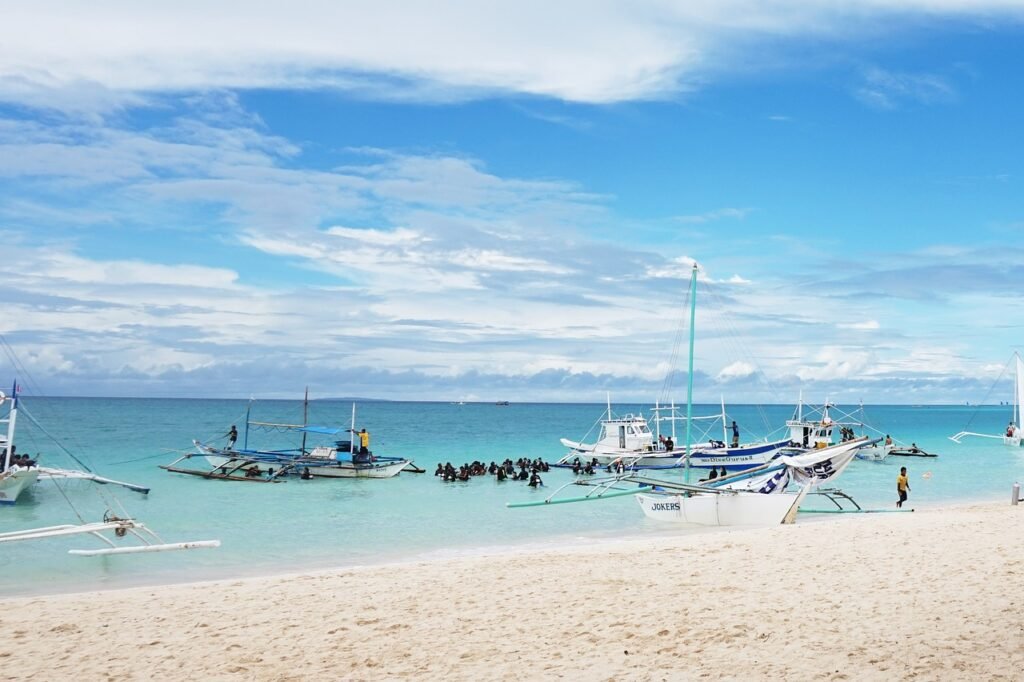
Pundaquit is not a polished ferry terminal. It feels more like a working beach jump-off where boatmen, coordinators, tourists, dry bags, coolers, and life vests move around the shore. This is where you confirm your route and pay attention to the details.
There is no fixed public boat schedule to Anawangin Cove. Boats operate on an on-demand, charter-based setup. For a private boat direct to Anawangin, the verified May 2026 rate is around ₱1,500–₱2,000, good for up to 4 pax.
For solo travelers or couples, joiner packages are common. Shared boat or joiner rates usually range from ₱1,099 to ₱2,499 per person, depending on the operator, inclusions, season, and itinerary.
Before boarding, confirm:
- Boat route
- Number of stops
- Return time
- Life vest availability
- Inclusion of Capones, Camara, or Nagsasa
- Garbage deposit policy
- Weather fallback
- Refund or rebooking rules
The boat ride can be scenic, but also wet and bumpy depending on the sea. Use a dry bag or waterproof phone pouch. Do not place gadgets, clothes, or food in an open tote bag and expect everything to stay dry.
Hiking to Anawangin Cove
You can hike to Anawangin Cove through the Mt. Pundaquit route, but this option is not for every traveler. As of May 2026, the route is open and classified as a minor climb with 3/9 difficulty, but the trail still carries real risks because of heat exposure, rocky ridges, and lack of water sources.
The route passes through exposed grassy hillsides and rocky sections. There are zero reliable water sources, so hikers must bring enough water from the mainland. The main challenge is not only the trail rating but the heat. During May 2026, temperatures were reaching around 25°C to 36°C, which can make exposed trekking more exhausting than expected.
Independent ascents are strictly prohibited. Local vetted guides are mandatory, usually bundled into commercial hiking packages ranging from ₱1,799 to ₱2,400. A boat exit is also mandatory because hikers usually do not hike back out after reaching Anawangin. You need to pre-charter your boat extraction before doing the hike.
If you are a first-timer who only wants to enjoy the beach, take the boat. If you are a hiker who wants the ridge views and a more adventurous approach, the Mt. Pundaquit route can be rewarding, but plan it properly.
First View of the Cove
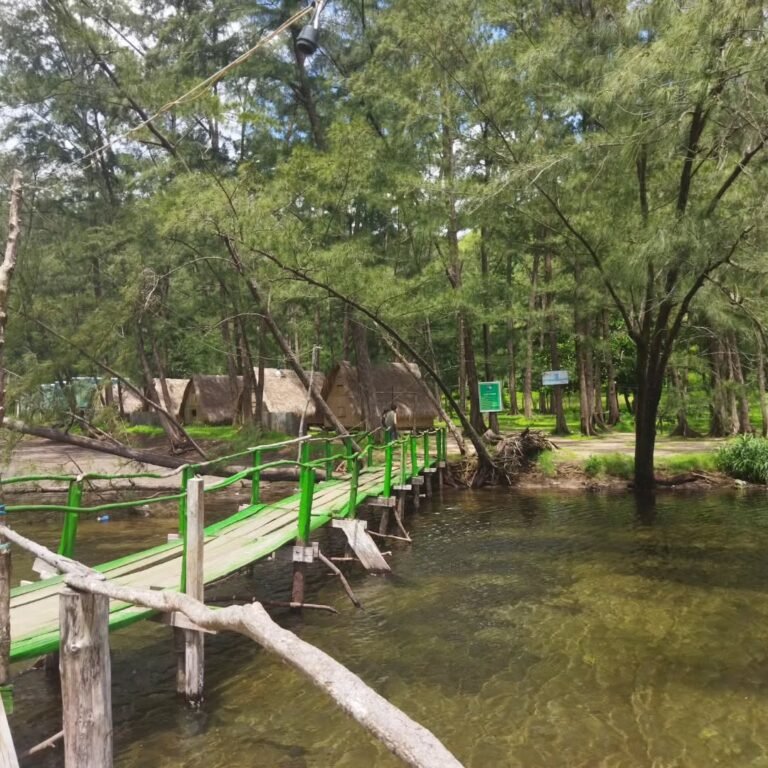
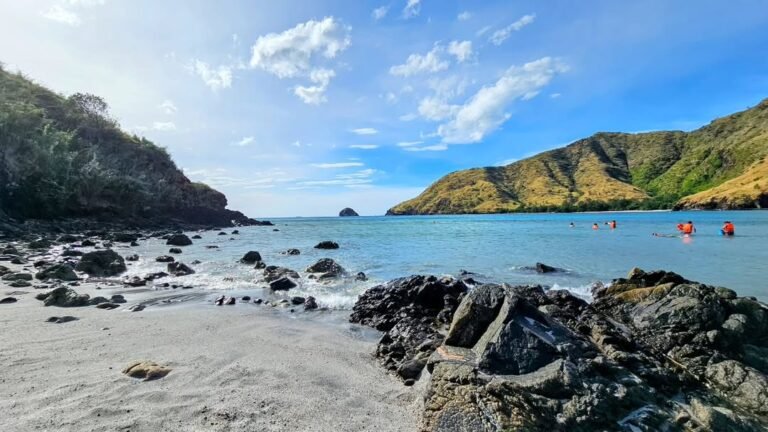
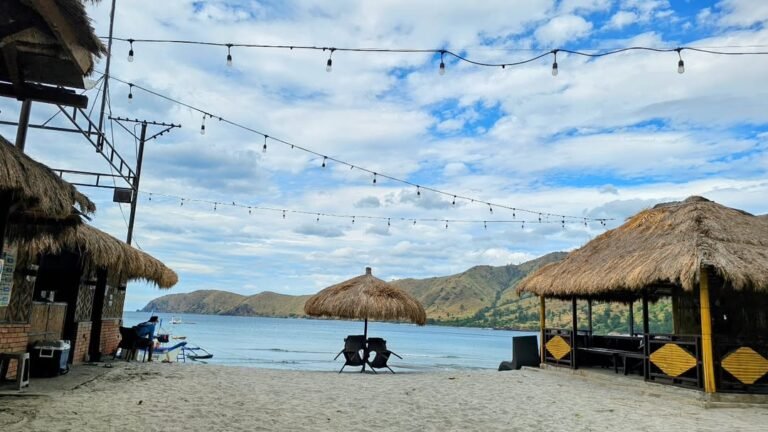
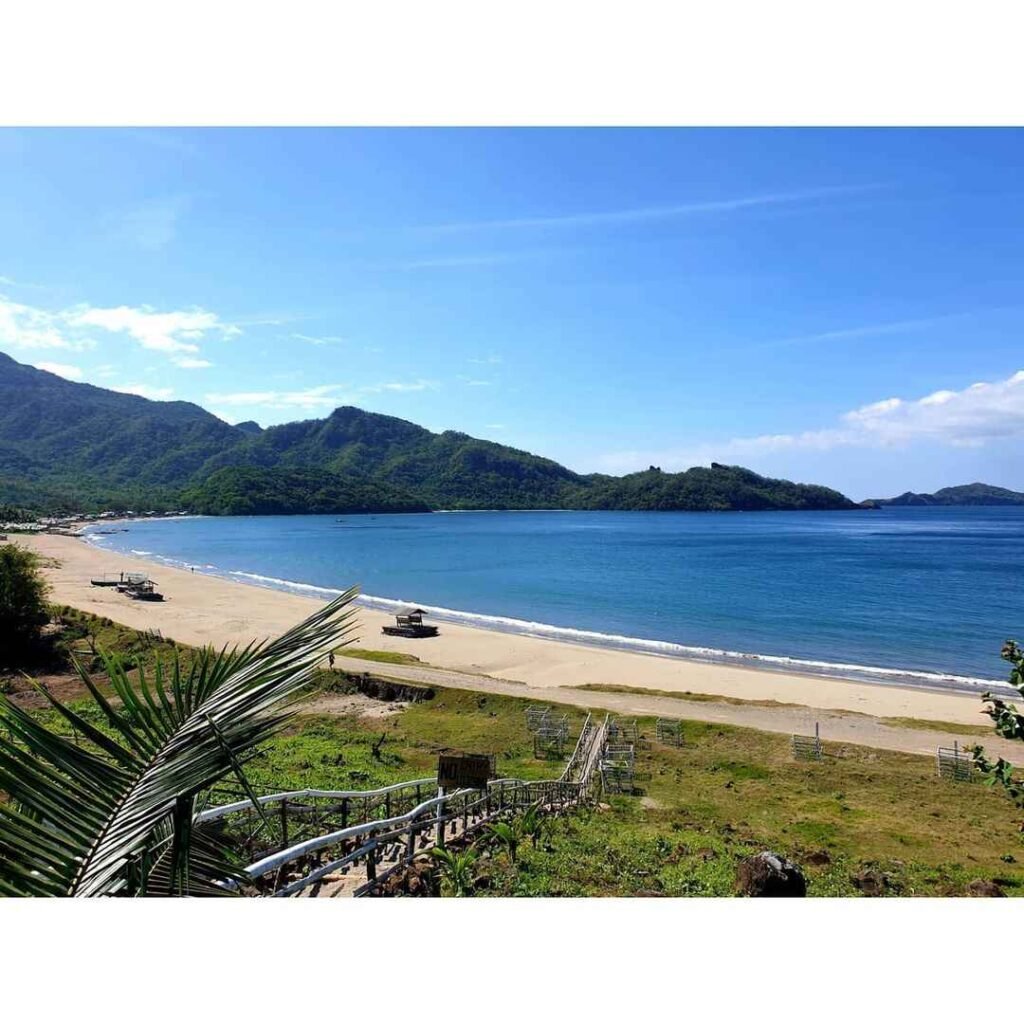
The first view of Anawangin Cove is the main payoff. Whether you arrive by boat or trail, the scenery feels different from many Zambales beaches. The cove is framed by mountains, the shoreline has that pale gray volcanic look, and the agoho trees create a camping-forest mood right behind the beach.
From the boat, the approach feels more dramatic because the cove slowly opens from the sea. You see the mountains first, then the tree line, then the beach area with tents, boats, and cottages. It is not a luxury beach reveal, but it is scenic in a rugged way.
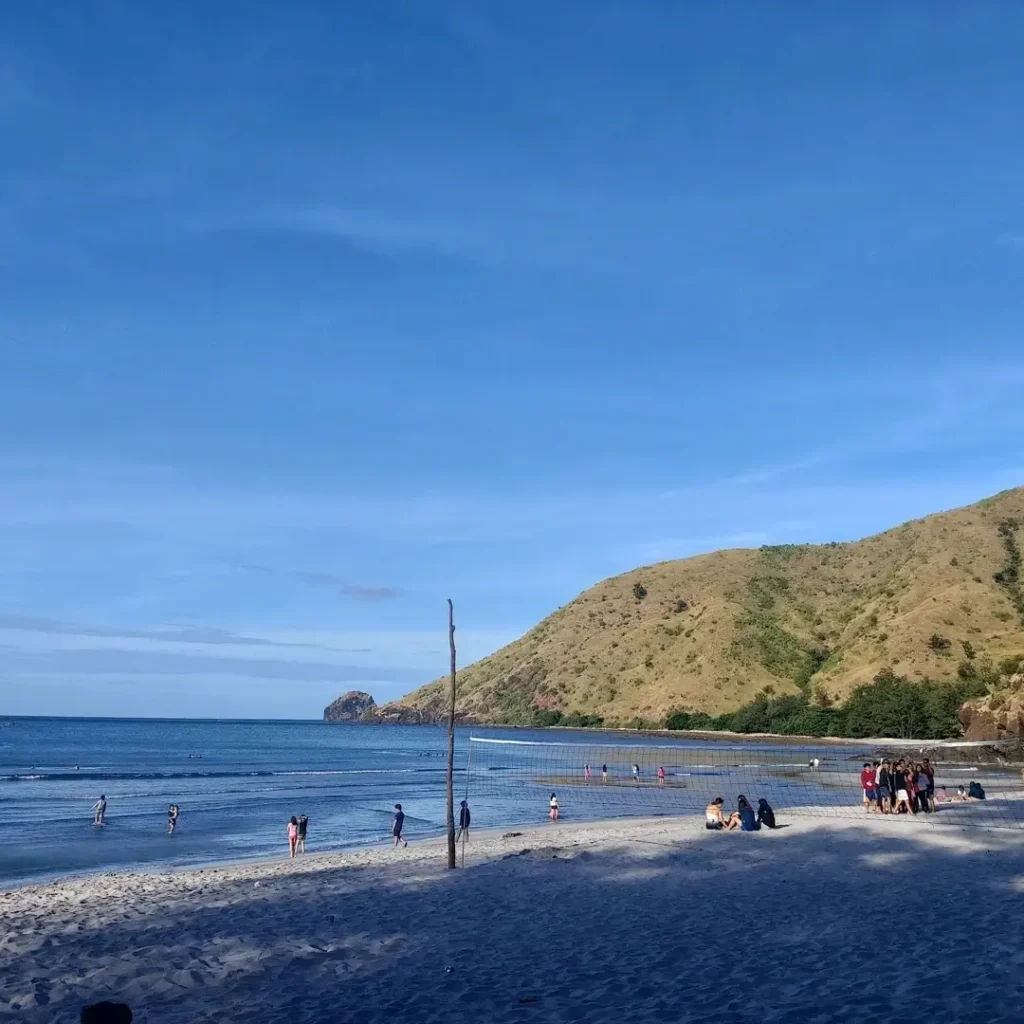
This is also why Anawangin Cove photos are still popular. The place gives you multiple layers in one frame: shoreline, boats, trees, tents, mountains, and people for scale.
Beach, Swimming, and Shoreline Experience
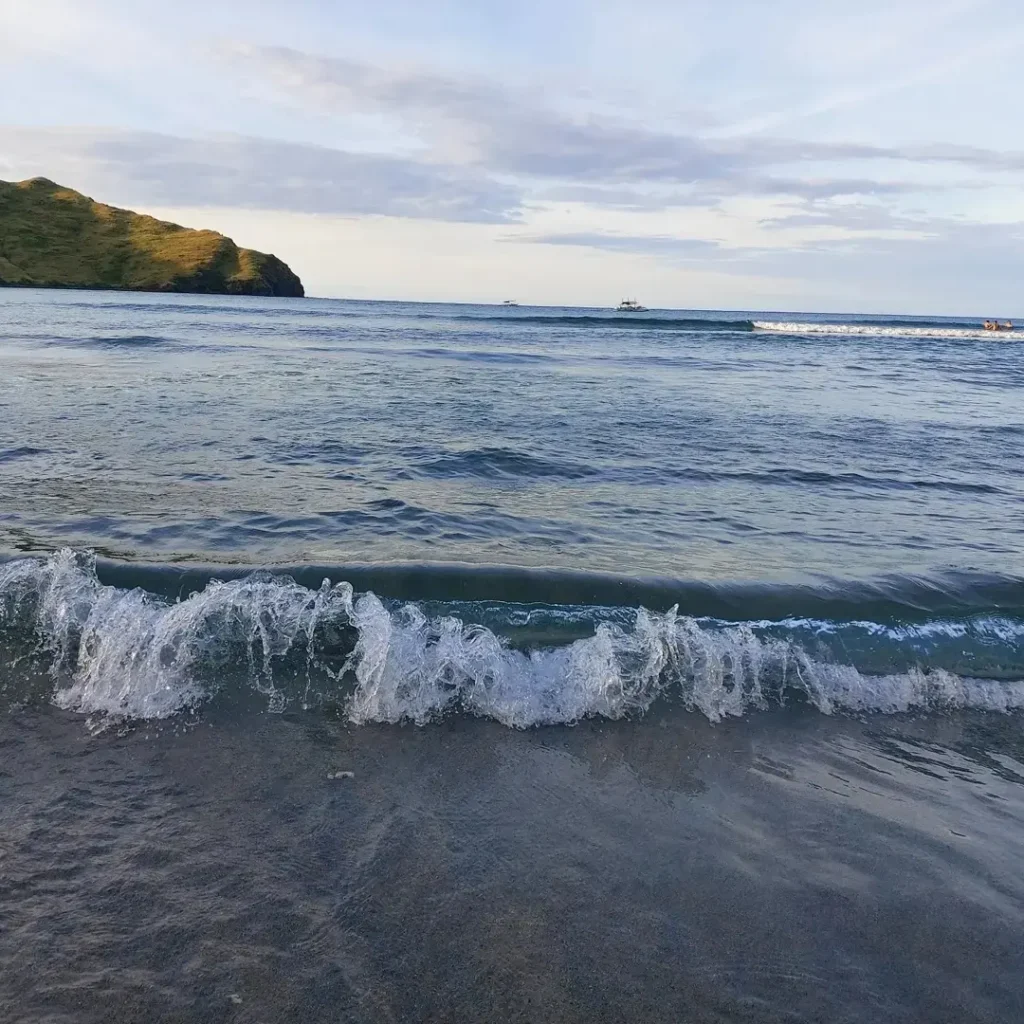
Anawangin Cove is good for beach bumming and swimming when conditions are calm, but it should not be treated like a lifeguarded resort beach. The sea can change depending on wind, tide, and weather, and the Philippine Coast Guard warns about hazards such as rip currents and sudden steep underwater drop-offs or biglang-lalim.
The shoreline is scenic, but conditions are not always picture-perfect. During peak periods, expect more people, more boats, more tents, and more pressure on the facilities. If you want fewer people in your photos, go early, stay overnight, or visit on a weekday.
For families with kids, swimming is possible, but close supervision is important. Ask your boatman or campsite staff where the safer swimming area is before entering the water. If the water looks rough or the boatmen advise against swimming, follow them.
Camping Under the Agoho Trees
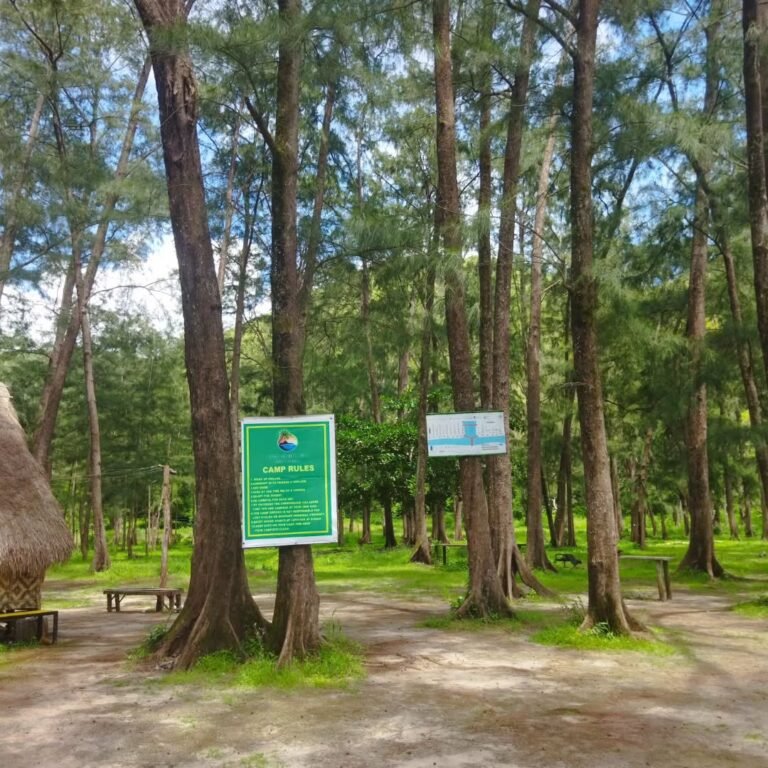
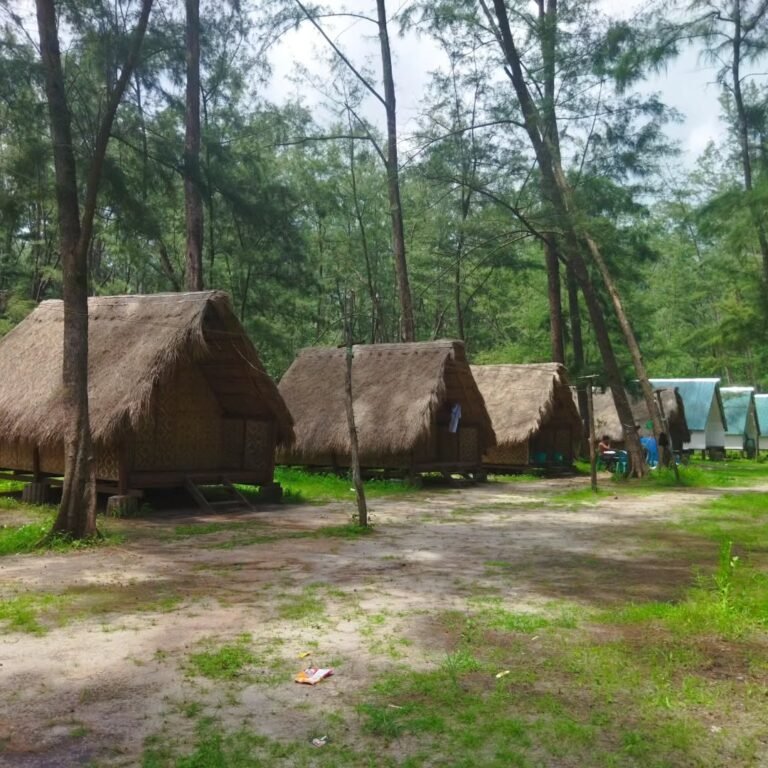
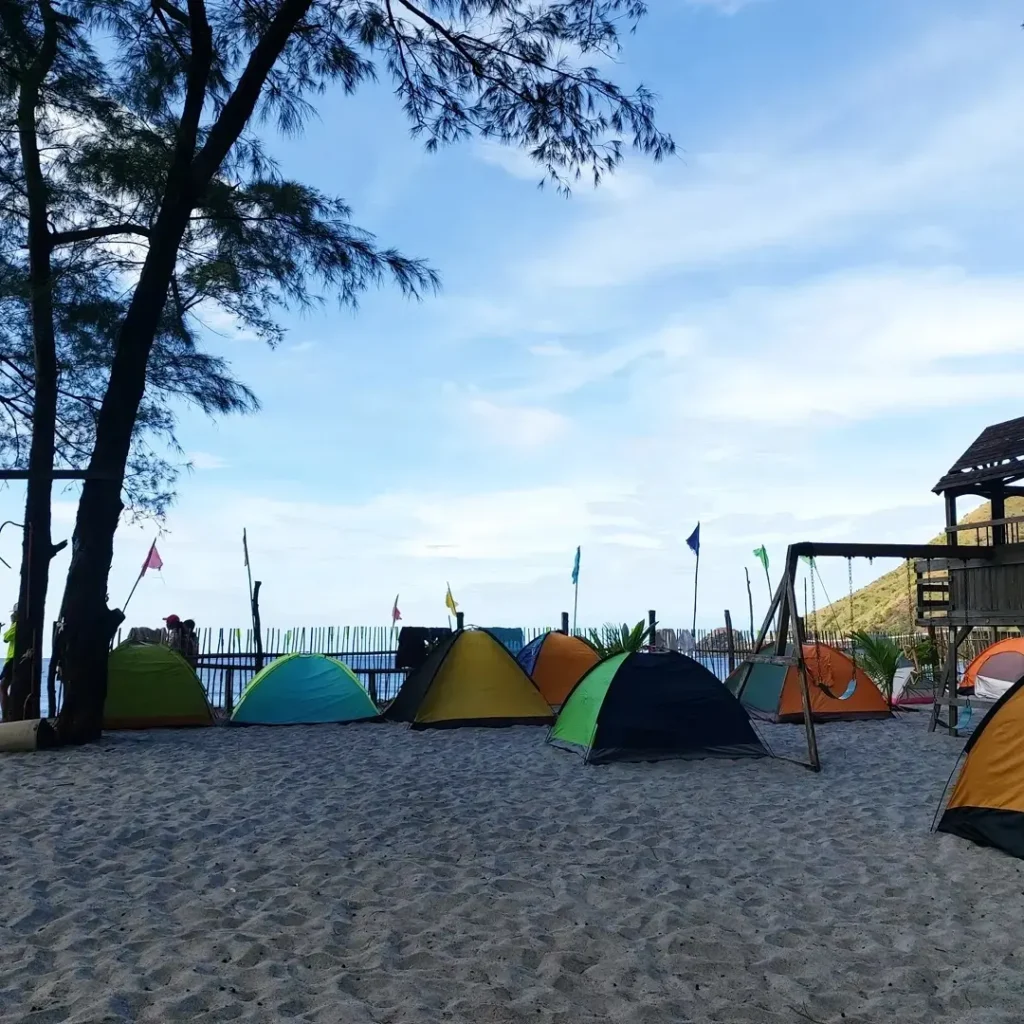
Camping is still the classic Anawangin Cove experience. The agoho trees give the campsite its identity, and the shaded areas make the beach feel different from a fully exposed tropical shoreline. This is where barkadas usually set up tents, cook simple meals, rest after swimming, and wait for sunset or early morning light.
As of May 2026, personal tent pitching costs around ₱200 per tent. Commercial tent rental is around ₱400–₱500 per night. A small kubo good for around 4 pax is around ₱350 per night, while large cottages for groups range from ₱2,000 to ₱2,500 per night. Camping table and chairs cost around ₱500 per set.
Quiet hours are enforced around 10:00 PM to 11:00 PM, so do not expect an all-night party setup. BYOB alcohol is allowed, and portable gas stove cooking is encouraged. Bonfires are allowed only in designated beach zones, and locals sell bundled firewood to prevent the illegal cutting of agoho trees.
The camping mood is nice if you like simple trips. But the comfort level is basic. You need to bring water, cash, food, power banks, lights, and patience.
What May Disappoint First-Time Visitors
Anawangin Cove can disappoint travelers who expect a polished resort. The place is scenic, but it is also rough around the edges.
The most common disappointments are:
- No reliable Globe, Smart, or DITO signal
- No commercial power grid
- Generator charging may be available but expensive
- No natural potable water source
- Sari-sari stores have heavy markups
- Restrooms and showers are rudimentary
- Some facilities lack steady running water
- Shower/restroom use costs around ₱20/head/use
- Crowding can make sanitation worse
- Capones and Camara docking can be aborted
- Weather-aborted side trips usually do not trigger cash refunds
If you accept those limitations, Anawangin Cove can still be a memorable Zambales beach camping trip. If those limitations sound stressful, it may be better to stay in Pundaquit and visit Anawangin as a day trip.
Best Time to Visit Anawangin Cove
The best time to visit Anawangin Cove is during dry-season windows when sea conditions are calm and there are no active PAGASA or Coast Guard warnings. For beach camping, photos, and boat transfers, weather matters more than the calendar date alone.
March to May is popular because it is summer, but it can also be very hot and crowded. During the May 2026 visit, temperatures reached around 25°C to 36°C. East-to-southeast winds created slight to moderate coastal sea conditions that were favorable for outrigger boat operations, but this can change quickly.
Weekdays are better if you want fewer crowds. Weekends, holidays, and post-cancellation surges can bring more tourists, more boats, and more pressure on toilets, showers, stores, and campsite space.
Avoid travel during:
- PAGASA Gale Warnings
- Typhoon signals
- Rough sea advisories
- Heavy rain
- Strong offshore surf
- Coast Guard restrictions
- Active maritime exclusion zones
- Peak holiday overcrowding
Anawangin Cove Visit Decision Table
| If you want… | Best strategy | Honest note |
|---|---|---|
| Beach camping | Stay 2D1N | Facilities are basic |
| Calm boat ride | Leave early | Still depends on sea condition |
| Quick day trip | Start before sunrise | Can feel rushed |
| Overnight trip | Bring full supplies | No signal and no grid power |
| Barkada trip | Split a private boat | Best value with 4+ pax |
| Couple trip | Go on a weekday | More peaceful than weekends |
| Family trip | Choose boat access | Restrooms may be uncomfortable |
| Hiking route | Get a vetted guide | No water sources on trail |
| Fewer crowds | Avoid holidays | Summer weekends get busy |
| Better photos | Shoot morning/golden hour | Drone needs permission |
| Island hopping | Add Capones/Camara/Nagsasa | Docking is not guaranteed |
| Safer sea conditions | Check PAGASA/PCG first | VERIFY LOCALLY |
How to Go to Anawangin Cove from Manila
To go to Anawangin Cove from Manila, travel first to San Antonio, Zambales, ride a tricycle to Pundaquit, then take an on-demand boat charter to Anawangin Cove. The route is simple on paper, but timing, weather, and boat arrangements matter a lot.
Manila to San Antonio, Zambales by Bus
The most direct commute is to ride a bus from Manila to San Antonio, Zambales. Verified May 2026 fare is around ₱350–₱400.
Tell the conductor that you are going to San Antonio or Pundaquit for Anawangin Cove. Most DIY travelers get off near San Antonio town proper or the public market, then take a tricycle to Pundaquit.
Manila to Olongapo to San Antonio
If the direct San Antonio route does not fit your schedule, you can use the connecting route:
| Route | Fare |
|---|---|
| Manila to Olongapo | ₱306–₱320 |
| Olongapo to San Antonio | ₱80 |
This route is useful if you are coming from Subic/Olongapo or if direct buses are limited.
Clark Airport / Dau Route
For travelers coming from Clark:
| Route | Fare |
|---|---|
| Clark Airport shuttle to Dau | ₱75–₱150 |
| Dau to Olongapo bus | ₱200 |
| Olongapo to San Antonio | Verify locally |
This route is practical for travelers flying into Clark, but it needs more transfers.
Private Car Route
By private car, the common route is:
Manila → NLEX → SCTEX → Subic/Olongapo side → San Antonio → Pundaquit
Travel time depends heavily on Metro Manila traffic, stopovers, weekend volume, and Pundaquit crowding. If you are driving, park in Barangay Pundaquit.
Parking fee as of May 2026:
| Vehicle | Parking Fee |
|---|---|
| Car / sedan / SUV | ₱200/night |
| Motorcycle | ₱100/night |
San Antonio to Pundaquit
From San Antonio town proper, ride a tricycle to Pundaquit. The standard rate is ₱40/person, but some drivers may push ₱70/person during twilight or peak surge. Bring small bills and clarify the fare before boarding.
Pundaquit to Anawangin Cove by Boat
From Pundaquit, arrange a boat to Anawangin Cove. There is no fixed public schedule. Boats are charter-based.
| Boat Type | Capacity | Rate |
|---|---|---|
| Private boat direct to Anawangin | Up to 4 pax | ₱1,500–₱2,000 |
| Anawangin + Capones + Camara | Up to 4 pax | ₱2,000–₱2,500 |
| Full island hopping with Nagsasa | Up to 4 pax | ₱3,500–₱4,000 |
Before leaving Pundaquit, confirm the return time. Do not assume your boatman will automatically appear whenever you want to leave.
Pundaquit Jump-Off, Boat Ride, and Return Trip Tips
Pundaquit is the main jump-off for Anawangin Cove, but travelers should know that boat trips are on-demand and weather-dependent. There is no fixed public boat schedule, so coordination is part of the trip.
Before boarding, do these:
- Complete manual registration/census if required.
- Pay the ₱20/person environmental fee.
- Confirm if your boat rate includes only Anawangin or nearby islands too.
- Ask if Capones and Camara docking is possible that day.
- Confirm if life vests are provided.
- Clarify your pickup and return time.
- Ask what happens if weather cancels the side trip.
- Keep the boatman or coordinator’s contact if signal is available in Pundaquit.
- Waterproof your bags.
- Keep small bills for fees and restroom use.
Capones Island and Camara Island are beautiful add-ons, but docking is highly volatile. Both lack deep-water harbors or proper docks. If the West Philippine Sea surf or tide is not favorable, the boatman may abort disembarkation. Do not treat Capones and Camara stops as guaranteed.
For day trips, return timing matters. If you stay too late, waves, light, and boat availability may become bigger problems. Overnight trips reduce that pressure because you have more time to enjoy the cove and return the next day.
Boat vs Hike to Anawangin Cove: Which Is Better?
For most first-time visitors, the boat from Pundaquit is the better way to reach Anawangin Cove. The hike is more scenic and adventurous, but it requires a vetted guide, heat preparation, enough water, and a pre-arranged boat exit.
| Option | Best For | Honest Note |
|---|---|---|
| Boat from Pundaquit | First-timers, families, barkadas, campers | Easier but sea-condition dependent |
| Shared/joiner boat | Solo travelers and couples | Check inclusions carefully |
| Private boat | Small groups up to 4 pax | Best control over timing |
| Mt. Pundaquit hike | Hikers and photographers | Hot, exposed, no water source |
| Hike + boat exit | Fit adventure travelers | Boat extraction must be arranged |
| Boat + viewpoint | Casual travelers | Best balance of effort and scenery |
Choose the boat if you are bringing camping gear, traveling with kids, visiting for a quick day trip, or going with non-hikers. Choose the hike only if your group is physically ready, properly guided, and prepared for heat.
The Mt. Pundaquit route is open as of May 2026, but independent ascents are not allowed. Local guides are mandatory, and hiking packages usually cost ₱1,799–₱2,400. Boat exit is mandatory, so this is not a route where you can casually hike in and hike back out.
Fees, Budget, and Expected Expenses
Anawangin Cove budget depends mostly on group size, boat sharing, camping setup, food, and whether you book a joiner package or private boat. The biggest cost is usually the boat or tour package, while the smaller fees add up once you start paying for entrance, tent setup, restroom use, food, water, and parking.
Anawangin Cove Budget Snapshot
| Expense | Estimated Cost | Notes |
|---|---|---|
| Manila to San Antonio bus | ₱350–₱400 | Direct route |
| Manila to Olongapo | ₱306–₱320 | Connecting route |
| Olongapo to San Antonio | ₱80 | Continue to Pundaquit |
| Clark to Dau shuttle | ₱75–₱150 | Clark route |
| Dau to Olongapo | ₱200 | Then continue to San Antonio |
| San Antonio to Pundaquit tricycle | ₱40/person | May rise to ₱70 peak/twilight |
| Environmental fee | ₱20/person | Pundaquit boundary |
| Day tour entrance | ₱80/person | May vary by campsite/operator |
| Overnight entrance | ₱130/person | May vary by campsite/operator |
| Private boat direct to Anawangin | ₱1,500–₱2,000 | Up to 4 pax |
| Anawangin + Capones + Camara | ₱2,000–₱2,500 | Up to 4 pax |
| Full island hopping with Nagsasa | ₱3,500–₱4,000 | Up to 4 pax |
| Joiner package | ₱1,099–₱2,499/person | Check inclusions |
| Tent pitching | ₱200/tent | Personal tent |
| Tent rental | ₱400–₱500/night | Commercial tent |
| Small kubo | ₱350/night | Good for 4 pax |
| Large cottage | ₱2,000–₱2,500/night | Group use |
| Table and chairs | ₱500/set | Camping setup |
| Shower/restroom use | ₱20/head/use | Bring small bills |
| Garbage deposit | ₱600/group | Refundable if trash is brought back |
| Parking, car/SUV | ₱200/night | Barangay Pundaquit |
| Parking, motorcycle | ₱100/night | Barangay Pundaquit |
| Paluto labor | ₱300 | Bring raw ingredients |
| Hiking package | ₱1,799–₱2,400 | Usually guide-bundled |
Budget Feel by Traveler Type
| Traveler Type | Budget Feel | Why |
|---|---|---|
| Solo DIY | Expensive | Boat cost is not split |
| Solo joiner | More practical | Shared package lowers cost |
| Couple | Moderate | Boat split is still small |
| Barkada of 4 | Best DIY value | Boat rate is easier to divide |
| Family | Manageable but basic | Comfort upgrades may add cost |
| Hikers | Moderate to high | Guide package + boat exit needed |
| Overnight campers | Budget-friendly if prepared | Bring gear, food, water |
For Anawangin Cove room rates, it is better to think in terms of campsite options: tents, kubo rentals, cottages, and group shelters. Unless you book a specific resort-style room, Anawangin is mainly a camping and basic cottage destination.
Can You Camp in Anawangin Cove?
Yes, camping is still one of the main ways to experience Anawangin Cove. Visitors can pitch personal tents, rent commercial tents, or use basic kubo and cottage setups depending on availability and operator rules.
As of May 2026, the camping-related fees are:
| Camping Item | Rate |
|---|---|
| Personal tent pitching | ₱200/tent |
| Commercial tent rental | ₱400–₱500/night |
| Small kubo rental | ₱350/night |
| Large cottage rental | ₱2,000–₱2,500/night |
| Camping table and chairs | ₱500/set |
Camping under the agoho trees is the classic Anawangin experience, but do not expect hotel comfort. The restrooms and showers are rudimentary, often made with cinderblock or corrugated-tin structures, and may lack steady running water during crowded periods. Shower or restroom use costs around ₱20/head/use.
Cooking is allowed in practical ways. Portable gas stove cooking is encouraged, and a local paluto service is available for around ₱300 labor fee, but you need to bring the raw ingredients. BYOB alcohol is allowed. Bonfires are allowed only in designated beach zones, and firewood is sold locally to prevent people from cutting agoho trees.
Quiet hours are enforced around 10:00 PM to 11:00 PM, so keep noise controlled at night.
Food, Water, Power, Signal, and Basic Facilities
Anawangin Cove is off-grid, so bring cash, drinking water, food, power banks, and realistic expectations for basic facilities. This is one of the most important parts of planning the trip.
There are no natural potable water sources in Anawangin. Visitors must bring drinking water from the mainland. At minimum, bring 1–2 liters per person for a short stay, but for overnight camping, bring more depending on heat, cooking plans, and group size.
Sari-sari stores exist inside the cove, but prices are marked up because everything has to be transported by boat. If you are on a budget, buy food, water, snacks, ice, and raw ingredients in San Antonio or Pundaquit before crossing.
Power and signal are very limited:
| Facility | What to Expect |
|---|---|
| Globe signal | None / unreliable |
| Smart signal | None / unreliable |
| DITO signal | None / unreliable |
| Commercial electricity | None |
| Charging | Sometimes available via gas generator, usually expensive |
| Internet | Do not rely on it |
| Drinking water | Bring from mainland |
| Restrooms | Basic, paid, can be unsanitary when crowded |
| Showers | Basic, paid, water may be inconsistent |
Download maps, booking details, contacts, and screenshots before leaving Pundaquit. If you need to work online, upload content, or stay reachable, Anawangin Cove is not a good place for that.
Nearby Islands and Coves to Pair with Anawangin
Anawangin Cove is often paired with Capones Island, Camara Island, and sometimes Nagsasa Cove, but every extra stop depends on boat rate, tide, surf, weather, and docking conditions. Do not build a tight itinerary assuming every stop is guaranteed.
| Nearby Place | Best For | Honest Note |
|---|---|---|
| Capones Island | Lighthouse, rocky island photos | Docking depends on surf |
| Camara Island | Quick island stop near Pundaquit | No deep-water dock |
| Nagsasa Cove | Longer cove camping trip | Farther and higher boat cost |
| Talisayen Cove | Quieter cove option | Verify access and rates |
| Silanguin Cove | More remote cove trip | Better for longer itinerary |
| Pundaquit Beach | Mainland base or wash-up | Good comfort fallback |
| Subic/Olongapo | Stopover before/after Zambales | Adds travel time |
For a short trip, the most common add-ons are Capones Island and Camara Island. The extended route for Anawangin + Capones + Camara costs around ₱2,000–₱2,500 for up to 4 pax.
For a fuller cove-hopping experience, the route including Nagsasa Cove costs around ₱3,500–₱4,000 for up to 4 pax. This is better for travelers with more time and budget.
Capones and Camara are the most volatile stops because both lack proper docking facilities. If the surf is rough, the boatman may decide not to let passengers disembark. Respect that decision.

Anawangin Cove vs Nagsasa Cove: Which Is Better?
Anawangin Cove is usually better for first-timers because it is nearer and easier to reach from Pundaquit, while Nagsasa Cove is better for travelers who want a farther, quieter, and more spread-out cove experience.
| Category | Anawangin Cove | Nagsasa Cove |
|---|---|---|
| Access | Nearer from Pundaquit | Farther boat ride |
| Budget | Usually cheaper direct boat option | Higher boat cost |
| Crowd | More popular, can be crowded | Often quieter |
| Best for | First-timers, barkadas, quick camping | Campers wanting more distance |
| Facilities | Basic, more developed in some areas | Basic and more remote-feeling |
| Itinerary fit | Day trip or 2D1N | Better for 2D1N or longer |
| Limitation | More commercialized | Longer travel, higher cost |
For a first Zambales cove trip, I would choose Anawangin first because it is easier to understand logistically. For travelers who already tried Anawangin or want a less crowded camping feel, Nagsasa may be the better next trip.
Anawangin Cove Sample Itinerary
A day trip to Anawangin Cove is possible, but a 2D1N camping itinerary gives more time for the beach, sunset, sunrise, and side trips without rushing the boat return. Choose your itinerary based on comfort level, weather, and whether your group wants to camp.
DIY Day Trip Itinerary
| Time | Activity | Notes |
|---|---|---|
| 12:00 AM–2:00 AM | Depart Manila | Early start reduces rush |
| 5:00 AM–6:00 AM | Arrive in San Antonio | Buy food and water |
| 6:00 AM–6:30 AM | Tricycle to Pundaquit | ₱40/person standard |
| 7:00 AM | Register and arrange boat | VERIFY LOCALLY |
| 7:30 AM | Boat to Anawangin | Waterproof bags |
| 8:00 AM–12:00 PM | Swim, take photos, rest | Watch heat and currents |
| 12:00 PM | Lunch | Bring food or use paluto |
| 1:00 PM–2:30 PM | Optional Capones/Camara | Docking not guaranteed |
| 3:00 PM–4:00 PM | Return to Pundaquit | Prepare small bills |
| 5:00 PM onward | Travel back to Manila | Expect traffic |
Who Is Anawangin Cove Best For?
Anawangin Cove is best for travelers who enjoy scenic but simple beach camping, not for travelers who need hotel-level comfort, reliable signal, or polished facilities.
| Traveler Type | Fit | Why |
|---|---|---|
| Barkadas | Excellent | Costs are easier to split |
| Campers | Excellent | Classic Anawangin experience |
| Couples | Good | Better on weekdays |
| Solo travelers | Good | Joiner packages are available |
| Budget travelers | Good | Best with group sharing |
| Hikers | Good | Mt. Pundaquit route is open |
| Photographers | Excellent | Cove, trees, tents, mountains |
| Families | Moderate | Boat access is okay, facilities are basic |
| First-time Zambales travelers | Good | Easy cove introduction if expectations are right |
| Luxury travelers | Poor | Too basic and off-grid |
| Remote workers | Poor | No reliable signal or power |
| Seniors with mobility issues | Poor to moderate | Boat boarding and facilities can be difficult |
What to Wear and Bring to Anawangin Cove
Bring light beachwear, sun protection, drinking water, food, cash, waterproof bags, and camping essentials because Anawangin Cove is off-grid and basic.
Beach and Clothing
- Swimwear
- Rash guard
- Shorts
- Towel
- Light shirt
- Light jacket for night or boat ride
Footwear
- Beach sandals
- Aqua shoes
- Hiking shoes if taking the Mt. Pundaquit route
Essentials
- Dry bag
- Waterproof phone pouch
- Power bank
- Charging cable
- Cash in small bills
- Drinking water
- Packed meals or snacks
- Sunblock
- Hat
- Sunglasses
- Toiletries
- Tissue
- Wet wipes
- Alcohol
- Flashlight or headlamp
- Insect repellent
- Personal medicine
- Motion sickness medicine
- First-aid kit
- Trash bag
Camping Gear
- Tent if DIY camping
- Sleeping mat
- Light blanket
- Portable fan
- Reusable utensils
- Portable gas stove, if allowed by your campsite
- Rope or clothesline
- Extra plastic bags for wet clothes
Do not underestimate water, cash, and waterproofing. These three can make or break your Anawangin Cove trip.
Mistakes to Avoid When Visiting Anawangin Cove
Most Anawangin Cove mistakes come from treating it like a regular resort beach instead of an off-grid cove where boat timing, weather, cash, water, and basic facilities matter.
Avoid these first-timer mistakes:
- Calling it Anawangin Island instead of Anawangin Cove
- Arriving late at Pundaquit
- Assuming there is a fixed public boat schedule
- Not verifying the boat rate before boarding
- Not confirming the return time
- Expecting Capones and Camara docking to be guaranteed
- Not checking weather, PAGASA, and Coast Guard advisories
- Not bringing enough cash
- Not bringing enough drinking water
- Relying on cheap food inside the cove
- Expecting strong mobile signal
- Expecting stable electricity
- Ignoring restroom and shower conditions
- Hiking without a vetted guide
- Underestimating heat on Mt. Pundaquit
- Forgetting the ₱600 garbage deposit rule
- Expecting cash refund for weather-aborted side trips
- Flying drones without permission or privacy awareness
- Leaving trash in the cove
The biggest mindset shift is simple: Anawangin is scenic, but it is still a basic outdoor trip.
Safety and Local Rules to Know
Anawangin Cove is manageable for prepared travelers, but safety should be taken seriously because the trip involves sea travel, basic facilities, heat, and weather-dependent activities.
Important rules and reminders:
- Wear life vests during boat rides.
- Check weather and sea conditions before crossing.
- Respect Coast Guard advisories.
- Watch for rip currents and sudden drop-offs.
- Do not swim during rough water.
- Bring enough water to avoid dehydration.
- Use sun protection, especially in summer.
- Do not hike Mt. Pundaquit without a guide.
- Do not cut agoho trees for firewood.
- Use only designated bonfire areas.
- Keep pets leashed if bringing them.
- Respect quiet hours from around 10:00 PM to 11:00 PM.
- Bring trash back for garbage deposit refund.
- Do not fly drones over people, tents, or private areas.
- Book with operators that have proper authority to operate.
The verified San Antonio Tourism Officer contact is Ma. Fe D. Acebedo: 0923-085-5116. Before publishing or traveling, recheck if this number is still active.
Final Verdict: Is Anawangin Cove Still Worth It?
Yes, Anawangin Cove is still worth visiting if you want a scenic Zambales beach-camping trip with boat access, agoho trees, mountain views, and a rustic overnight experience. It is not the hidden, untouched escape that older stories may suggest, but it still has a strong identity as a classic Zambales camping destination.
Go if you are a barkada, camper, hiker, photographer, budget traveler, or DIY traveler who enjoys simple places. Skip or adjust your plan if you need clean resort bathrooms, stable electricity, internet, easy mobility, or guaranteed island-hopping stops.
For most first-timers, I recommend taking the boat from Pundaquit and staying overnight if your group can handle basic facilities. A day trip works, but it can feel rushed. The hike is better for prepared hikers, not casual beachgoers.
Anawangin Cove rewards travelers who plan properly. Verify the boat, weather, fees, and local rules before leaving, then go with realistic expectations.
Frequently Asked Questions About Anawangin Cove
Is Anawangin Cove worth visiting?
Yes, Anawangin Cove is worth visiting if you enjoy beach camping, mountain-backed scenery, boat trips, and a rustic Zambales experience. It is best for barkadas, campers, photographers, hikers, and budget travelers. It may disappoint visitors expecting luxury facilities, strong signal, clean resort bathrooms, or an empty hidden beach.
Where is Anawangin Cove located?
Anawangin Cove is located in San Antonio, Zambales, Central Luzon. The main jump-off point is Barangay Pundaquit, where travelers arrange boats to the cove. It is part of mainland Luzon, but it has no normal road access, so visitors usually arrive by boat or guided hike.
How do you get to Anawangin Cove from Manila?
From Manila, travel to San Antonio, Zambales by bus, then ride a tricycle to Pundaquit. From Pundaquit, arrange a boat to Anawangin Cove. The direct Manila to San Antonio bus fare is around ₱350–₱400, while the Pundaquit boat is charter-based and should be confirmed before travel.
Where is the jump-off point for Anawangin Cove?
The main jump-off point for Anawangin Cove is Barangay Pundaquit in San Antonio, Zambales. This is where most visitors register, pay local fees, meet boatmen or coordinators, and board boats for Anawangin, Capones Island, Camara Island, Nagsasa Cove, and other nearby stops.
How long is the boat ride to Anawangin Cove?
The boat ride from Pundaquit to Anawangin Cove commonly ranges from around 20 to 45 minutes, depending on sea condition, boat type, load, and actual landing point. Always treat boat duration as weather-dependent and confirm with your boatman before crossing.
Can you hike to Anawangin Cove?
Yes, you can hike to Anawangin Cove through the Mt. Pundaquit route. As of May 2026, the trail is open and classified as a minor climb with 3/9 difficulty. However, guides are mandatory, independent ascents are prohibited, there are no water sources, and boat exit must be pre-arranged.
How much is the budget for Anawangin Cove?
Anawangin Cove budget depends on group size, boat sharing, camping setup, and side trips. Direct boat to Anawangin costs around ₱1,500–₱2,000 for up to 4 pax. Day tour entrance is ₱80/person, overnight entrance is ₱130/person, and environmental fee is ₱20/person. Bring extra cash for food, water, parking, and restroom use.
Can you camp in Anawangin Cove?
Yes, camping is allowed in Anawangin Cove. Personal tent pitching costs around ₱200/tent, while commercial tent rental is around ₱400–₱500/night. Small kubo rentals and group cottages are also available, but availability and campsite rules should be verified locally before travel.
Is Anawangin Cove good for swimming?
Anawangin Cove can be good for swimming when the water is calm, but it is not a lifeguarded resort beach. Watch for rip currents, sudden drop-offs, waves, and changing sea conditions. Families with kids should ask locals where to swim and supervise children closely.
Is Anawangin Cove family-friendly?
Anawangin Cove can be family-friendly for families used to boat trips and basic outdoor facilities. It is less ideal for families needing clean resort-style bathrooms, reliable electricity, strong mobile signal, or easy mobility access. For more comfort, consider staying in Pundaquit and visiting Anawangin as a day trip.
Is Anawangin Cove better as a day trip or overnight trip?
Anawangin Cove is possible as a day trip, but an overnight camping trip gives a fuller experience. Staying 2D1N allows more time for sunset, sunrise, beach walks, photos, and a less rushed return. Day trips are better for non-campers or travelers with limited time.
What is the best time to visit Anawangin Cove?
The best time to visit Anawangin Cove is during calm dry-season windows when there are no gale warnings, typhoon signals, or Coast Guard restrictions. Weekdays are better for fewer crowds. Summer is popular but hot, and weekends or holidays can make facilities more crowded.
What should I bring to Anawangin Cove?
Bring cash, drinking water, food, dry bag, waterproof phone pouch, power bank, sunblock, hat, sunglasses, towel, toiletries, flashlight, insect repellent, personal medicine, motion sickness medicine, trash bag, and camping gear if staying overnight. Hikers should also bring proper shoes and extra water.
Which is better, Anawangin Cove or Nagsasa Cove?
Anawangin Cove is better for most first-timers because it is nearer and easier to access from Pundaquit. Nagsasa Cove is better for travelers who want a farther, quieter, and more remote-feeling camping trip. Choose based on budget, time, sea condition, and crowd preference.
What nearby islands can you visit with Anawangin Cove?
Nearby places you can pair with Anawangin Cove include Capones Island, Camara Island, Nagsasa Cove, Talisayen Cove, and Silanguin Cove. Capones and Camara are common short-trip add-ons, while Nagsasa and farther coves are better for longer itineraries. Docking and rates must be verified locally.
Related Zambales Travel Guides
Planning an Anawangin Cove trip becomes easier when you look at it as part of a bigger Zambales route. Since Anawangin is usually accessed from Pundaquit in San Antonio, you can pair it with nearby coves, beaches, mountain-view destinations, and side trips depending on your schedule, budget, and weather conditions.
For travelers comparing Anawangin with another classic Zambales camping destination, read my full Nagsasa Cove Zambales DIY travel itinerary. Nagsasa is farther from Pundaquit than Anawangin, but it can feel more spacious and quieter, especially for campers who want a longer cove trip.
If you are still deciding where to go in the province, check this list of must-visit Zambales tourist spots. It gives a wider view of the beaches, coves, mountains, lakes, and underrated stops you can include in a longer Zambales itinerary.
For travelers who want a rugged inland side trip after a beach escape, Coto Mines in Zambales is a good option to explore. It offers a different kind of adventure compared with Anawangin Cove because the experience is more about mountain roads, rivers, and raw inland scenery.
Another scenic side trip worth considering is Mapanuepe Lake in San Marcelino. It pairs well with travelers who enjoy camping, boat rides, and quiet landscapes, but it has a completely different mood from the beach-camping setup of Anawangin.
For a full province-wide route, use my Zambales ultimate travel guide to plan where Anawangin fits into your trip. This is helpful if you are choosing between San Antonio, San Narciso, San Felipe, Botolan, Iba, and other Zambales destinations.
If your main goal is beach hopping, this guide to the best Zambales beaches can help you compare Anawangin Cove with other coastal stops in the province. It is useful for deciding whether you want a camping cove, surf beach, family-friendly shoreline, or quieter weekend escape.



Hello, can I talk to someone regarding Anawagin tour?