By I’m Aiden Kenzy, the founder of Lakbay Pinas · Last updated: August 2026
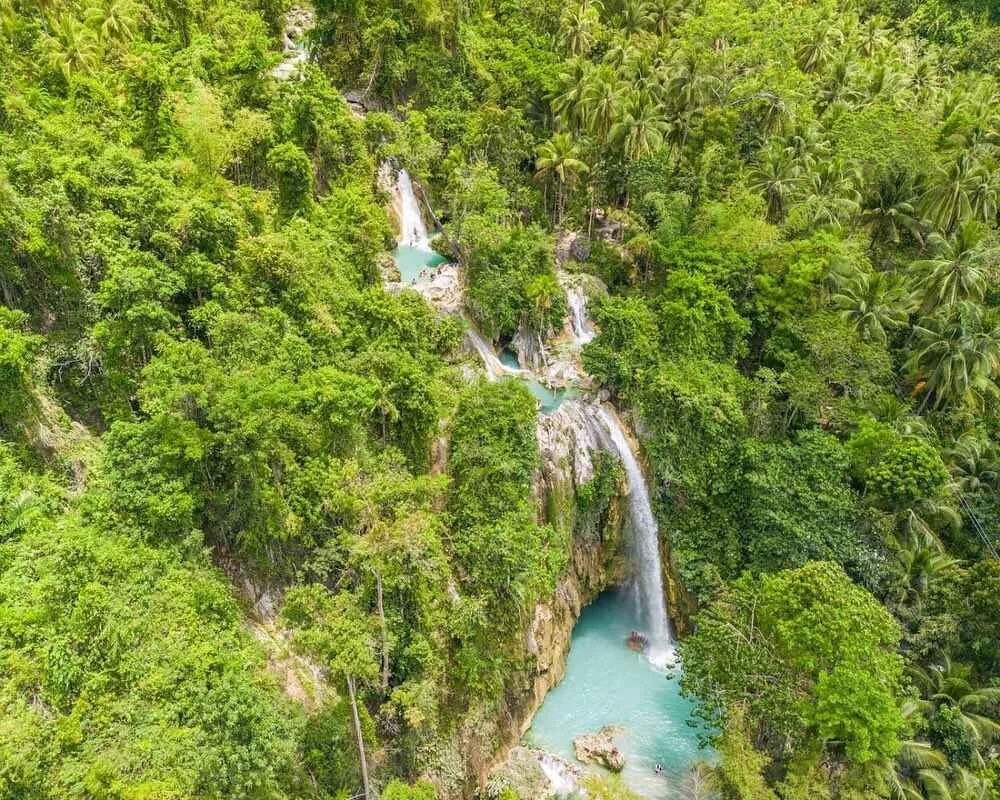
Tangadan Falls is a two-tiered waterfall in Barangay Amontoc, San Gabriel, La Union, sitting along the Baroro River about 20–25 minutes inland from the San Juan surf strip. Getting there requires registering at the San Gabriel Municipal Hall, paying a ₱30 environmental fee, hiring a mandatory DOT-accredited guide (₱500–₱700 per group), and riding a habal-habal up a steep mountain road to the trailhead before a short downhill trek of 15–20 minutes.
Key Takeaways:
- The LGU sets the entrance fee at ₱30 per person and the guide fee at ₱500–₱700 per group of up to 7 — both are non-negotiable.
- The best time to visit is June to November, two to three days after rainfall, when the cascade is at full force but the trail has dried out.
- The short trail is a 15–20 minute descent via roughly 300 concrete steps — manageable going down, genuinely taxing on the way back up.
- The standout feature is the lower cascade’s 40-foot drop into a plunge pool up to 35 feet deep, with cliff-jumping platforms at 10, 15–20, 30, and up to 40 feet.
Tangadan Falls Quick Guide
| Detail | Info |
|---|---|
| Destination | Tangadan Falls |
| Location | Barangay Amontoc, San Gabriel, La Union |
| Province | La Union, Ilocos Region (Region I) |
| Type | Two-tiered freshwater waterfall |
| Access Difficulty | Short Trek (Moderate return climb) |
| Entrance Fee | ₱30 per person (LGU environmental fee) |
| Guide Fee | ₱500–₱700 per group (up to 7 pax) |
| Best Season | June–November (2–3 days after rain); Dec–May for calmer trails |
| Swimming | Yes — with life vest strongly advised |
| Activities | Swimming, cliff diving, river trekking, bamboo raft (seasonal) |
| Operating Hours | 6:00 AM – 5:00 PM (last entry at 3:00 PM) |
| Travel Time from San Juan | ~20–25 minutes to San Gabriel; +20–30 min habal-habal to trailhead |
Table of Contents
Where Is Tangadan Falls Located?
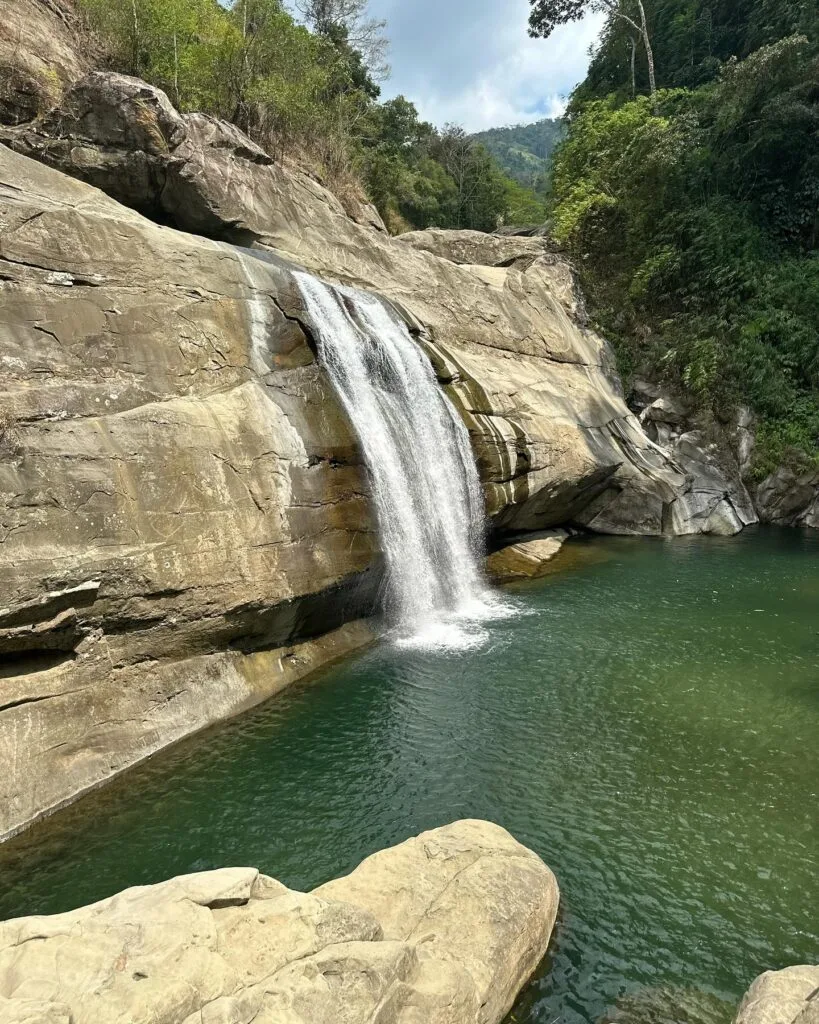
Tangadan Falls sits in Barangay Amontoc, in the municipality of San Gabriel, La Union, tucked into the foothills of the Cordillera Mountain Range. It is a two-tier cascade along the Baroro River, with cold water that originates from the hinterlands of the province adjacent to the Cordilleras.
San Gabriel is just a 20-minute ride from the surfing town of San Juan, making this an easy half-day side trip if you’re already based on the coast. The two environments feel completely different — cold mountain freshwater versus the warm salt air of Urbiztondo — and the contrast is part of the appeal. If you want a full picture of what La Union’s inland mountains offer alongside the coast, check out our complete La Union travel guide.
How to Get to Tangadan Falls
Getting to Tangadan Falls from Manila is a three-phase journey.
Phase 1: Manila to La Union
From Manila, take a bus bound for La Union with lines like Partas (Cubao and Pasay), Viron (Cubao), or Dominion (Cubao). The fare runs roughly ₱400–₱505, and travel time is about 5–7 hours. Most buses heading to La Union terminate at San Fernando City, but if you are staying in San Juan, board a bus bound for Ilocos or Abra and tell the driver to drop you at San Juan.
Phase 2: Coastal Hub to San Gabriel Municipal Hall
From People’s Park in San Juan, transfer to a jeepney to San Gabriel — the fare is ₱15–₱25 and travel time is about 20 minutes. Tell the driver you’re going to Tangadan Falls; they know the drop-off. Alternatively, a tricycle on a special trip from San Juan runs roughly ₱500–₱800 for the vehicle — more expensive but more flexible, especially for early morning starts.
Phase 3: Municipal Hall to the Trailhead
This leg is the most logistically specific part of the whole journey. A habal-habal (motorcycle taxi) from the Municipal Hall to the trailhead costs ₱400 for one rider or ₱600 for two, and the mountain road takes about 20–30 minutes to ascend. Renting the entire jeepney for larger groups costs ₱1,800 for the vehicle roundtrip.
I hired a habal-habal in April 2026. The road climbs sharply, single-lane in stretches, with blind corners above steep ravines. It’s not frightening if you trust the driver — and the local operators know every turn — but it is not a road for unfamiliar private cars.
For a Tangadan Falls day trip from San Juan, the total door-to-falls transit time runs roughly 1.5 to 2 hours if you depart by 5:30 AM and move without delays.
Entrance Fees, Permits, and Guide Requirements at Tangadan Falls
Every visitor pays ₱30 per person in environmental fees and ₱500–₱700 per group for a mandatory local guide — no exceptions, no workarounds.
When you reach San Gabriel, head to the Municipal Hall beside the Police Station, look for the Treasury Office, register, and pay the entrance fee of ₱30 per person. Keep the receipt. The “No Receipt, No Entry” rule is firmly in effect. LGU checkpoints along the mountain road will ask for it.
The “No Tour Guide, No Entry” policy is strictly enforced. The guide fee is ₱700 per group, good for 1–7 people. Groups with more than seven members pay an additional ₱100 per extra person. Some older sources quote ₱500 for groups of five or six — as of the 2026 tourism season, budget for ₱700 for a full-day rate that covers all San Gabriel attractions including Tangadan Falls.
All visitors must register with the San Gabriel LGU and work with DOT-accredited tour guides. These guides are knowledgeable, often assist with photos, and share real insights about the falls. San Gabriel also holds a Red Orchid Award from the Civil Service Commission and the Department of Health as the best LGU implementer of a smoke-free program in Region 1 — smoking is banned across the entire municipality.
You can reach the Municipal Hall’s tourism office at +63 72 687 0125 or +63 916 479 6253 to confirm current availability and conditions before you arrive. Save the number before you head into the mountains — there is zero cell signal once you’re in the river canyon.
San Gabriel LGU municipal tourism office page
Getting to the Water: The Trail at Tangadan Falls
From the habal-habal drop-off at the top of Barangay Amontoc, you choose one of two routes to the water.
The Short Trail (Downstream — Most Visitors’ Choice)
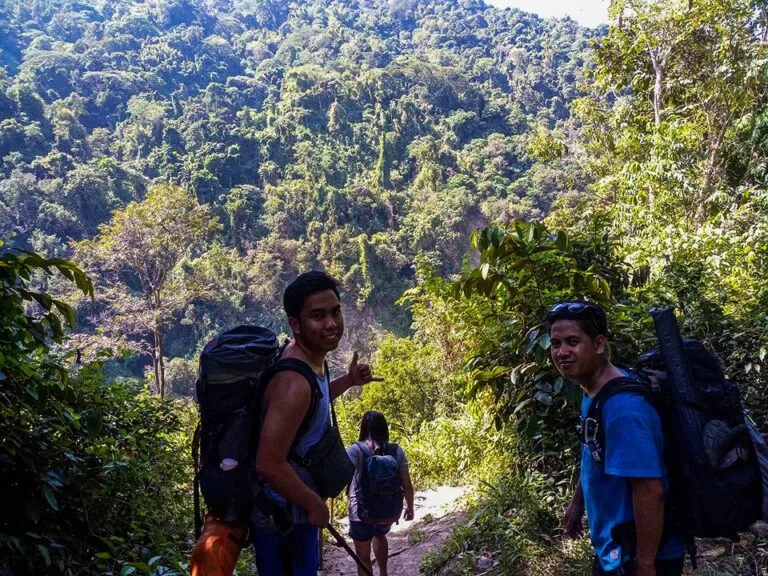
The trek to Tangadan Falls takes about 15 to 30 minutes depending on your pace. For the shorter trail, you are dropped off closer to the source of the falls at the top of a staircase, and a 15–20 minute walk brings you down to the viewpoint.
That descent sounds easy — and the downhill part is. The staircase is steep and the steps are uneven in places. You need to be good at balancing; the trail is challenging and the stairs are not proportionate and are steep. Some reviewers report around 350–450 steps, and the ascent on the way back is where it gets genuinely strenuous.
The return climb is the part every guide warns you about and every first-timer underestimates. Climbing 100-plus vertical metres of concrete steps in tropical midday heat is what pushed me to start at 6:00 AM. Leaving by 8:30 AM means you beat the worst of the sun.
Short Trail Stage Breakdown:
- Habal-habal drop-off → staircase top: ~2 min walk on flat concrete
- Staircase top → river basin: ~15–20 min descent, ~300–450 steps
- Basin → staircase top (return): ~25–35 min hard climb
- Total round trip: ~45–60 min of walking, excluding time at the falls
The Long Trail (Upstream River Trek)
Anyone wanting a more immersive adventure can choose the longer option by telling your guide before you set off. A one-hour hike weaves through the jungle following the river to the falls, with cliff-jumping spots and multiple Baroro River crossings along the way.
The trail really is far, and features a lot of slopes. You pass through different areas including rice fields, rivers, forests, rocky beds, and muddy areas. The trek also passes active agricultural zones where San Gabriel farmers grow Thysanolaena latifolia — the tiger grass used to make the traditional Filipino walis tambo (soft broom). Most visitors don’t realize that the hinterlands of La Union, not Baguio, are a primary source of this crop. Walking past the grass plots while your guide explains the local economy is one of those details no generic guide will give you.
Footwear: Water shoes or high-grip trekking sandals are essential for the river trek. Bring plenty of water, hiking snacks, and good water shoes with grip to avoid falling. Standard flip-flops on the limestone surface near the falls are how people get hurt.
Accessibility note: The short trail is manageable for most, including children and seniors, but those with breathing or mobility issues should carefully consider the difficulty. Elderly visitors or anyone with knee problems should take the habal-habal and stick to the short staircase trail — and still take it slow on the return climb. The river trek is not appropriate for anyone with mobility limitations.
Swimming and Activities at Tangadan Falls
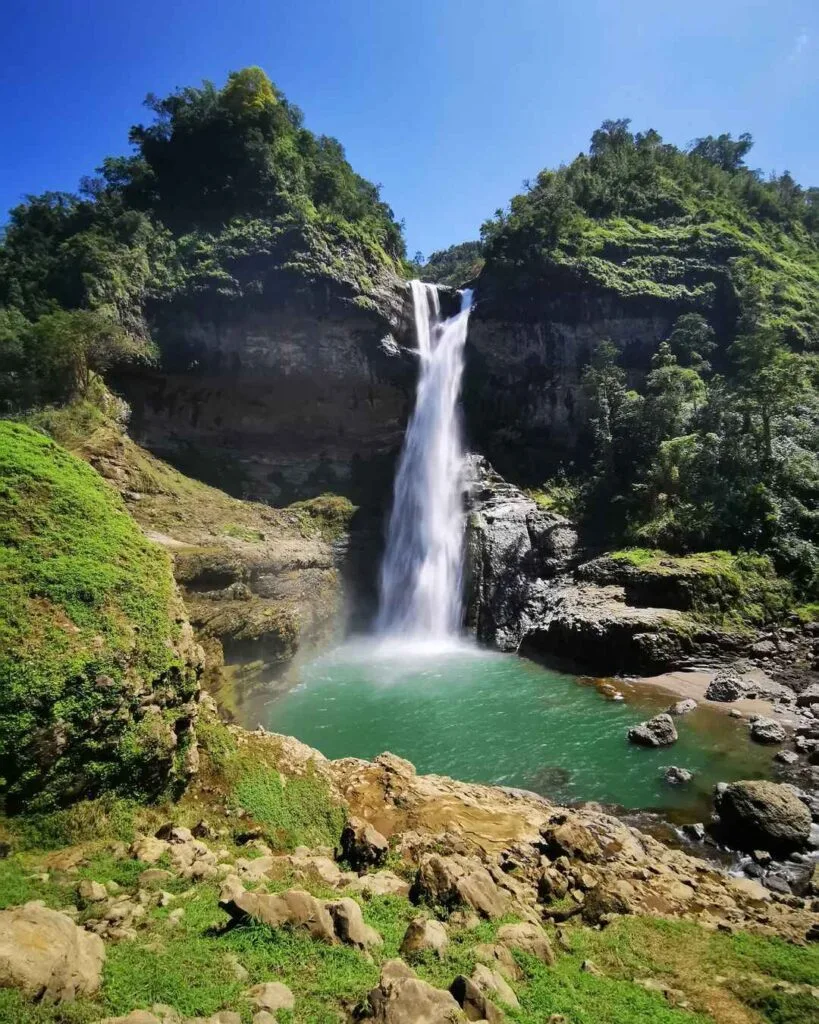
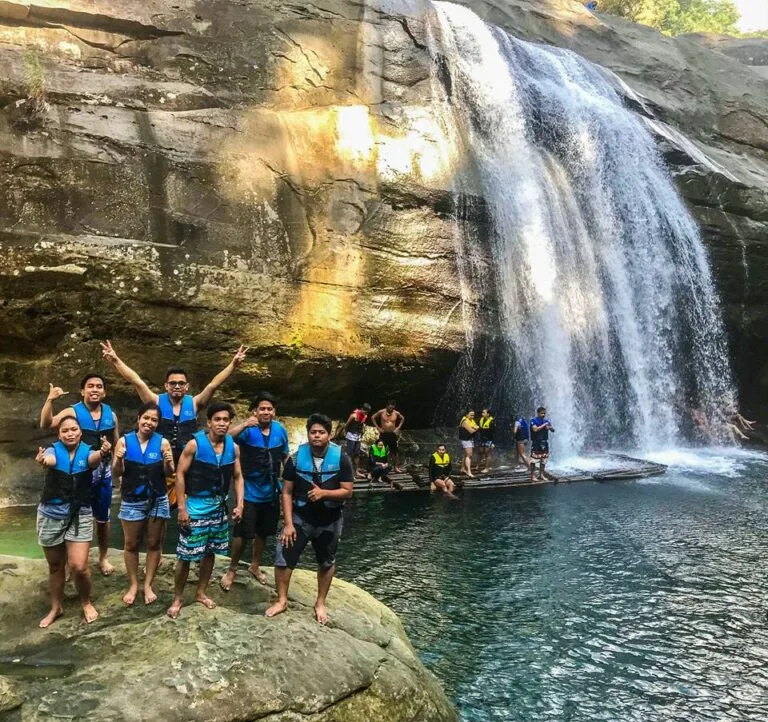
The lower cascade is the main event — a 40-foot-wide, nearly 100-foot-wide curtain of water dropping into a plunge pool that reaches up to 35 feet deep.
The lower cascade towers at around 50 feet with a width of about 100 feet, and has a deep natural catch basin perfect for a quick dip. The upper level has a smaller drop but a bigger and deeper pool ideal for cliff jumping.
Swimming is allowed and popular, but the depth and the current directly beneath the falling water demand respect. Life vests are available for rent at ₱50 per unit. The water is cold freshwater from mountain aquifers — noticeably colder than the river at lower elevations — and the buoyancy you feel in the sea does not apply here.
Cliff Diving at Tangadan Falls
Most tourists are content with jumping from one of the 20-foot rock formations, but experienced adventurers can tackle the highest point — at 50 feet. Jumping platforms exist at roughly 10 feet, 15–20 feet, 30 feet, and the full 40–50-foot apex. There are multiple cliff diving spots at the base of the falls; those doing the longer trail also have the opportunity to do a 6m and 10m jump from cliffs on the hike back.
I jumped from the 20-foot platform in April 2026. The drop felt much longer on the way down than it looked from the edge. The cold hit instantly at entry, and the current near the base of the falls is real — you swim laterally toward the shallows, not straight across. It took about four seconds to find my footing, and that was enough to understand why the guide stays close.
Bamboo Raft (Balsa)
Locally operated bamboo rafts were historically used to ferry visitors directly under the cascade and into a shallow cave behind the waterfall. The balsa fleet is operationally fragile — previous typhoons have washed out the infrastructure entirely. Check the current status directly with the LGU at registration. When available, the raft costs around ₱250 per raft (roughly ₱83 per person for a group of three).
Best Time to Visit Tangadan Falls
The best time to see Tangadan Falls is during the rainy season, June to November, two or three days after rainfall — the cascade runs at full power and the trail has shed the worst of the mud. During the dry season (December to May), the water flow reduces significantly, and some visitors find the falls underwhelming in peak summer.
That said, the rainy season brings its own serious hazard. The Baroro River’s V-shaped Cordilleran watershed means water levels can rise to dangerous heights within minutes if it rains heavily upstream — even if the sky above you is clear. The San Gabriel LGU enforces mandatory closures during active heavy rainfall and typhoon warnings. If dark clouds appear while you are at the basin, your guide will move you out immediately. Do not argue.
The site is open from 6:00 AM to 5:00 PM, but the LGU cuts off entry to the falls at 3:00 PM. Arriving at the municipal hall by 6:00 AM is the single best logistical decision you can make — you beat the crowd, complete the ascent before midday heat, and finish the return climb before your legs give out.
Weekday visits are substantially less crowded than weekends. If you are doing a Tangadan Falls day trip from San Juan La Union on a Saturday in peak season, expect company at the basin.
Budget Breakdown for Visiting Tangadan Falls
A DIY trip from San Juan for a group of three, using jeepney and habal-habal, costs roughly ₱700–₱900 per person all-in.
| Expense | Cost (PHP) |
|---|---|
| Bus: Manila → San Juan / San Fernando | ₱505–₱800 per person |
| Jeepney: San Juan → San Gabriel | ₱15–₱25 per person |
| Tricycle (special trip): San Juan → San Gabriel | ₱500–₱800 per vehicle |
| Habal-habal: Municipal Hall → Trailhead (roundtrip, solo) | ₱400 per motorcycle |
| Habal-habal: Municipal Hall → Trailhead (roundtrip, 2 pax) | ₱600 per motorcycle |
| Monster Jeepney (shared): Municipal Hall → Trailhead | ₱120–₱150 per person |
| Monster Jeepney (exclusive, up to 15 pax): roundtrip | ₱1,800 per vehicle |
| Environmental / Entrance Fee (LGU-set) | ₱30 per person |
| Mandatory Guide Fee (1–7 pax) | ₱500–₱700 per group |
| Additional guide fee per extra person (8+ pax) | ₱100 per head |
| Life Vest Rental | ₱50–₱60 per unit |
| Parking (motorcycle / car) | ₱20 / ₱50 |
| Shower Facility | ₱10 per person |
| Bamboo Raft (if available) | ₱250 per raft |
To pair Tangadan Falls with an afternoon Northern Tour covering Immuki Island and the stone formations in Luna, a combined Tangadan Falls and Northern Tour including Immuki Island and Luna attractions runs ₱1,800–₱2,000 for a dedicated vehicle hire, excluding individual site entrance fees. Our guide to Immuki Island in La Union covers what to expect at that stop. This entire province has a rich network of La Union tourist spots worth tying together on a multi-day itinerary.
One hard rule on cash: San Gabriel’s mountain barangays run on a strictly cash-based economy. There are no ATMs and no digital payment terminals at or near the trailhead. Withdraw enough small-denomination pesos in San Juan or San Fernando before you leave.
What to Pack for Tangadan Falls
| Item | Essential? |
|---|---|
| Water shoes or high-grip trekking sandals | Yes — required for river trek and basin |
| Dry bag (for phone, keys, receipts) | Yes — river spray is constant |
| Waterproof phone case or GoPro | Yes — standard phones will get wet |
| At least 1 liter of water per person | Yes — vendors exist but charge premium prices |
| High-energy snacks (pre-packed) | Yes — grilling and cooking are prohibited at the site |
| Sunblock and rash guard / SPF clothing | Yes — exposed sections of the habal-habal ride and basin |
| Quick-dry clothes and a change of outfit | Yes |
| Small bills in cash (₱20s, ₱50s, ₱100s) | Yes — for fees, tips, and vendors |
| Trekking pole or walking stick | Optional — helpful for the return climb |
| Life vest (rentable on-site for ₱50) | Strongly advised for non-swimmers |
| Insect repellent | Recommended for river trek |
Leave food in sealed containers; the LGU strictly enforces a carry-in, carry-out policy. All waste must come back up with you to the disposal bins at the parking area.
Safety Tips for Visiting Tangadan Falls
Tangadan Falls is genuinely safe when you follow the rules — and genuinely dangerous when you don’t.
Water safety — concrete specifics:
The plunge pool beneath the lower cascade drops to up to 35 feet. The water is cold, freshwater, and offers no saltwater buoyancy. The force of the falling water generates a hydraulic undertow directly beneath the cascade — this current can push a swimmer sideways faster than expected. During the rainy season, the river current is strong, and the pool can be 20 to 30 feet deep. Non-swimmers must stay on the shallow peripheral shelves of the basin. When swimming, wearing a life vest is essential to stay afloat and prevent drowning. Life vests can be rented from local vendors near the falls.
Cliff diving — do not skip the guide briefing:
In 2017, a visitor from San Fernando City drowned while cliff diving at the falls. His companions said he jumped from a cliff diving spot, and upon landing in the deep water, he was swept away by the strong current. His relatives tried to help but could not. Rescuers from San Gabriel and San Juan spent a full day searching and found his body late that afternoon. That incident reshaped the LGU’s entire safety framework.
All cliff jumps now require explicit authorization from your assigned guide, who will point out the safe landing zones and warn you about submerged rocks before you jump. Listen to that briefing. The 20-foot platform was where I jumped, and my guide told me exactly where to land and which direction to swim. That information mattered.
Flash flood risk — leave immediately when rain starts:
The Baroro River canyon’s steep, narrow topography funnels water down from high Cordilleran elevations. If it rains heavily in the mountains above — even if conditions look fine at the basin — river levels can rise to life-threatening depths within a matter of minutes. Your guide will tell you to move the moment the rain begins. Do not wait.
Slippery rocks and the return climb:
The trail is challenging; the stairs are not proportionate and are steep. The limestone around the basin is wet and slick at all times. Move slowly between pools, test each footing before shifting your weight, and wear shoes — not sandals — for the descent. On the return climb, take breaks. Dehydration and leg fatigue on the steep stairs are the most common causes of minor injuries.
Elderly and mobility-limited visitors:
The short trail is physically achievable for most healthy adults, including older visitors, but the return climb is demanding on the knees and cardiovascular system. Some children and elderly do the trek, but the river crossing on the long trail is slippery and not recommended for them. Stick to the short staircase route and pace yourself.
What I’d Do Differently Next Time
I went in April 2026 with a group of three, arriving at San Gabriel Municipal Hall at 6:15 AM. We were processed and on a habal-habal by 6:20 AM, at the basin by 7:00 AM, and back at the municipal hall by 9:00 AM. The timing was close to perfect.
What I’d change: I’d bring a proper trekking pole for the return climb. By the time we reached the top of the staircase, my quads were fully done — not painful, just drained. I’d also bring better water shoes with ankle support rather than the flat-soled water sandals I had, because some rocks near the upper pool were sharper than expected.
Finally, I’d verify bamboo raft availability with the LGU before the trip, not on arrival. We got there and found the balsa wasn’t operating that day. It would have been nice to know in advance. Call the tourism office at +63 916 479 6253 the day before you visit.
One observation specific to my April visit: the dry season does reduce the waterfall considerably. The main lower cascade was still dramatic and the pool was fully swimmable, but photos I’ve seen from rainy season visits show a visibly wider and more forceful curtain of water. If the main draw for you is the sheer volume of the falls, plan for June–November, two days after a good rain.
Frequently Asked Questions About Tangadan Falls
Is a tour guide required to visit Tangadan Falls?
Yes — a tour guide is legally mandatory. The “No Tour Guide, No Entry” policy is firmly in place. The guide fee is ₱700 per group, covering 1–7 people. All visitors must register with the San Gabriel LGU and be assigned a DOT-accredited local guide before proceeding to the falls. The guides know the terrain, the safe jumping zones, and the flash flood warning signs — their role is safety-critical, not ceremonial. Do not try to enter via the river trail unguided; LGU checkpoints along the mountain road will send you back.
How long is the hike to Tangadan Falls from the jump-off point?
The trek from the trailhead to Tangadan Falls takes about 15 to 30 minutes depending on your pace, following the short downstream staircase route. Once at the trailhead, a 10–20 minute hike reaches the falls, though the return ascent — involving roughly 350–450 steps — is strenuous. The longer upstream river trek takes 60–75 minutes one way, involves multiple Baroro River crossings, and requires water shoes with ankle support. Most first-time visitors take the short staircase route.
Can you swim and cliff dive at Tangadan Falls?
Yes to both, with clear conditions. The lower cascade drops roughly 50 feet into a natural catch basin with enough depth for deep-water swimming. Most visitors jump from 20-foot rock platforms, while experienced adventurers tackle the 50-foot apex. Swimming is permitted throughout the plunge pool, but the LGU strongly advises renting a life vest (₱50–₱60) for anyone who isn’t a strong swimmer. All cliff jumps must be cleared with your guide first — they will identify safe landing zones and warn you about the undertow beneath the falling water.
How do you get to Tangadan Falls from Manila?
From Manila, take a provincial bus (Partas, Viron, Dominion, or Fariñas) from Cubao or Pasay bound for La Union. The fare runs roughly ₱400–₱505 and travel time is about 5–7 hours. Get off at People’s Park in San Juan, then transfer to a jeepney to San Gabriel for about ₱15–₱25 and a 20-minute ride. At San Gabriel Municipal Hall, register, hire a guide, then ride a habal-habal (₱400–₱600 roundtrip) for the 20–30 minute ascent to the trailhead. Total travel time from Manila to the falls is approximately 7–9 hours.
What is the entrance fee at Tangadan Falls in San Gabriel, La Union?
The LGU sets the entrance fee at ₱30 per person, paid at the Municipal Treasury Office in San Gabriel. This is separate from the mandatory guide fee of ₱500–₱700 per group. The “No Receipt, No Entry” rule is firmly in effect, and you may be asked to present your official receipt at the site. Additional costs include the habal-habal ride (₱400–₱600 roundtrip) and optional life vest rental (₱50–₱60). Budget ₱700–₱900 per person for a complete DIY day trip from San Juan covering all transport, fees, and safety rentals.
Final Verdict: Is Tangadan Falls Worth Visiting?
Tangadan Falls earns a 5 out of 5 for adventure-seeking day-trippers from the La Union coast — the combination of a real mountain ride, a physically satisfying trek, cold river swimming, and cliff jumping at multiple heights delivers an experience the beach strip cannot replicate. If you are already in San Juan for surfing, skipping Tangadan Falls is genuinely leaving the best inland experience in the province on the table. For first-time visitors to the Philippines who want a managed but authentic freshwater adventure with direct community benefit, this is one of the most well-run waterfall destinations in Northern Luzon.
For our full breakdown of what to do beyond the falls, visit our San Juan La Union travel guide and our La Union beach guide to plan the rest of your trip.