TL;DR (Too Long; Didn’t Read)
| Category | Quick Snapshot |
| Destination | Dinadiawan Aurora, located in Dipaculao, North of Baler. |
| Best Feature | Pristine white sand beach (creamy/golden hue) and a relaxed, uncrowded vibe compared to Baler. |
| Travel Time | Approx. 6–8 hours from Manila via private car or bus. |
| Transport | Bus (Genesis/JoyBus) to Baler, then Van/Trike to Dipaculao. Private cars take NLEX > SCTEX > CLLEX. |
| Top Activities | Beach bumming, swimming, chasing waterfalls (Baul Falls), and glamping. |
| Crucial Tip | Bring Cash. ATMs are scarce and mostly located in Baler town proper (1 hour away). |
Introduction: The Hidden White Sand of the North
If you have ever been to Baler, you know the drill: energetic surfer vibes, gray volcanic sand, and a crowd that never seems to sleep. But what if I told you that just an hour north of that surfing capital lies a stretch of coast that feels like an entirely different world? Welcome to Dinadiawan Aurora, a paradise defined by its creamy white sand and tranquility that is becoming harder to find in Luzon.
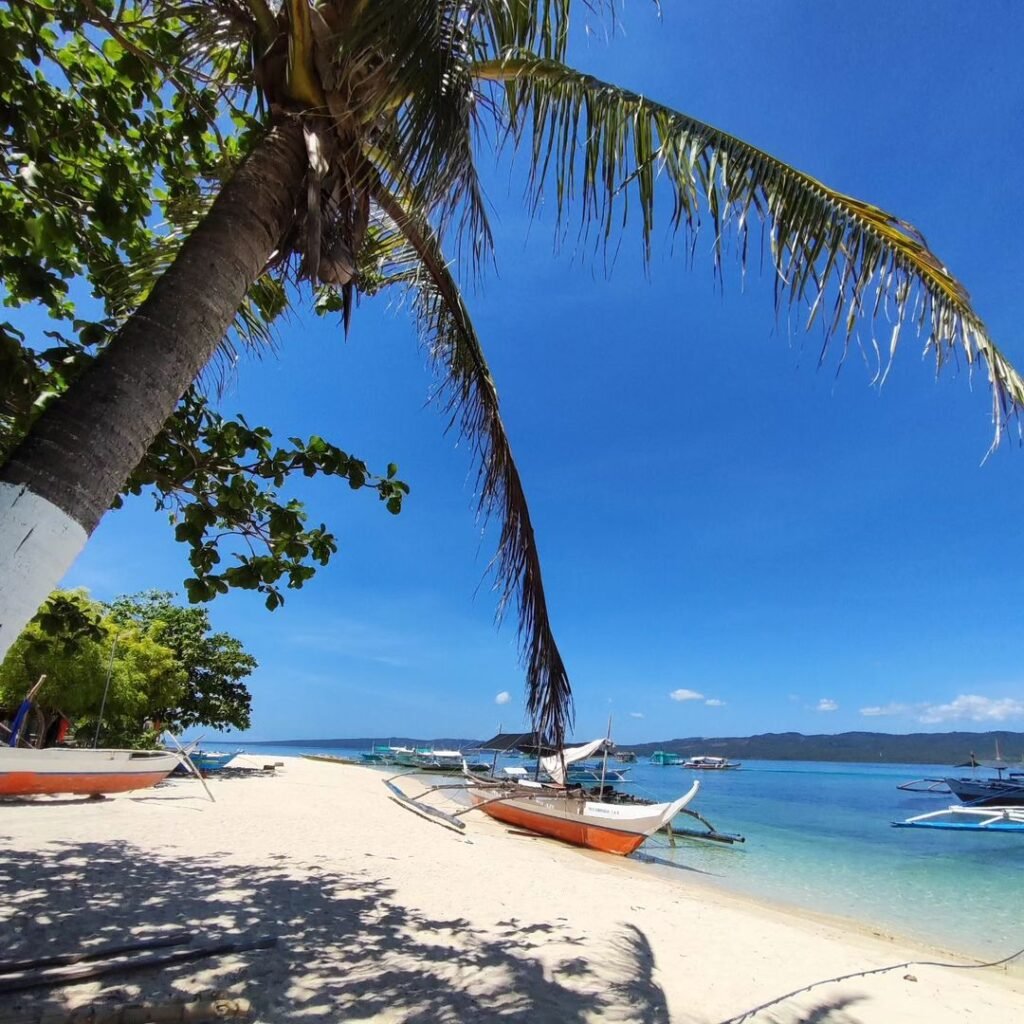
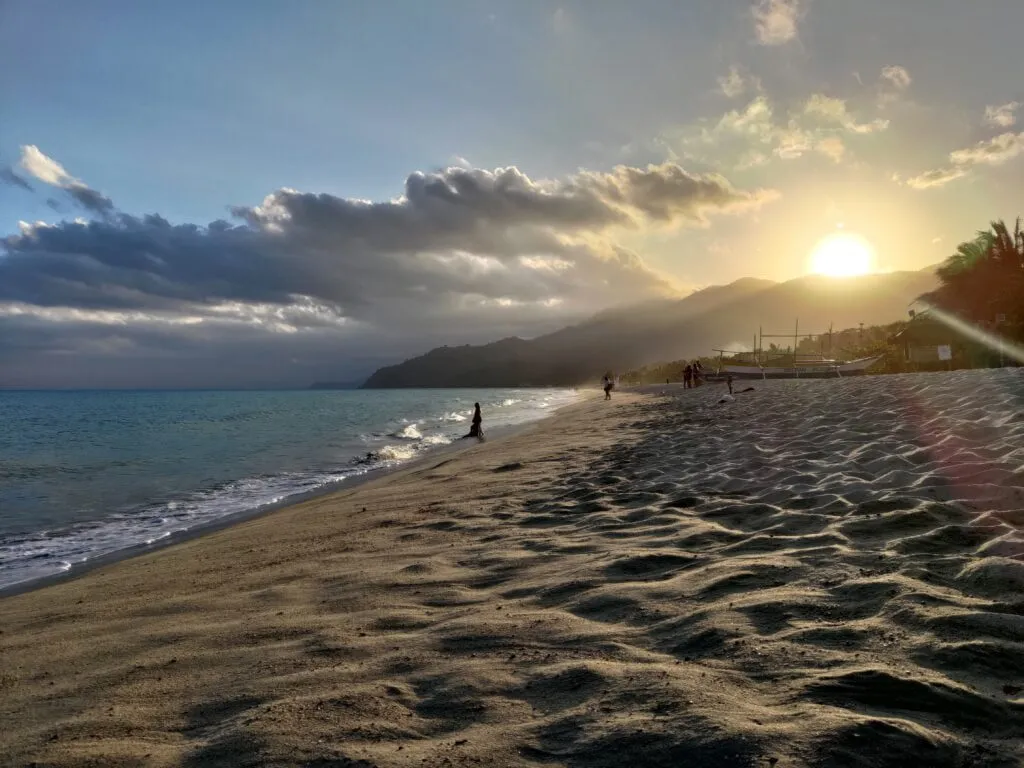
I remember my first trip to the Dinadiawan Aurora location. We were chasing the sunrise along the winding roads of the Sierra Madre, and as we descended into the municipality of Dipaculao, the aggressive waves of the Pacific tamed down into a shimmering, inviting blue. Unlike the dark sands of Sabang Beach, Dinadiawan offers a long stretch of whitish-golden shorelines backed by lush coconut trees and the imposing mountains.
This area is situated in Dipaculao, Aurora province, sandwiched between the majestic Sierra Madre mountain range and the vast Pacific Ocean. It is rapidly becoming a top destination not because of high-end commercialism, but because of its raw beauty. It is the kind of place where you go to disconnect. The signal is intermittent, the electricity can be moody, but the peace you get in return is absolute.
Lakbaypinas Tip: take a moment to appreciate the backdrop. You are standing at the foot of the Sierra Madre, the Philippines’ longest mountain range and our natural barrier against typhoons. This area is a protected landscape crucial to Luzon’s biodiversity. When you visit, tread lightly. The beauty of Dinadiawan relies heavily on this delicate balance between the mountains and the sea.
Table of Contents
How to Get to Dinadiawan Aurora from Manila
Getting to this slice of paradise requires a bit of patience, but I assure you, the journey is part of the adventure. The roads leading to Aurora are some of the most scenic in the country. Whether you are driving or commuting, here is a detailed breakdown of how to get to Dinadiawan Aurora from Manila.
Option 1: Commute (Bus)
For DIY travelers, the most reliable way is through the Genesis Transport Service. You have two main choices: the regular air-conditioned bus or the JoyBus (Deluxe).
Manila to Baler: Head to the Genesis Cubao terminal. I highly recommend booking the JoyBus in advance. It has a restroom on board, blankets, and no stopovers, cutting your travel time to about 5–6 hours. The regular bus takes longer (6–7 hours) due to stops in Cabanatuan and Pantabangan.
Baler to Dinadiawan: Once you arrive at the Baler Central Terminal, you are not there yet. You need to take a van or a tricycle to Dinadiawan. Vans bound for Casiguran usually pass by Dinadiawan. Alternatively, you can hire a tricycle for a “special trip,” though this will cost more. The ride takes about 45 minutes to 1.5 hours.
Option 2: Private Vehicle
If you have a private car, you have full control over your pace. This is my preferred method because the drive through the mountains is spectacular.
Take NLEX (North Luzon Expressway) and exit at SCTEX (Subic-Clark-Tarlac Expressway).
Connect to CLLEX (Central Luzon Link Expressway) to bypass traffic in Cabanatuan.
Head towards Palayan City and Bongabon.
From Bongabon, Nueva Ecija, you will traverse the winding mountain roads leading to Aurora.
Once you reach the Baler roundabout, follow the signs pointing to Dipaculao/Casiguran.
The travel time via private car is roughly 6 to 8 hours, depending on how many stopovers you make and your driving speed through the zigzag roads.
Transport Comparison Table
| Mode of Transport | Route | Estimated Cost (PHP) | Travel Time |
| Bus (Regular) | Cubao to Baler | 600 – 750 | 6-7 Hours |
| JoyBus (Deluxe) | Cubao to Baler | 800 – 1,100 | 5-6 Hours |
| Van/Trike | Baler to Dinadiawan | 200 – 500 | 1-1.5 Hours |
| Private Car | Manila via Bongabon | Gas + Tolls (approx. 3k-4k) | 6-8 Hours |
Lakbaypinas Tip:
If you are driving via the Bongabon-Baler road, you will encounter the iconic zigzag roads. Make a quick stop at the “Balete Tree” or the mountain viewpoints for a photo op. More importantly, drive safely. The local driving culture here involves honking your horn on blind curves to alert oncoming traffic. It is not rude; it is a safety necessity. Roll down your windows, turn off the AC, and let the cool mountain air in!
Best Time to Visit Dinadiawan Aurora
Choosing the best time to visit Dinadiawan Aurora can make or break your experience. Since the province faces the Pacific Ocean, the weather patterns here can be distinct from the rest of Luzon.
The Summer Season (March to June)
This is undeniably the peak season. During these months, the weather in Aurora is hot and sunny, making the cool waters of the Pacific incredibly refreshing. The ocean is generally calmer, allowing for safe swimming for children and relaxed kayaking. The water clarity is at its best, shimmering in turquoise and deep blues.
The Dry Season (November to February)
This is the Amihan (Northeast Monsoon) season. While it is technically dry, the winds are stronger, creating bigger waves. If you enjoy cooler breezes and don’t mind a bit of chop in the water, this is a great time to visit. It is perfect for camping on the beach without sweating profusely.
The Wet Season (July to October)
I would advise caution during these months. This region is a typhoon path. The mountain roads can be prone to landslides during heavy rains, and the waves can become dangerous. Always check the weather forecast before planning a trip in the second half of the year.
Lakbaypinas Tip: Aurora faces East, which means the sunrises here are legendary. I challenge you to wake up at 5:00 AM. Witnessing the “Sikat ng Araw” (Sunrise) rising directly from the horizon of the Pacific Ocean is a spiritual experience for many Filipino travelers. The way the light hits the white sand, turning it gold for a few minutes, is the best souvenir you can take home.
Where to Stay: Beach Resorts in Dinadiawan Aurora
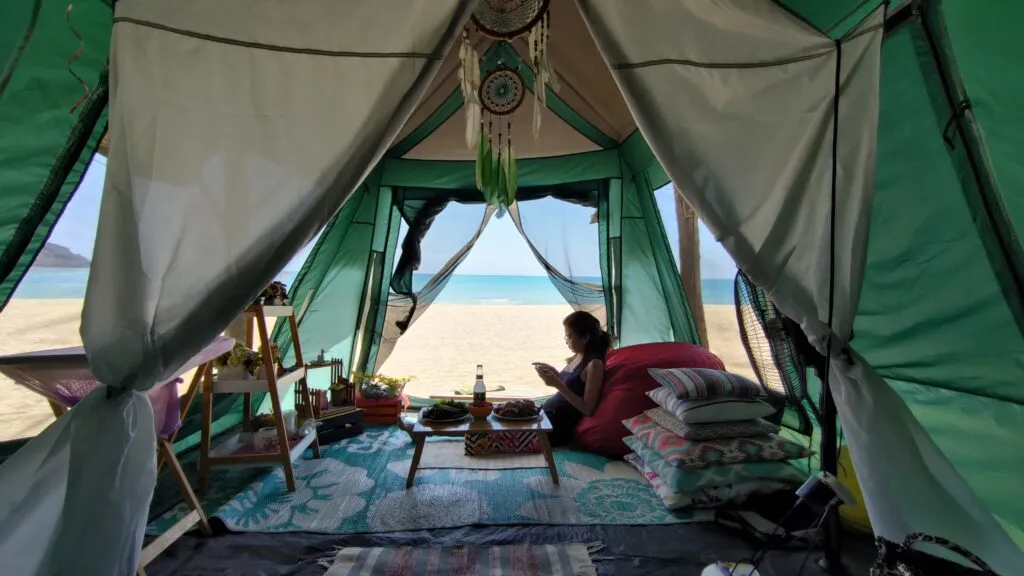
Accommodation here ranges from rustic to comfortable. You won’t find 5-star luxury hotels, but you will find charm. When looking for a beach resort in Dinadiawan Aurora, consider if you want air-conditioning or if you prefer the “glamping” experience. Here is a breakdown of where to stay in Dinadiawan Aurora.
Resort Categories
Budget (Camping/Tent Pitching): almost every resort allows this. It is the cheapest way to stay. You pay a pitching fee and use common bathrooms.
Mid-range (Air-conditioned Cottages): Simple rooms with AC and private baths. These sell out fast during weekends.
Group/Family Villas: Larger structures suitable for “barkadas” or extended families, often including kitchen use.
Top Resort Picks
Sand and Stars: This is perhaps the most “Instagrammable” spot. They specialize in glamping tents and aesthetically pleasing A-frame cottages. It is perfect for couples or small groups who want comfort while staying close to nature.
La Sunshine Beach Resort: A staple in the area. They offer spacious beachfront cottages and have a wide shoreline. It is great for big families who need space to run around.
Isla de Paraiso: If you need a pool as a backup to the ocean, this is a good choice. They offer private villas and a more manicured resort feel.
Comparative Resort List
| Resort Name | Budget Level | Best Feature |
| Sand and Stars | Mid-Range | Glamping & Aesthetics |
| La Sunshine | Budget-Friendly | Spacious Beachfront |
| Isla de Paraiso | Family/Group | Pool & Private Villas |
Lakbaypinas Tip:
When booking, specifically ask for a “Kubo” (Nipa Hut) style accommodation if you want the authentic feel. These native structures are designed with bamboo slats and Nipa leaves that allow natural ventilation. Even without air conditioning, a well-made Kubo keeps you cool at night—a true Filipino rural experience that connects you to the heritage of the province.
Top Things to Do and Nearby Attractions
While the main agenda is to do nothing, there are active pursuits if you get restless. Here are the top activities and attractions centered around Dinadiawan Aurora Beach.
Swimming and Beach Bumming
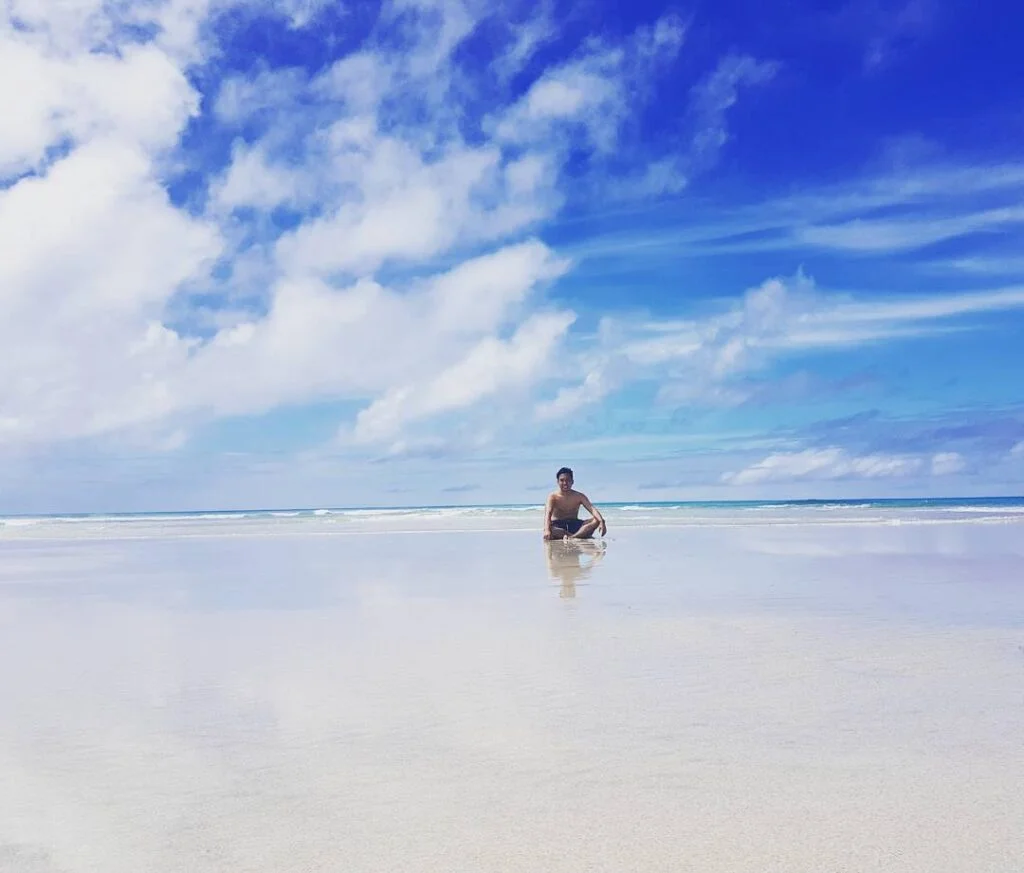
The sand here is not powdery white like Boracay; it is a coarser, creamy grain that doesn’t stick to your skin as stubbornly. The water gets deep relatively quickly compared to flat beaches, so always supervise children.
Drone Photography
If you are a content creator, bring your drone. The highway runs parallel to the beach, separated by a line of coconut trees. The aerial view of the green mountains, the gray road, the green trees, the white sand, and the blue ocean is a color palette you won’t find elsewhere.
Side Trip: Baul Falls
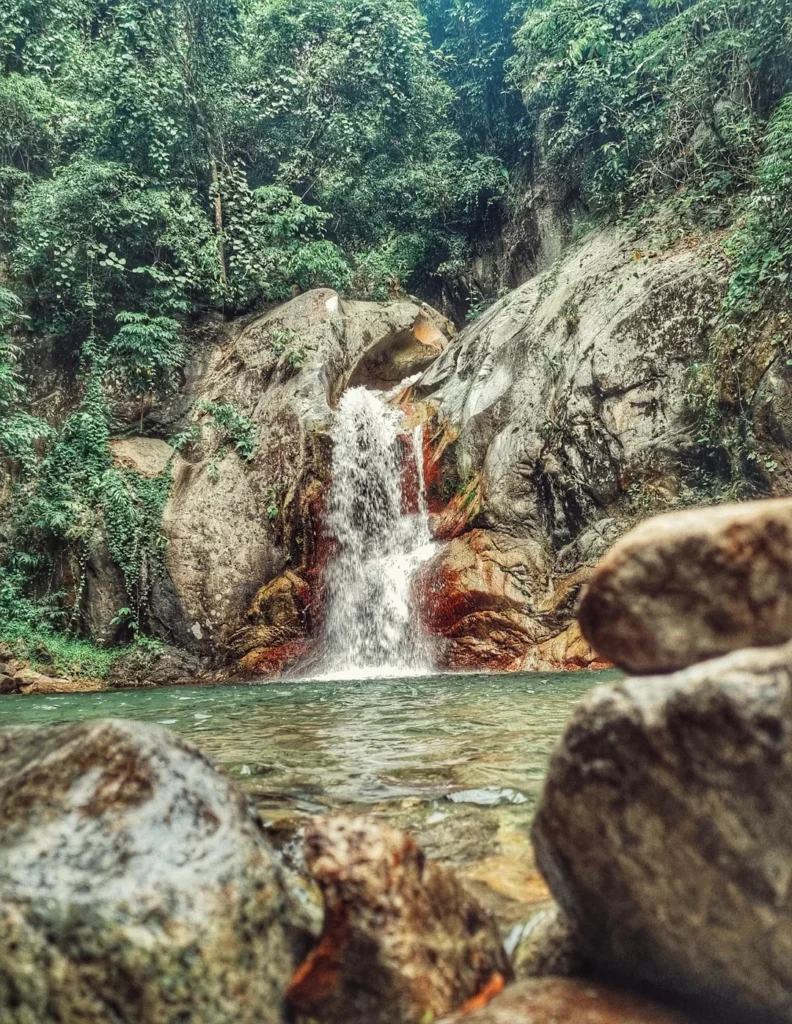
Located just a short tricycle ride or drive away is Baul Falls. It is not a massive waterfall, but the trek is manageable and the basin is refreshing. It is a great way to rinse off the saltwater.
Side Trip: Ampere Beach
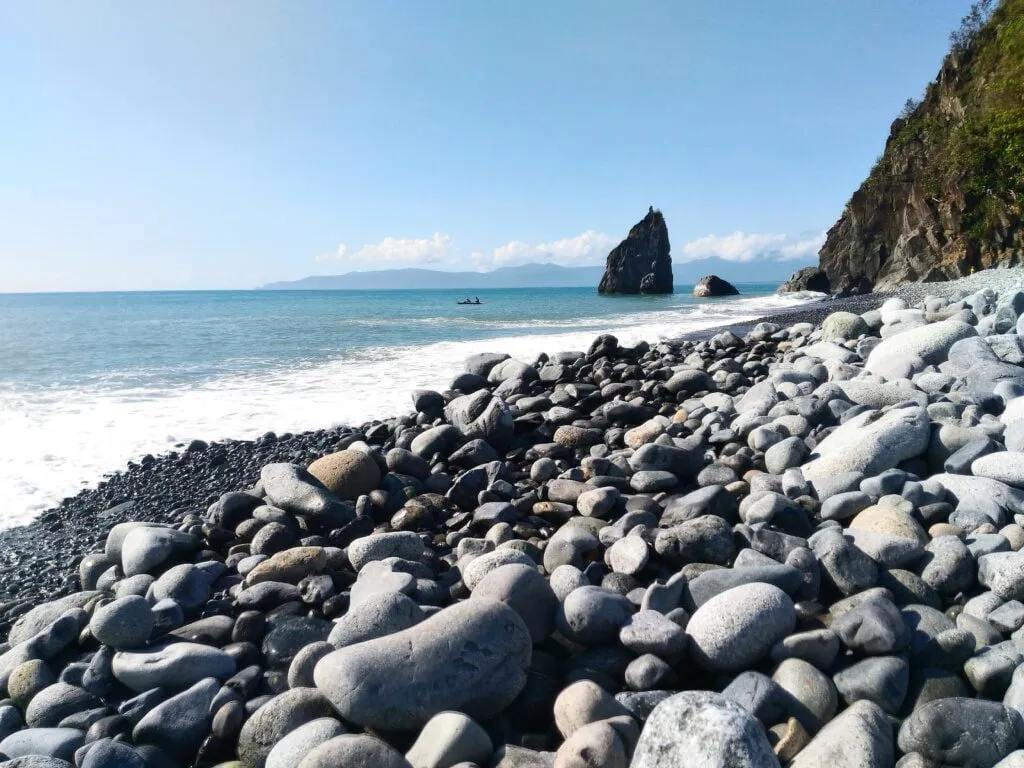
On your way to or from Dinadiawan, stop at Ampere Beach in Dipaculao. You cannot swim here due to strong currents, but the beach is famous for its smooth rocks and pebbles. It is a visual spectacle, especially at sunrise when the waves crash against the rock formations.
Lakbaypinas Tip: Engage in a “Boodle Fight” dining experience. Many resorts allow you to buy fresh seafood from local fishermen (“Mangingisda”) who dock their boats early in the morning. You can buy Blue Marlin, Tuna, or Squid at farm-gate prices. Grill it yourself or ask the resort staff to cook it for a fee. Eating with your hands (Kamayan) by the beach with fresh catch is the ultimate bonding experience.

Dinadiawan Aurora DIY Itinerary & Budget
Planning a Dinadiawan Aurora DIY trip? Here is a sample schedule to maximize your weekend without rushing.
2 Days 1 Night (2D1N) Sample Itinerary
Day 1
02:00 AM – Depart Manila.
06:00 AM – Breakfast in Cabanatuan or Bongabon.
09:00 AM – Stop at Baler Market for supplies (Meat, Charcoal, Water).
10:30 AM – Arrival in Dinadiawan. Check-in/Pitch Tent.
12:00 PM – Lunch (Boodle Fight).
03:00 PM – Swimming and Photo ops.
07:00 PM – Dinner and Bonfire sessions.
Day 2
05:00 AM – Wake up for Sunrise. Coffee by the shore.
07:00 AM – Breakfast.
09:00 AM – Side trip to Baul Falls.
11:00 AM – Wash up and Check-out.
12:00 PM – Lunch in Baler (try the local buffets).
01:00 PM – Pasalubong shopping.
02:00 PM – Drive back to Manila.
Estimated Travel Budget (Per Person)
For a Group of 4 (DIY via Car):
Gas & Tolls: PHP 1,000 (shared)
Accommodation: PHP 800
Food/Supplies: PHP 1,000
Fees/Misc: PHP 500
Total: ~PHP 3,300
Solo Traveler (Commute):
Bus Fares (Roundtrip): PHP 1,500
Van/Trike transfers: PHP 500
Accommodation (Tent): PHP 400
Food: PHP 1,000
Total: ~PHP 3,400
Lakbaypinas Tip: Support the local economy by buying “Pasalubong” (souvenirs) from roadside stalls in Dipaculao rather than big commercial stops. Look for local Suman (rice cake) usually wrapped in banana leaves or fresh Banana Chips. These are often made by the families living right behind the stalls, so your money goes directly to the locals.

Essential Travel Tips for Tourists
To ensure a smooth trip, keep these practical travel tips in mind. This Dinadiawan Aurora travel guide wouldn’t be complete without managing your expectations.
Cash is King
I cannot stress this enough: ATM availability is practically non-existent in Dinadiawan. The nearest reliable ATMs are in Baler town proper. Bring more cash than you think you need for accommodation, food, and emergency transport.
Connectivity and Signal
If you need to work remotely, this might be a challenge. Smart and Globe networks have signal, but 4G/LTE is spotty. In some resort areas, you might get decent data, but in others, you will be on Edge. Treat this as a digital detox.
Bring Your Own Supplies
While there are sari-sari stores, they have limited inventory. If you are staying in a budget resort, bring your own drinking water, toiletries, and charcoal. Not all resorts have functioning restaurants.
Lakbaypinas Tip: Practice “CLAYGO” (Clean As You Go). Aurora locals are very protective of their clean shores. Unlike more commercialized beaches, you won’t see an army of cleaners here. Be a responsible tourist—a “Disiplinadong Turista”—and pack your trash out with you. Let’s ensure these white sands remain pristine for the next generation.
Frequently Asked Questions (FAQs)
Is there a signal in Dinadiawan Aurora?
Yes, there is signal coverage for major networks like Globe and Smart, but it is intermittent. Do not expect high-speed internet for video calls. Some spots on the beach have better reception than others.
How many hours is the travel from Manila to Dinadiawan?
Travel time usually takes 6 to 8 hours via private vehicle, depending on your speed through the mountain roads and stopovers. Commuting via bus can take roughly the same time if you catch the direct connections efficiently.
Can we pitch tents in Dinadiawan resorts?
Yes! Most resorts are camping-friendly. They usually charge a “pitching fee” ranging from PHP 200 to PHP 500 per tent. Some resorts also rent out tents if you didn’t bring one.
Is Dinadiawan pet-friendly?
Generally, yes. Most beach resorts in Dinadiawan are open to pets, especially since many accommodations are open-air cottages or camping styles. However, always message the resort beforehand to confirm their specific pet policy.
Is the road to Dinadiawan steep?
Yes. Crossing the Sierra Madre involves winding and steep roads, particularly the Villa-Maria Aurora route. Ensure your vehicle is in top condition, specifically your brakes and tires, before attempting the drive.
Lakbaypinas Tip: When asking locals for directions or assistance, always address them as “Ate” (Sister) or “Kuya” (Brother). It is a universal sign of respect in Filipino culture and establishes instant rapport. You will find that people are much more willing to help when approached with this familial warmth.
Conclusion
Dinadiawan Aurora is the perfect escape from the chaotic city life. It balances the raw, untamed nature of the Pacific with just enough comfort to make for a relaxing vacation. Whether you are sleeping in a tent under the stars or lounging in an air-conditioned cottage, the sound of the waves here hits differently. It is a reminder that you don’t need to fly to Boracay or Palawan to find beautiful white sand; sometimes, you just need to drive north and cross the mountains.
Ready to experience the white sands of the North? Book your favorite beach resort in Dinadiawan Aurora today and start packing your swimwear! Share this guide with your travel buddies to plan the perfect road trip.
Explore More of Aurora Province: Your Next Adventure
Don’t let your journey end in Dipaculao. The province of Aurora is a massive coastal frontier offering everything from world-class surfing to rugged mountain views. Here are other essential guides to help you plan a multi-stop itinerary:
The Gateway Hub (Baler): Since you have to pass through the capital to reach Dinadiawan, why not spend a night there?
Discover the surf capital’s top attractions with our guide to the Best Baler Tourist Spots & Itinerary.
Specifically interested in the surf scene? Read our dedicated Sabang Beach (Baler) DIY Travel Guide.
Go Further North (Casiguran): If you loved the raw, white sands of Dinadiawan but want even more seclusion, head another hour north to the “hidden” tip of the province.
Read the guide: Casapsapan Beach, Casiguran: DIY Itinerary.
The “Batanes of the East” (Dingalan): Located at the southernmost tip of Aurora, this destination offers dramatic cliffs and rolling hills perfect for day hikes.
Plan your trip: Dingalan Aurora Tourist Spots & Things to Do.