Introduction: The Weeping Mountain
Quick Look: Mt. Kabunian (approx. 1,840 MASL) is the scenic centerpiece of the Bakun Trio in Benguet. Known as the “Home of the Kankana-ey God,” it is a Major Climb characterized by sheer vertical walls, the grueling “Stairway to Heaven” trail, and cultural sanctity. Best hiked during the dry season (November to May), though the wet season reveals its famous waterfalls.
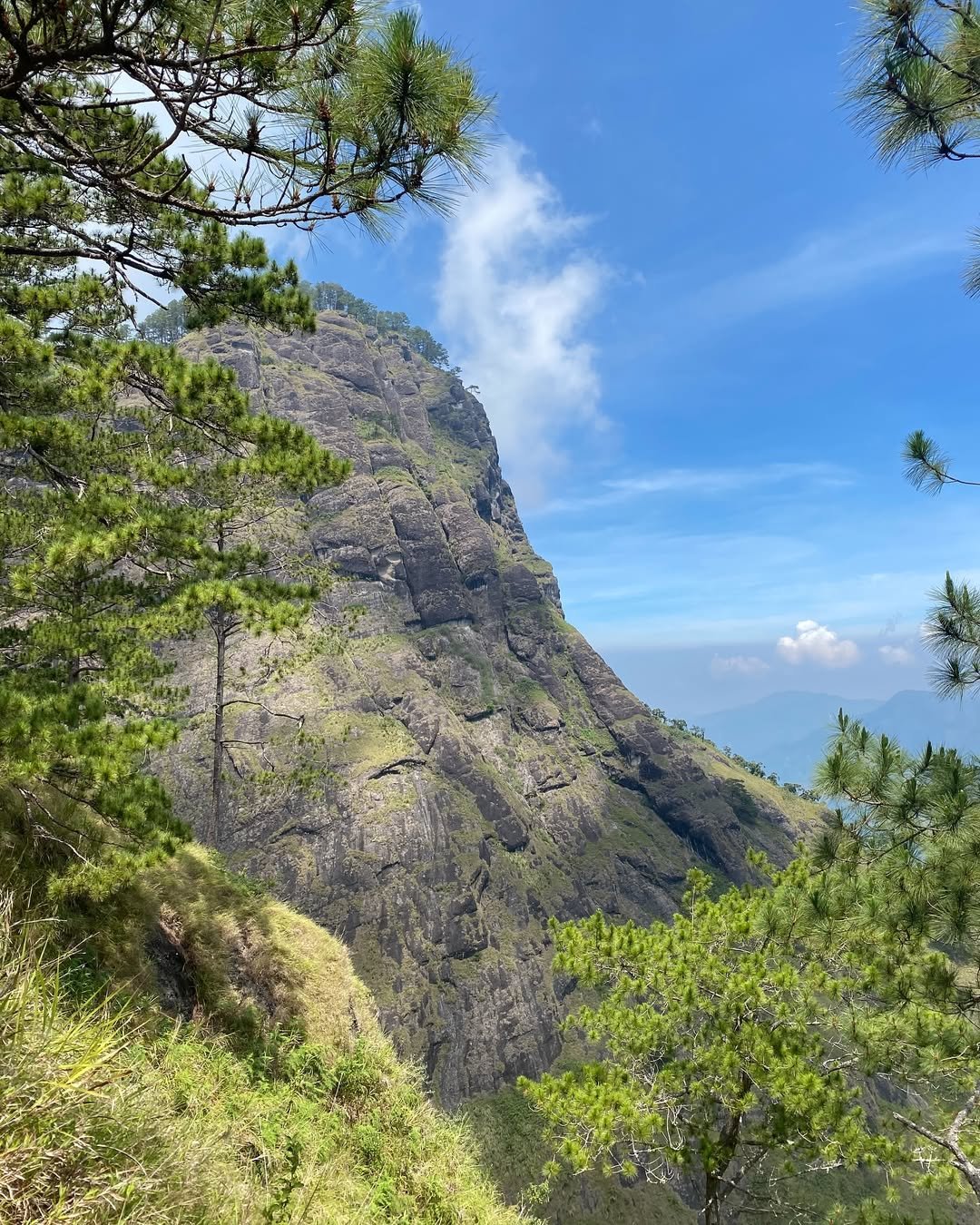
Imagine standing at the foot of a massive granodiorite rock face that seems to scrape the sky. Now, imagine that same rock face “weeping.”
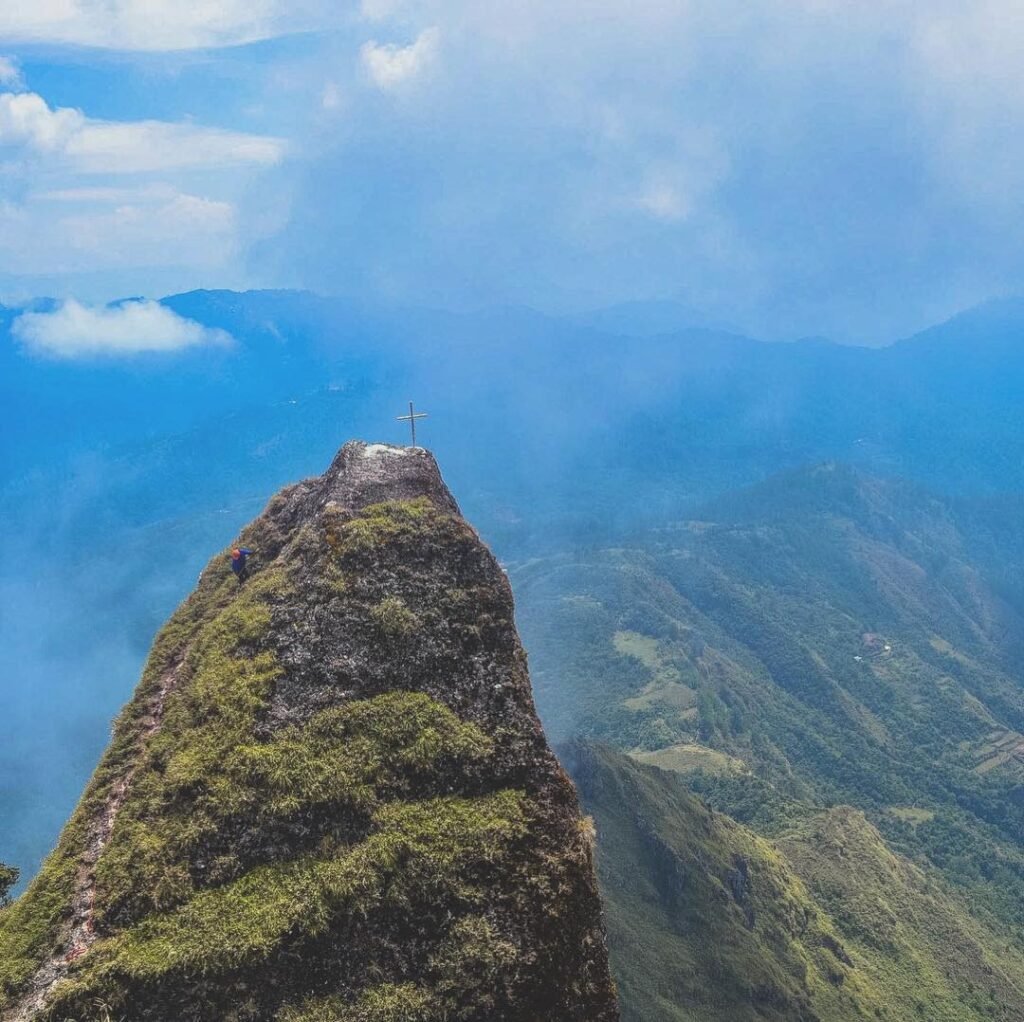
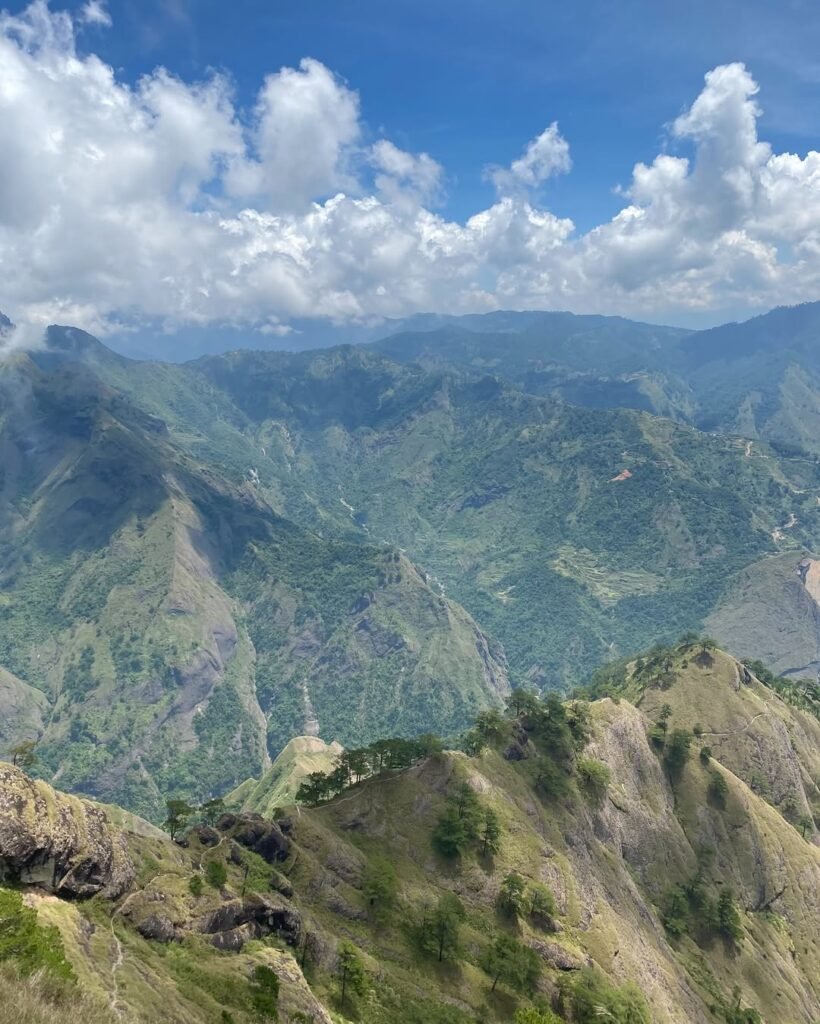
During the wet season (typically June to October), the precipitous cliffs of this mountain channel rainwater into ephemeral waterfalls that cascade hundreds of meters down the sheer rock. This phenomenon has earned it the moniker “The Crying Mountain.” But to the locals of Bakun, Benguet, this peak is far more than a geological spectacle. It is named after Kabunian, the supreme deity of the Cordilleras. It is believed to be his dwelling place, a sacred sanctuary where the god descends to commune with the spirits of the ancestors.
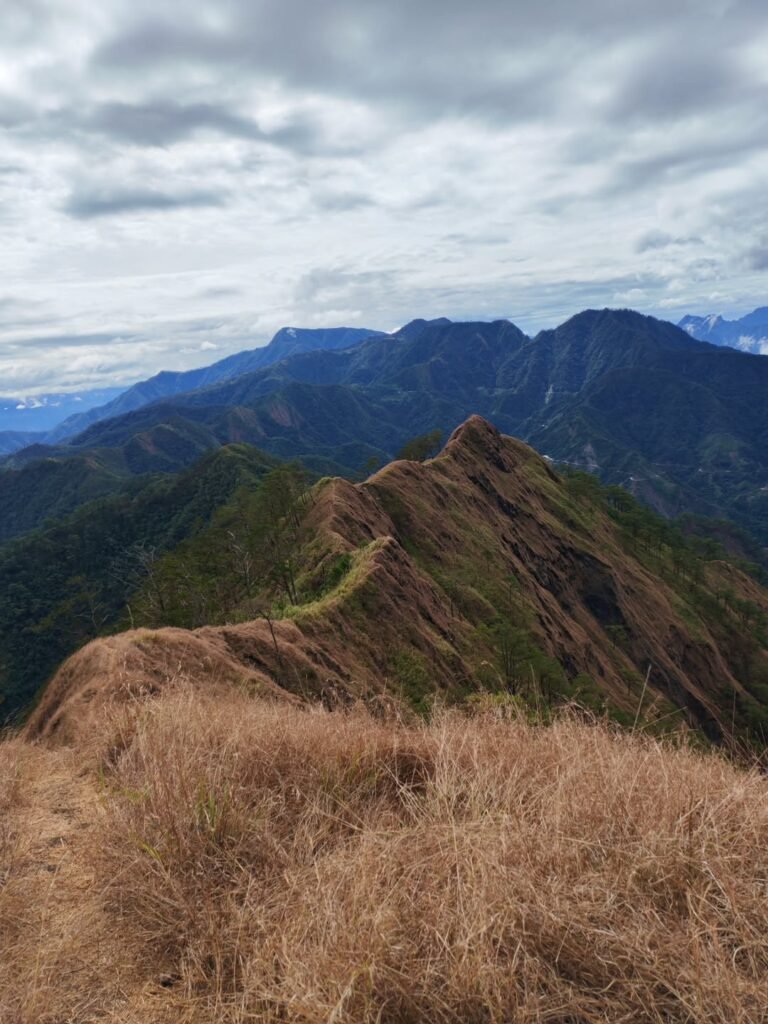
Unlike the rolling, mossy slopes of its neighbor Mt. Pulag, Mt. Kabunian is jagged, rocky, and unapologetically steep. Located roughly 60 to 80 kilometers north of Baguio City, it forms part of the “Bakun Trio”—a challenging series of climbs that includes Mt. Tenglawan and Mt. Lubo.
But be warned: this is not a walk in the park. While the elevation is moderate, the terrain demands respect. You will face the “Stairway to Heaven”—a relentless ascent on concrete steps and carved rock—and traverse exposed ridges that bake under the midday sun.
In this Mt. Kabunian hiking guide, we’ve compiled everything you need to navigate the rocky crags and strict cultural protocols of this Major Climb. From surviving the “reverse hike” (where you descend first and climb back up when you’re tired) to securing your slot with the Bakun Municipal Tourism Council, we have updated all logistics for 2026.
Insider Note: Before you lace up, remember that you are entering a sacred domain. If you look closely at the cliff sides through binoculars, you can still see ancient wooden coffins and burial jars tucked into the crevices—a silent reminder that on Kabunian, we are merely guests.
Quick Specs: Is Mt. Kabunian Hard?
How difficult is the Mt. Kabunian hike? Mt. Kabunian is rated as a 5/9 Major Climb (Advanced) by local standards.1 While the summit sits at a moderate 1,840 MASL, the 10km out-and-back trail is strenuous due to the “Reverse Hike” profile—you descend steeply from the jump-off first, meaning you must climb back up to the trailhead when you are most exhausted. Expect 6 to 9 hours of total trekking time on exposed, rocky terrain.
| Specification | Data / Benchmark |
| Elevation | ~1,789 to 1,840 MASL |
| Location | Poblacion, Bakun, Benguet |
| Difficulty Rating | 5/9 (Major Climb) |
| Trail Class | 1-3 (Established trail with rock scrambling) |
| Days Required | 1 Day (Dayhike) or 3 Days (Bakun Trio) |
| Total Distance | ~10 Kilometers (Back-and-Forth) |
| Hours to Summit | 4 to 6 Hours (Average Pace) |
| Limatik Presence | Minimal (Seasonal/Wet Season only) |
| Summit View | 360° view of Ilocos Sur & West Philippine Sea |
Table of Contents
Pre-Climb Requirements (2026 Protocol)
Do you need a permit for Bakun? Yes. Advance booking is mandatory to secure a local guide and a sleeping slot at the Old Municipal Hall. Walk-ins are frequently turned away if the limited pool of local guides is fully booked. You must contact the Bakun Municipal Tourism Council at least 2 weeks before your trip. For 2026, a Medical Certificate is highly recommended (and often mandatory) for all Major Climbs in Benguet.
Step 1: Booking & Registration
The “Walk-in” culture is dead in Bakun. The municipality operates on a strict carrying capacity based on the number of available local guides. If you arrive at Sitio Poblacion without a confirmed slot and all guides are deployed to Mt. Tenglawan or Mt. Lubo, you will not be allowed to hike.
The Golden Rule: You cannot hike Mt. Kabunian without a local guide. The ratio is strictly 1 Guide for every 6 Hikers.
How to Book: Message the official “Bakun Municipal Tourism Council“ Facebook page or the “Bakun LGU” page to secure your dates.
A Note on Contacts: You might see names like Ms. Nenita Budas or Mr. Arthur Tolito in older blog posts (2018-2023). While they are legendary tourism officers, personnel assignments in the LGU change annually. It is much safer to message the official page first rather than relying on personal mobile numbers that may be inactive.
Step 2: Medical Requirements (Fit-to-Climb)
As safety protocols tighten across the Cordillera Administrative Region (following the strict standards set by Mt. Pulag), we strongly advise all 2026 hikers to prepare a Medical Certificate.
The Requirement: A certificate from a physician stating you are “Fit for Strenuous Hiking” or “Fit to Climb.”
Why bring it? Even if the tourism officer only asks you to sign a waiver on the day of your hike, having this certificate is your insurance policy. Policies in Benguet can change overnight—especially during the wet season—and you don’t want to be rejected at the registration desk after a 6-hour bus ride.
Insider Tip: If you are part of an organized tour (Joiner), your coordinator usually handles the waiver. However, if you are a DIY hiker or the team leader, bring a hard copy of your group’s medical certificates. It speeds up the registration process at the Old Municipal Hall significantly.
Step 3: The “Sacred” Briefing
Once you arrive at the Old Municipal Hall in Poblacion, you will undergo a mandatory orientation. Do not skip this.
Mt. Kabunian is not just a geological formation; it is a graveyard. The briefing will cover specific cultural taboos (panyew).
No Pointing: Do not point your finger directly at the burial caves or hanging coffins.
Silence: Maintain a respectful volume when passing near the sacred sites on the cliffside.
Photography: Listen to your guide. There are specific angles where photos are allowed, and areas where they are strictly forbidden to respect the spirits of the ancestors.

How to Get There: The DIY Journey
How to go to Mt. Kabunian from Baguio? From Baguio City, take a taxi or jeepney to the Petron Gas Station at KM 5, La Trinidad (Not Dangwa Terminal). Board the stationed Bakun Cooperative Bus, which departs strictly between 6:00 AM and 7:00 AM daily. The fare is approximately PHP 200 – 250. Alternatively, groups of 10+ can rent a “Monster Jeep” from Baguio for PHP 9,000 – 12,000 (roundtrip).
Leg 1: Manila to Baguio (The Staging Ground)
Your Mt. Kabunian DIY Guide begins with the standard pilgrimage to the City of Pines. Board a Victory Liner (Cubao/Pasay) or JoyBus Genesis (Cubao/Avenida) bound for Baguio City.
Target Arrival: You must arrive in Baguio by 4:00 AM to make the transfer.
Travel Time: Allow 4 to 6 hours for the trip.
Fare: Expect to pay PHP 700 – 1,000 depending on the bus class (Regular Aircon vs. Deluxe).
Leg 2: The Critical Transfer (Baguio to KM 5)
Insider Tip: This is where most first-timers fail. Do NOT go to the Slaughterhouse Terminal or the old Dangwa Station. The bus for Bakun is parked at a specific Petron Gas Station at KM 5, La Trinidad, Benguet.
From the Victory Liner terminal, hail a taxi directly to “Petron KM 5” (Fare: ~PHP 100 – 150). If you are on a tight budget, take a jeepney marked “La Trinidad” from the Baguio Center Mall (Fare: ~PHP 15 – 20).
The “Bakun Daily Trip” Bus: There is usually only ONE trip per day. It departs between 6:00 AM and 7:00 AM, but it often waits until it is fully loaded with cargo—sacks of rice, vegetables, and live chickens.
Miss the Bus? If you miss this 7:00 AM window, you are stranded for 24 hours unless you charter a private vehicle at a premium price.
Leg 3: The Halsema Highway & Sinipsip Junction
Prepare for a grueling 6 to 7-hour ride. The bus will traverse the Halsema Highway (the highest highway in the Philippines) before turning left at the Sinipsip Junction (around KM 60).
From Sinipsip, the road dives into the mountains. While paved, the road to Poblacion, Bakun consists of hairpin turns and steep descents.
Motion Sickness Warning: If you are prone to dizziness, take your Bonamine 30 minutes before boarding. I have seen many hikers empty their stomachs on this winding road.
Stopovers: The bus usually stops at Sinipsip for a brunch break. This is your last chance to buy decent meals before hitting the remote barangay.
Option B: The “Monster Jeep” Experience (Group)
For groups of 10 to 15 hikers, renting a Monster Jeep is the standard solution. These are custom-modified jeepneys with elevated suspensions and truck engines designed to eat up the Cordillera terrain.
Pickup: The driver can pick you up directly at the Victory Liner Terminal in Baguio.
Cost (2026 Estimate): PHP 9,000 – 12,000 for the whole group (Roundtrip: Baguio-Bakun-Baguio).
Top-Loading: Riding on the roof (“Top-load”) offers the best views of the Sea of Clouds along Halsema, but it is risky. Grip the rails tight—the temperature drops significantly on the roof, so wear your windbreaker.
The Trail: Anatomy of the Hike
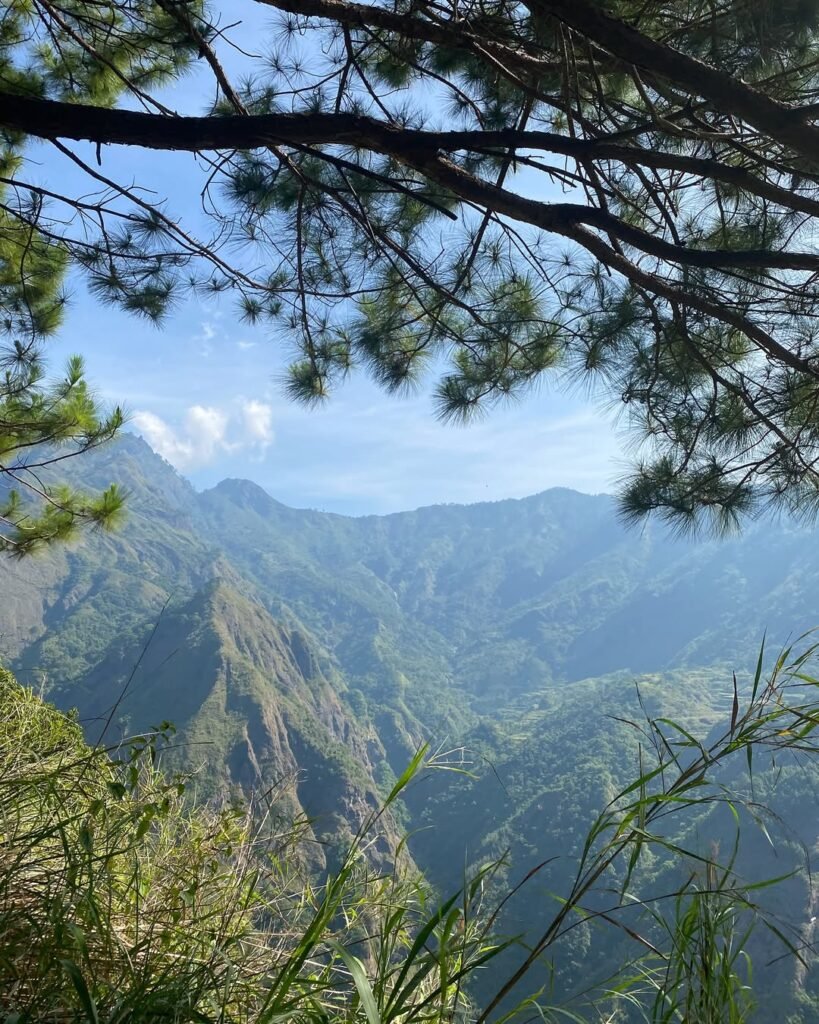
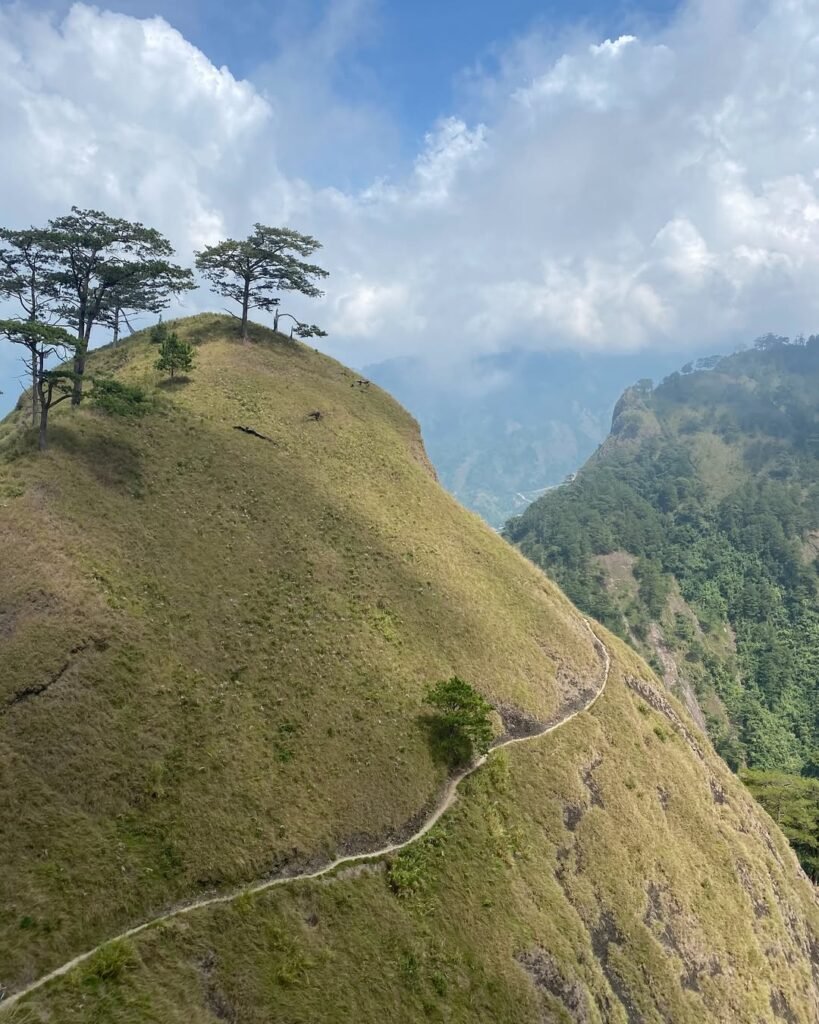
What is the Mt. Kabunian trail like? The trail covers approximately 10 kilometers (out-and-back) with a distinct “Reverse Hike” profile. The route is 80% exposed to the sun, transitioning from a steep descent through vegetable gardens to a punishing ascent via the “Stairway to Heaven”—a series of concrete steps and metal railings carved into the vertical rock face.
Segment 1: The Deceptive Descent (Poblacion to River)
The hike begins at the Old Municipal Hall in Sitio Poblacion. Unlike Mt. Pulag where you start climbing immediately, Mt. Kabunian baits you with a relaxingly steep descent. You will lose about 300 meters of elevation as you navigate a network of concrete pathways through local sayote and bean gardens.
The Trap: It feels easy on the lungs, but it is high-impact on the knees. As you descend, keep one thought in your mind: I have to climb back up this wall at 2:00 PM. Conserve your energy. Do not sprint this section just because gravity is helping you.
Segment 2: The Steel Bridge & River Valley
After about 45 minutes to 1 hour, you will reach the valley floor. Here, the roar of the Bakun River dominates the soundscape. You will cross a prominent steel hanging bridge that connects the foot of Mt. Gedgedayan to the base of Mt. Kabunian.
This is your transition point. There are waiting sheds here built by the LGU.
Insider Tip: Adjust your gear here. The shade ends now. Apply your sunblock, put on your arm sleeves, and hydrate. From this point on, you are exposed to the elements.
Segment 3: The “Stairway to Heaven”
This is the segment that earns Mt. Kabunian its 5/9 difficulty rating. The dirt trail disappears, replaced by the famous “Stairway to Heaven”—hundreds of concrete steps anchored into the cliffside with galvanized iron railings.
The gradient is severe. You are essentially climbing a vertical wall.
The Heat Factor: Because the stairs are made of concrete and rock, they absorb and radiate heat. By 10:00 AM, the temperature here can feel 5-10 degrees hotter than the ambient air.
The View: Pause to catch your breath (you will need to). Look behind you to see the magnificent pine forests of Mt. Lubo and the sharp, carrot-like peak of Mt. Tenglawan.
Segment 4: The Summit & The Ancient Ones
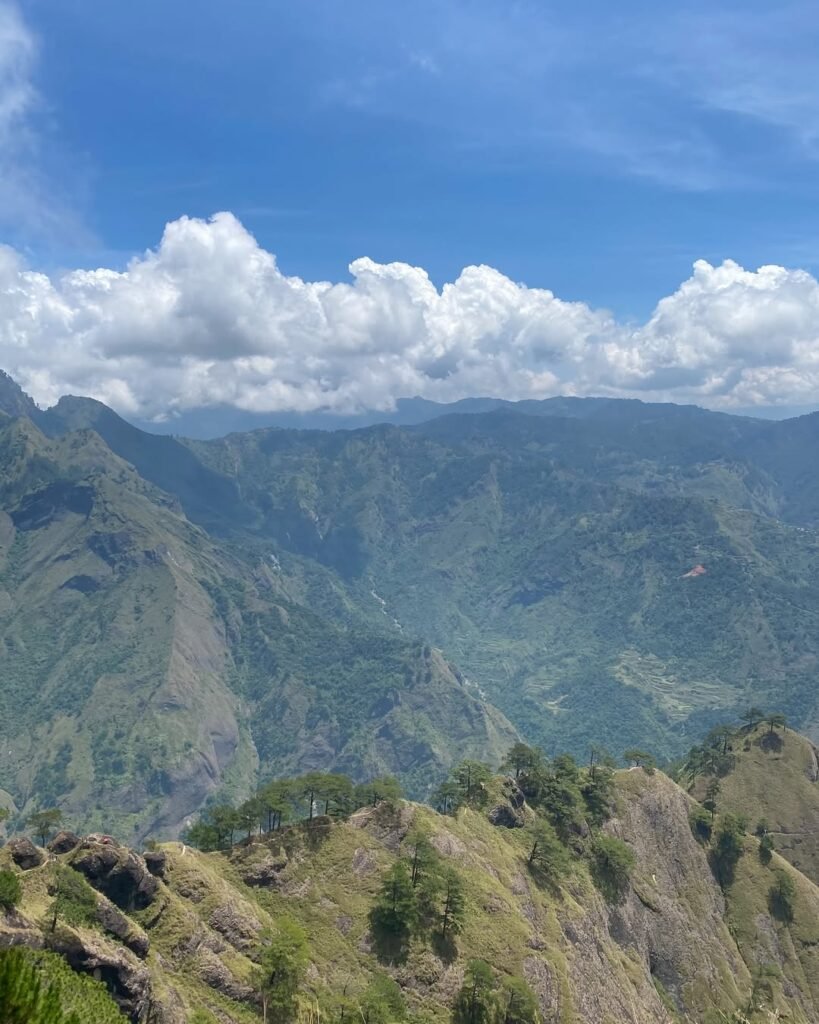
As you breach the ridge, the vegetation shifts to high-altitude grass and stunted pine trees. The summit plateau, sitting at 1,840 MASL, offers a commanding 360-degree view that stretches all the way to the West Philippine Sea in the Ilocos region.
But the true highlight isn’t just the view; it’s the history.
Spotting the Coffins: From the designated view decks, use your binoculars (or your camera’s zoom). You will see wooden coffins and burial jars tucked into the inaccessible crevices of the sheer rock faces.
Cultural Note: These are the resting places of the ancestors. The locals believe placing them higher brings them closer to Kabunian. Remember the briefing: Do not point (Panyew) and maintain a respectful silence.
Mt. Kabunian Itinerary Options (2026 Strategy)
How long is the Mt. Kabunian hike? The trek typically requires 6 to 9 hours to complete the 10-kilometer out-and-back trail. We strongly recommend a strict 4:00 AM start time. This strategy ensures you reach the summit before the clouds obscure the view (usually by 9:00 AM) and allows you to descend the exposed “Stairway to Heaven” before the peak solar heat hits at 12:00 PM.
Option A: The Focused Dayhike (Kabunian Only)
This itinerary assumes you have arrived in Poblacion, Bakun the night before and slept at the Old Municipal Hall.
Insider Tip: Do not delay your start. The heat on the concrete stairs is manageable at 8:00 AM but becomes suffocating by 11:00 AM. Every hour you delay in the morning adds significant difficulty to your return trip.
| Time | Activity | Elevation / Notes |
| 03:30 AM | Wake up / Light Breakfast / Coffee at Old Munisipyo | Poblacion Base |
| 04:00 AM | Start Trek (Headlamps required) | Begin descent to river |
| 05:00 AM | Arrival at Bakun River / Hanging Bridges | Lowest Point |
| 05:15 AM | Start of Assault (The “Stairway”) | Sunrise on trail |
| 07:00 AM | Arrival at Waiting Shed / View Deck | Water break |
| 08:30 AM | SUMMIT: Mt. Kabunian | 1,840 MASL / Photo ops |
| 09:30 AM | Start Descent back to River | Caution: Slippery if wet |
| 11:00 AM | Back at Bakun River / Early Lunch | Prepare for final assault |
| 12:00 PM | Start of Ascent back to Poblacion | The “Crux” of the day |
| 02:00 PM | Back at Old Municipal Hall | Wash up / Log out |
| 03:00 PM | Siesta or Side trip to Pattan Falls | Optional |
Option B: The “Bakun Trio” Context
For those with 3 days to spare, Mt. Kabunian is usually the centerpiece of the Bakun Trio expedition. It is often scheduled as the Day 2 climb because it balances the “warm-up” of Mt. Lubo and the endurance test of Mt. Tenglawan.
Day 1: Arrival / Mt. Lubo (Highest but easiest terrain).
Day 2: Mt. Kabunian (Technical and scenic).
Day 3: Mt. Tenglawan (The “Carrot Peak” / Longest trail).
Planning to conquer all three? Read our comprehensive guide on logistics and sequencing here: [Insert Internal Link: The Ultimate Bakun Trio Hiking Guide]
Budget Breakdown (The Financials)
How much is the budget for Mt. Kabunian? A safe budget for a DIY hiker joining a group of 10-15 is PHP 3,500 – 4,000. If booking an all-inclusive organized tour, market rates range from PHP 2,900 to PHP 3,500 (Manila to Manila). Your biggest variable cost is the transport; the fixed Monster Jeep rental (~PHP 12,000) must be divided among enough passengers to keep the per-head cost low.
The “Cash Only” Rule
Before we dive into the numbers, a critical reminder: There are NO functional ATMs in Poblacion, Bakun. The last reliable ATM is in La Trinidad (KM 5 or KM 6). Do not rely on GCash or Maya as the signal is too intermittent for transactions. Bring hard cash in smaller denominations (PHP 50s and 100s) to pay for local fees and sari-sari store supplies.
2026 Expense Watch: The Price List
Prices in the Cordilleras have adjusted for inflation. Below is the estimated cost breakdown for a standard 2-Day / 1-Night trip assuming a DIY group of 12-15 hikers.
| Expense Item | Est. Cost (PHP) | Notes |
| Bus (Manila-Baguio) | 1,400 – 1,800 | Roundtrip (Victory Liner/JoyBus) |
| Monster Jeep Share | 800 – 1,000 | Share of PHP 12,000 rental |
| Guide Fee | 200 – 250 | Per head (PHP 1,200 – 1,500 per group of 6) |
| Environmental / Reg Fee | 150 – 200 | Paid at Barangay Hall |
| Accommodation | 250 – 300 | Per night at Old Munisipyo (Foam included) |
| Baggage Fee | 50 – 100 | Storage fee at jump-off (Optional) |
| Shower Fee | 50 | Per bucket/use |
| Food / Supplies | 500 – 700 | Self-catering / Market buy in Baguio |
| TOTAL SAFE BUDGET | ~PHP 4,000 | Safe buffer per person |
Variable Costs & Hidden Fees
The Guide Fee Ratio: The strict 1:6 ratio means if you are a group of 7, you must hire two guides (Total: PHP 2,400 – 3,000). This increases the cost per head significantly.
Overtime Fees: If you finish the hike past 6:00 PM, guides may charge an overtime fee of PHP 100 per hour.
Gas Stove Use: While the communal kitchen at the Old Municipal Hall has stoves, you might need to chip in PHP 50 – 100 per group for the LPG consumption if the tank is running low.
Insider Tip: If you are a solo traveler on a tight budget, taking the Bakun Cooperative Bus (PHP 200 one-way) is cheaper than renting a jeep, but you risk getting stranded if the bus is full. For peace of mind, I always recommend joining an organized tour or pooling funds for the jeep rental.
Where to Stay & Eat: Base Camp Logistics
Where to stay in Bakun? The primary accommodation for hikers is the Old Municipal Hall (locally called “Old Munisipyo”) in Sitio Poblacion. It offers rustic, communal sleeping quarters for PHP 250 – 300 per night. Bedding (foam mats and blankets) is usually provided. Dining options are scarce, so teams are strongly advised to buy fresh supplies in Baguio City and cook using the hall’s communal kitchen.
Accommodation: The Old Municipal Hall
Forget about booking Agoda hotels here. In Bakun, the “hotel” is a repurposed government building. The setup is communal: you sleep side-by-side with other hiking groups in a large open room on the second floor.
The Sleeping Setup: The LGU provides thick foam mattresses and heavy blankets included in the accommodation fee.
Insider Tip: This is a huge logistical win. You can leave your bulky sleeping pad and sleeping bag at home. My back thanked me for not hauling that extra 1kg up the stairs.
The Communal Kitchen: This is the highlight of the facility. The hall is equipped with a functional kitchen, including large woks (kawa), pots, and—crucially—gas stoves.
Cost Saver: You don’t need to bring portable butane burners or mess kits. Just pay a small “LPG Share” (usually PHP 50 – 100 per group) to use the facilities.
Food Availability: The Supply Run
Poblacion is a quiet village, not a commercial tourist hub like Sagada. There are a few small carinderias and sari-sari stores near the Barangay Hall, but they operate on village time.
The “8 PM” Rule: Most stores close by 8:00 PM. If you descend late from the summit and haven’t pre-ordered food, you will go hungry.
Shopping Strategy: Do NOT rely on the local stores for your main meals. Stocks are limited to canned goods (sardines/corned beef) and instant noodles.
Action Plan: Buy your meat (chicken/pork), vegetables, and rice at the Baguio City Public Market or the La Trinidad Vegetable Trading Post before boarding the bus or jeep.
The Liquor Ban: Be aware that Bakun often enforces strict curfews and occasional liquor bans to maintain peace in the community. If you plan to celebrate your summit success, ask the Tourism Officer first if alcohol is permitted inside the Old Munisipyo.
Essential Gear List: The “Anti-Heat” Pack
What should I bring to Mt. Kabunian? Unlike the cold peaks of Benguet, Mt. Kabunian requires a Heat Management Strategy. Mandatory items include a Silver-coated Hiking Umbrella (Payong), Arm Sleeves, and at least 3 Liters of Water (sources are unreliable). Trekking Poles are non-negotiable for the steep ascent back to Poblacion.
Forget the thick fleece jackets you wore to Mt. Pulag. The challenge on Mt. Kabunian is not the cold—it is the solar radiation. The “Stairway to Heaven” is exposed rock and concrete, which turns into an oven by 10:00 AM.
Here is the specialized loadout for this specific mountain:
Sun Protection (The “Payong” Strategy):
Hiking Umbrella: This is your most important piece of gear. Because the trail involves vertical steps rather than technical scrambling, you can easily hike with an umbrella. It lowers your “Real Feel” temperature by 5-10 degrees.
Arm Sleeves & Leggings: Wear long sleeves or reputable arm coolers (like Naturehike or Ahon). The sun here bites.
Knee Support (Mandatory):
Trekking Poles: Do not attempt the “Reverse Hike” without them. You will need them to offload weight from your knees during the initial descent and, more importantly, to drag yourself up the final 300-meter assault back to the Old Municipal Hall.
Optics:
Binoculars / Zoom Lens: The hanging coffins are tucked deep into the cliff crevices. Without binoculars or a phone with 10x Zoom, they just look like dark spots on the rock.
Hydration System:
Capacity: Bring 2 to 3 Liters.
Source Check: There is a water source near the Waiting Shed (Steel Bridge area), but it is often seasonal. In the dry months (March – May), it can dry up to a trickle. Assume you need to carry everything from the jump-off.
Insider Tip: Pack a small spray bottle with water and mist your face during the stair ascent. The evaporative cooling works wonders when the air is stagnant on the ridge.
Frequently Asked Questions (FAQ)
Is Mt. Kabunian beginner-friendly? No. While the elevation is moderate, the 5/9 Difficulty Rating reflects the strenuous nature of the hike. The 10-kilometer trail involves steep, exposed ascents and a psychological “Reverse Hike” challenge. It is suitable for “Active Beginners” (those who run or train regularly), but sedentary individuals will struggle significantly on the “Stairway to Heaven.”
Is there mobile signal in Bakun?
Yes, but it is network-specific.
Smart / TNT: Signal is generally reliable at the Old Municipal Hall (Poblacion) and on the Summit Ridge. You can send SMS and sometimes get 4G data for social media updates.
Globe / TM: Coverage is dead to weak. Do not rely on it for emergency calls or coordination.
Insider Tip: If you need to work remotely (digital nomad style), the Municipal Hall sometimes offers paid Wi-Fi access (Piso Wi-Fi), but speeds are slow.
Can I hike Mt. Kabunian alone (Solo Joiner)?
Yes, but it comes with a “Solo Tax.” Because the Guide Fee (PHP 1,200 – 1,500) is fixed per group (1-6 pax), a solo hiker must pay the entire amount.
Strategy: Try to “adopt” yourself into another small group at the registration area to split the cost. Most hiking groups in Bakun are welcoming to walk-ins if the guide ratio allows it.
Can we bring a private car to Bakun?
Yes, but leave the sedan at home. The road from Sinipsip Junction (Halsema Highway) to Poblacion is fully paved but features incredibly steep gradients and tight hairpin turns.
Requirement: Bring a high-clearance vehicle (SUV, Pickup, AUV) with an experienced mountain driver.
Warning: Brake failure is a real risk on the long descent into the valley. Ensure your brakes are serviced before the trip. Parking is available near the Old Municipal Hall.
What is the “Bakun Trio”?
The Bakun Trio refers to the three major peaks accessible from the Poblacion base camp. Many hikers attempt to summit all three over a 3-Day Itinerary:
Mt. Lubo (Patullok): The highest but easiest (often Day 1).
Mt. Kabunian: The most scenic and technical (Day 2).
Mt. Tenglawan: The endurance test featuring the “Carrot Peak” (Day 3).
Is the “Sea of Clouds” guaranteed?
No. Mt. Kabunian is lower than Mt. Pulag, so the sea of clouds is less consistent. However, the open ridges offer a different spectacle: a clear view of the West Philippine Sea and the Ilocos coastline on a crisp morning. The best chance for clouds is at sunrise (5:30 AM – 6:30 AM).
Conclusion: Respect the Domain
Is Mt. Kabunian worth the climb? Absolutely. But remember that Mt. Kabunian is a sacred sanctuary first and a hiking destination second. Completing this Major Climb requires not just the physical endurance to conquer the “Stairway to Heaven,” but the discipline to follow strict Leave No Trace (LNT) principles. Respect the silence of the burial grounds; you are a guest in the home of a god.
Surviving the “Reverse Hike” is a badge of honor. Dragging your tired legs back up the 300-meter assault from the Bakun River to the Old Municipal Hall in Poblacion is a test of character that every Filipino mountaineer should experience. But as you wash the red clay off your boots at the communal shower, remember the most important rule of this mountain.
The Cultural Imperative: We are hiking through an active spiritual domain. The Kankana-ey elders believe that Kabunian (the deity) resides here.
-
Silence is Golden: When passing the cliff sections where the hanging coffins are visible, keep your voice down. Boisterous laughter is considered Panyew (taboo).
-
Pack It In, Pack It Out: There are no trash bins on the ridge. That candy wrapper stays in your pocket until you reach Baguio City. Do not burden the locals with your waste.
What’s Next? The Trio Awaits. Conquering Mt. Kabunian is often just the second chapter of the story. If your knees have recovered and your thirst for adventure isn’t quenched, the “Carrot Peak” is calling.
Explore More: Cordillera Hiking Guide
Loved the challenge of Mt. Kabunian? Whether you are looking to level up your game or find a chill recovery hike for your next weekend, check out our other detailed guides below:
🌲 Similar Major Climbs (Difficulty 5-8)
If you enjoyed the physical demand of Bakun but want to experience different terrains like mossy forests or rice terraces, these are your next best steps:
Mt. Amuyao (Barlig-Batad Traverse): Swap the rocky cliffs of Bakun for the majestic rice terraces of Ifugao. Read our Mt. Amuyao DIY Traverse & Itinerary.
Mt. Ugo (Benguet-Nueva Vizcaya): Experience the “Old Spanish Trail” and endless pine forests. Check out our Guide to Mt. Ugo Traverse & Difficulty.
Browse the Full List: Not sure where to go next? See our curated list of Major Climbs in the Philippines (Difficulty 5-8).
🔥 Level Up: Hardcore Climbs (Difficulty 9/9)
Did you find the “Stairway to Heaven” too easy? If you are ready to test your absolute limits, it might be time to graduate to the “Harkor” category.
The Ultimate Test: Discover the toughest mountains in the country in our guide to Hardcore Climbs (Difficulty Level 9).
☁️ Recovery & Chill Hikes
If the “Reverse Hike” of Kabunian destroyed your knees, take it easy on your next trip with a scenic dayhike that offers high rewards for lower effort.
Mt. Ulap (Itogon): The perfect “active recovery” hike featuring the famous Gungal Rock. Read the Ultimate Guide to Mt. Ulap.