1. Quick Facts: Mt. 387 (Batong Amat)
Mt. 387, also known as Batong Amat, is located in Puncan, Carranglan, Nueva Ecija. It stands at approximately 724+ MASL. The difficulty is rated 2/9 for the backtrail (beginner-friendly) and 4/9 for the traverse to Aloha Falls (requires ropes). The trek usually takes 6–8 hours.
| Parameter | Details |
| Location | Brgy. Puncan, Carranglan, Nueva Ecija |
| Elevation | 724+ MASL |
| Difficulty | Minor Climb (2/9 Backtrail | 4/9 Traverse) |
| Trail Class | 1-3 (Established trail to Scrambling) |
| Key Feature | The “Lover’s Tree” & Aloha Falls |
Introduction: The Chocolate Hills of the North
Mt. 387 (Batong Amat) in Puncan, Carranglan, Nueva Ecija is the ultimate eco-adventure accessible from Manila. Standing at 724+ MASL, it offers a beginner-friendly backtrail (2/9 difficulty) and a challenging traverse to Aloha Falls (4/9 difficulty). Known for the “Luntian” project, every hiker pays a ~₱30 seedling fee to plant a tree before ascending, making it a hike with a purpose.
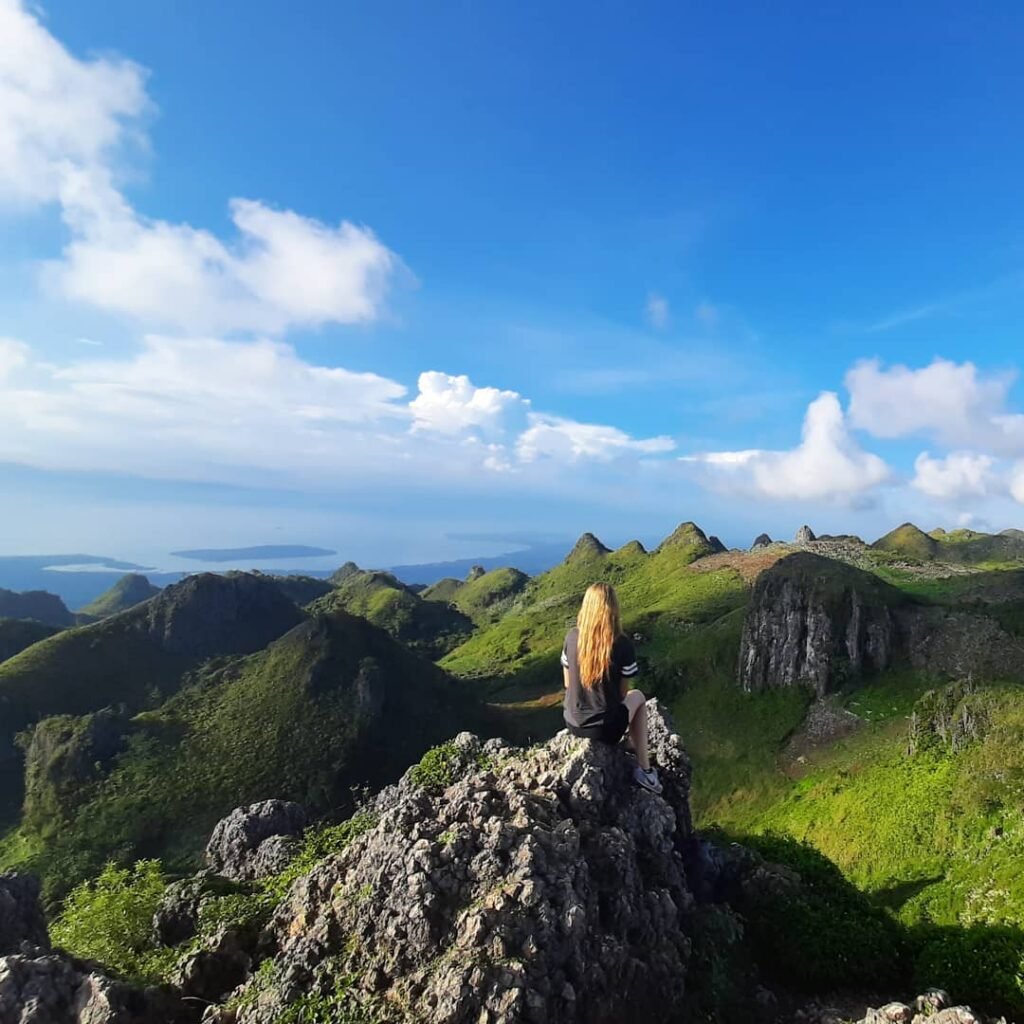
If you’ve seen photos of golden-brown mounds that look strikingly like Bohol’s famous formation, you’re looking at Mt. 387, also known locally as Batong Amat (Ghost Rock).
While the “Chocolate Hills of the North” aesthetic is the main draw for the Instagram crowd, this mountain offers something far more meaningful. It is a Community-Based Ecotourism (CBET) success story and arguably the most popular destination on our list of 28 Must-Visit Nueva Ecija Tourist Spots for 2025.
Under the leadership of Sir Roy Manuzon and the local association, the mountain is part of the “Luntian” (Green) initiative. Unlike other commercialized peaks where you just pay an entrance fee, here you actively participate in rehabilitation. Before you take your first step on the trail, you will stop at the nursery to plant a seedling. You aren’t just a tourist here; you are a reforester.
The Duality of the Hike
I need to manage your expectations: this mountain has a split personality.
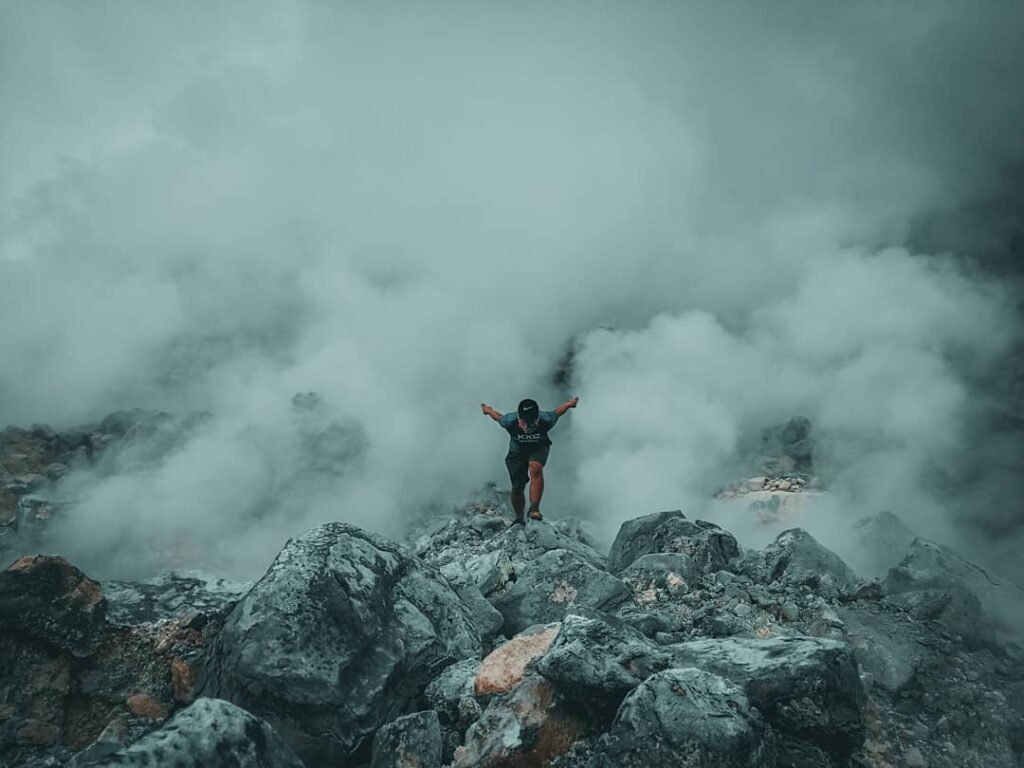
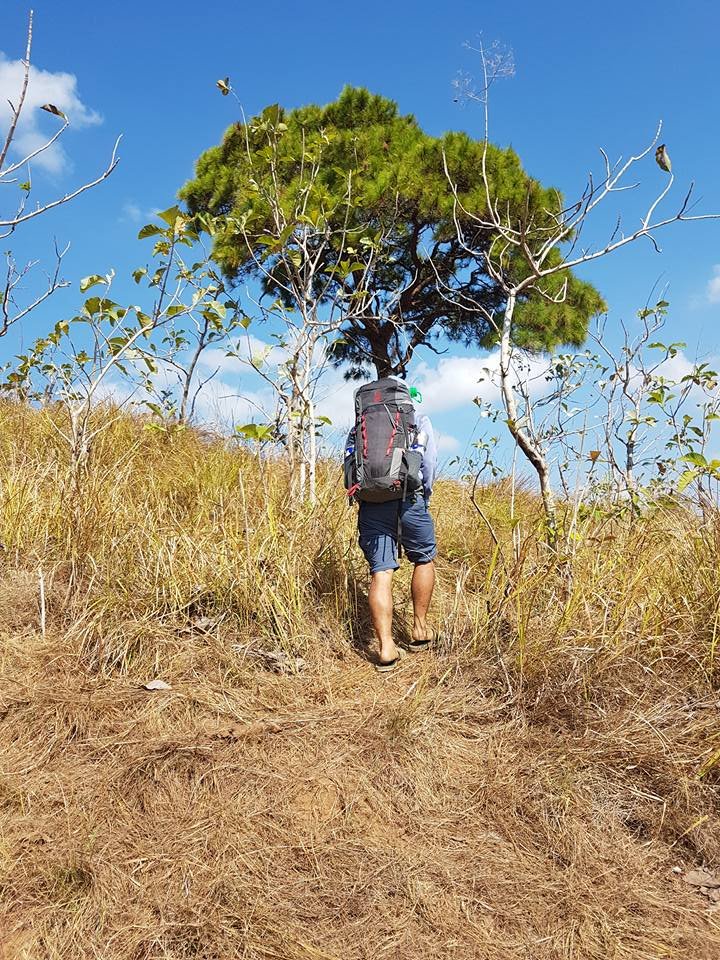
The Ascent (The Heat): The climb to the Lover’s Tree and the summit is exposed. You will be walking on open ridges covered in Cogon grass. If you climb during the dry season (March–May), the heat index is punishing. It feels much hotter than the elevation suggests.
The Traverse (The Tech): Once you cross the summit, the vibe changes instantly. The traverse to Aloha Falls drops into a shaded, technical ravine. The soil here is loose and powdery (or muddy if it rained), requiring you to use installed ropes to rappel down steep sections.
Who is this Hike For?
Honesty time: I’ve seen beginners struggle on the traverse.
If you are an absolute first-timer, the Backtrail (going up and down the same path) is a solid 2/9 difficulty. It’s safe, scenic, and manageable.
However, if you want the full experience including the swim at Aloha Falls, you need to prepare for a 4/9 difficulty rating. The traverse requires good balance, decent upper body strength for the ropes, and knees that can handle a steep descent.
Table of Contents
How to Get to Mt. 387 From Manila (DIY & Private)
To get to Mt. 387 via public transport, take a Victory Liner or Five Star bus bound for Tuguegarao or Santiago from Cubao or Pasay terminals. Ask the conductor to drop you off at “Puncan” or the large Iglesia Ni Cristo chapel in Carranglan. The fare is approximately ₱450–₱550 per person, and the travel time is 4–5 hours.
Option A: By Bus (Commuter Guide)
The Critical Commuter Tip: Do not ride a bus that is only bound for “Cabanatuan” or “San Jose City.” If you do, you will be dropped off at the terminal in the city center, and you’ll have to pay an extra ₱150–₱200 for a tricycle ride to Puncan.
To avoid this hassle, always look for the “Cagayan Valley” signage (Tuguegarao, Isabela, or Santiago). These buses pass directly through the Maharlika Highway where the jump-off is located.
-
Bus Operators: Reliable options are Victory Liner, Five Star Bus, and Baliwag Transit.
-
Terminals: Most hikers depart from Cubao (along EDSA) or Pasay.
-
Schedule: Buses run 24/7, but I highly recommend the 11:00 PM or 12:00 MN trip. This gets you to the jump-off by 4:00 AM, giving you time to register and nap before the hike.
-
Drop-off Point: Tell the conductor “Brgy. Puncan” or look for the massive Iglesia Ni Cristo (INC) chapel on the right side of the road. The registration area is just across or a few meters away.
Note on Tickets: I usually pay around ₱450 for a regular aircon bus. Keep your ticket handy for inspection during stops.
Option B: Private Vehicle
If you are driving, the road is completely paved and accessible for sedans or hatchbacks. The drive takes about 3–4 hours from Balintawak depending on traffic.
-
The Route: Take NLEX and connect to SCTEX, then TPLEX.
-
The Exit: Take the Pura or Guimba exit. Follow the road signs leading to San Jose City, then merge onto the Maharlika Highway heading north to Carranglan.
-
Google Maps Pin: Search for “Mt. 387 Jump Off Point” or “Mt. 387 – Batong Amat.”
-
Parking: Secure parking is available inside the INC Compound or designated slots at the jump-off.
-
Parking Fee: Expect to pay ₱50 for motorcycles and ₱100 for 4-wheeled vehicles.
Mt. 387 Hiking Experience: What to Expect
The trail begins with a mandatory tree-planting activity at the nursery. The ascent features open cogon grass fields leading to the “Chocolate Hills” view deck and the famous Lover’s Tree. The traverse to Aloha Falls involves a steep, dusty descent using installed ropes, followed by a refreshing river trek and an optional truck ride back.
Phase 1: The “Luntian” Project (Tree Planting)
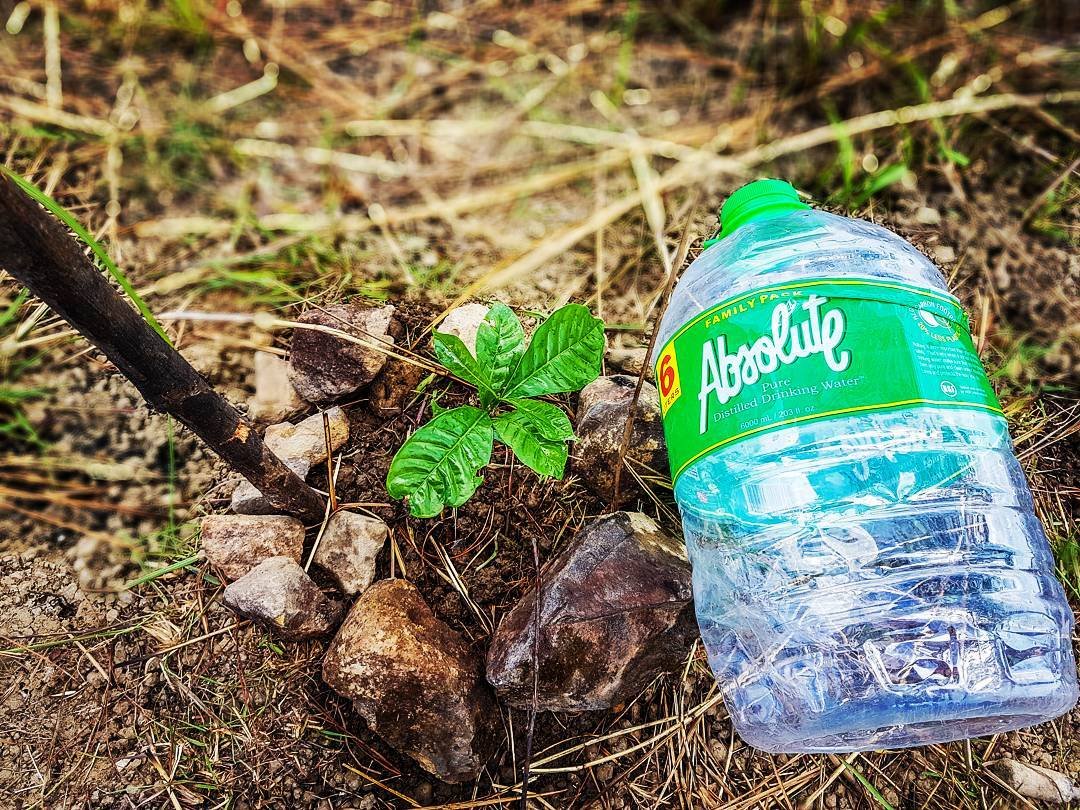
Unlike other mountains, the first step here isn’t on the trail—it’s at the Community Nursery. You are required to pay a ₱30 Seedling Fee as part of the local “Luntian” (Green) reforestation project.
We spent about 15 minutes here choosing our saplings and planting them in the designated zone. This isn’t just a gimmick; the local association, led by Sir Roy Manuzon, strictly monitors this to ensure the bald patches of the mountain are rehabilitated.
Phase 2: The Golden Ridges & Lover’s Tree
After the forest line, the canopy disappears, and you enter the Golden Ridges. These rolling hills covered in Cogon grass turn a vibrant gold during the dry months (January–May), giving the mountain its “Chocolate Hills of the North” nickname.
The panoramic view of the Sierra Madre range and the vast plains of Central Luzon is stunning, but it comes with zero shade. You will be exposed to direct sunlight, so hydration is key here.
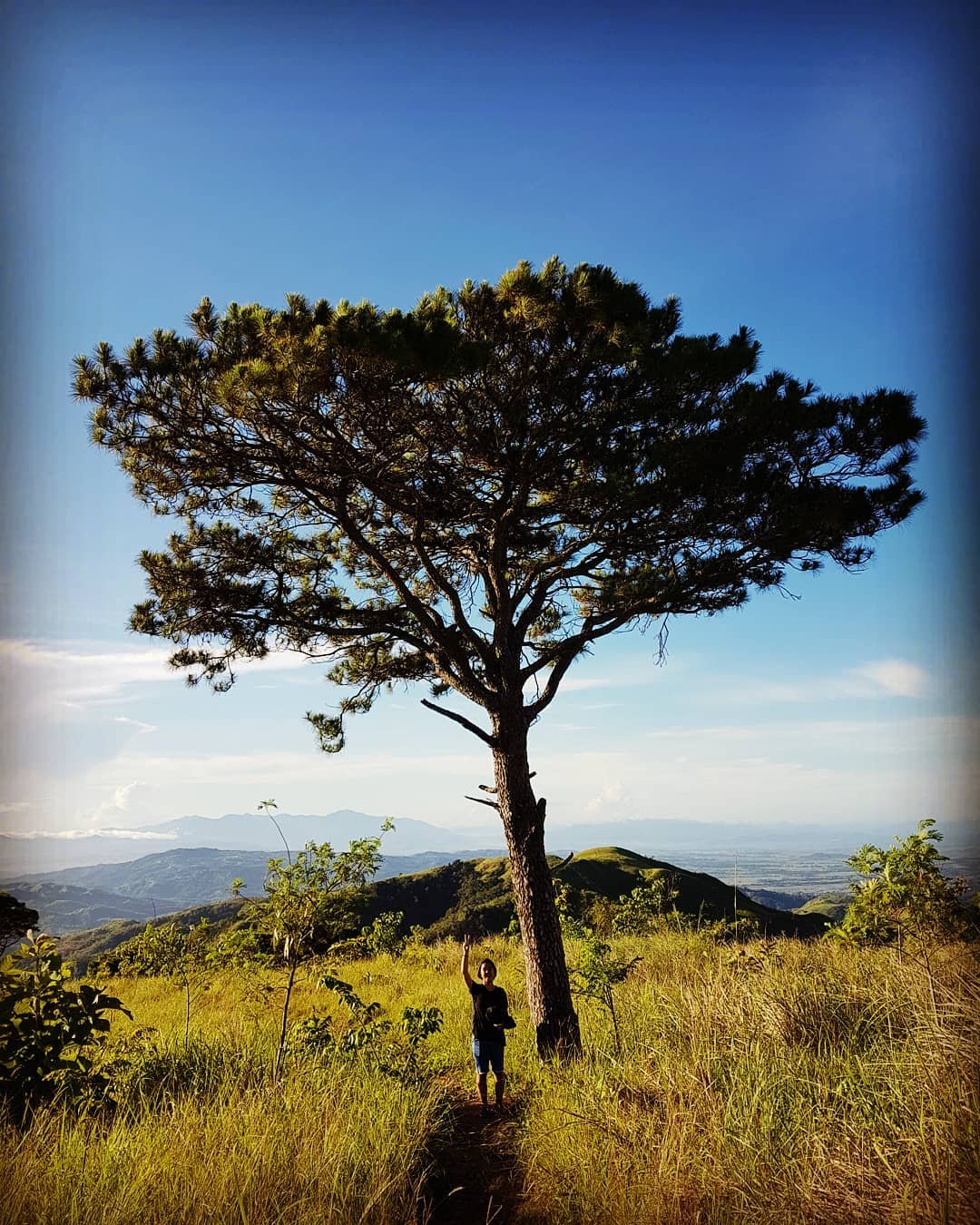
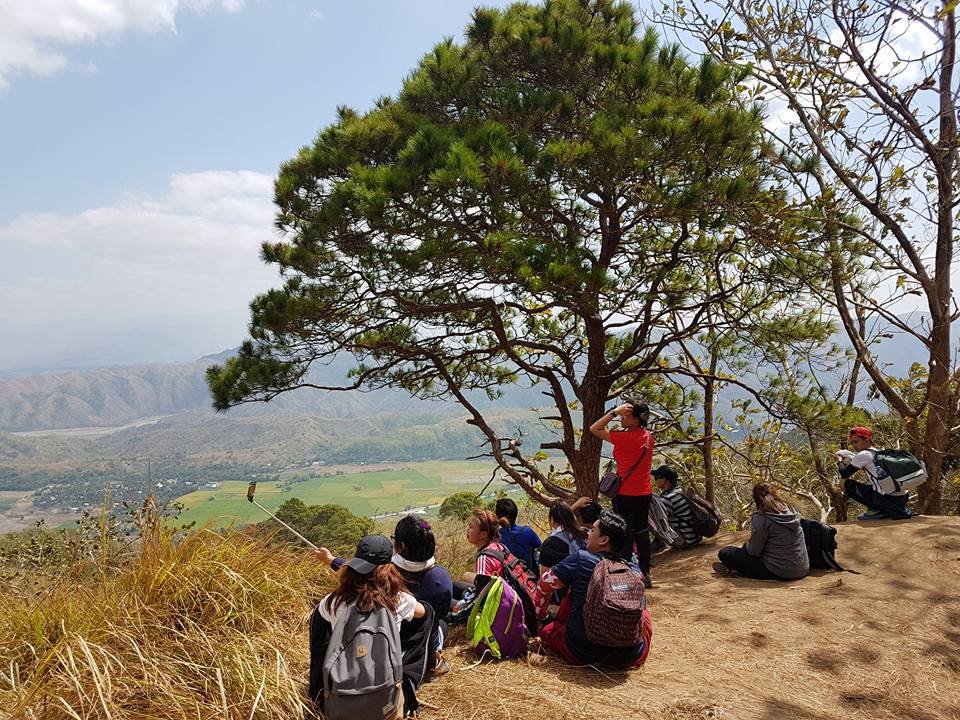
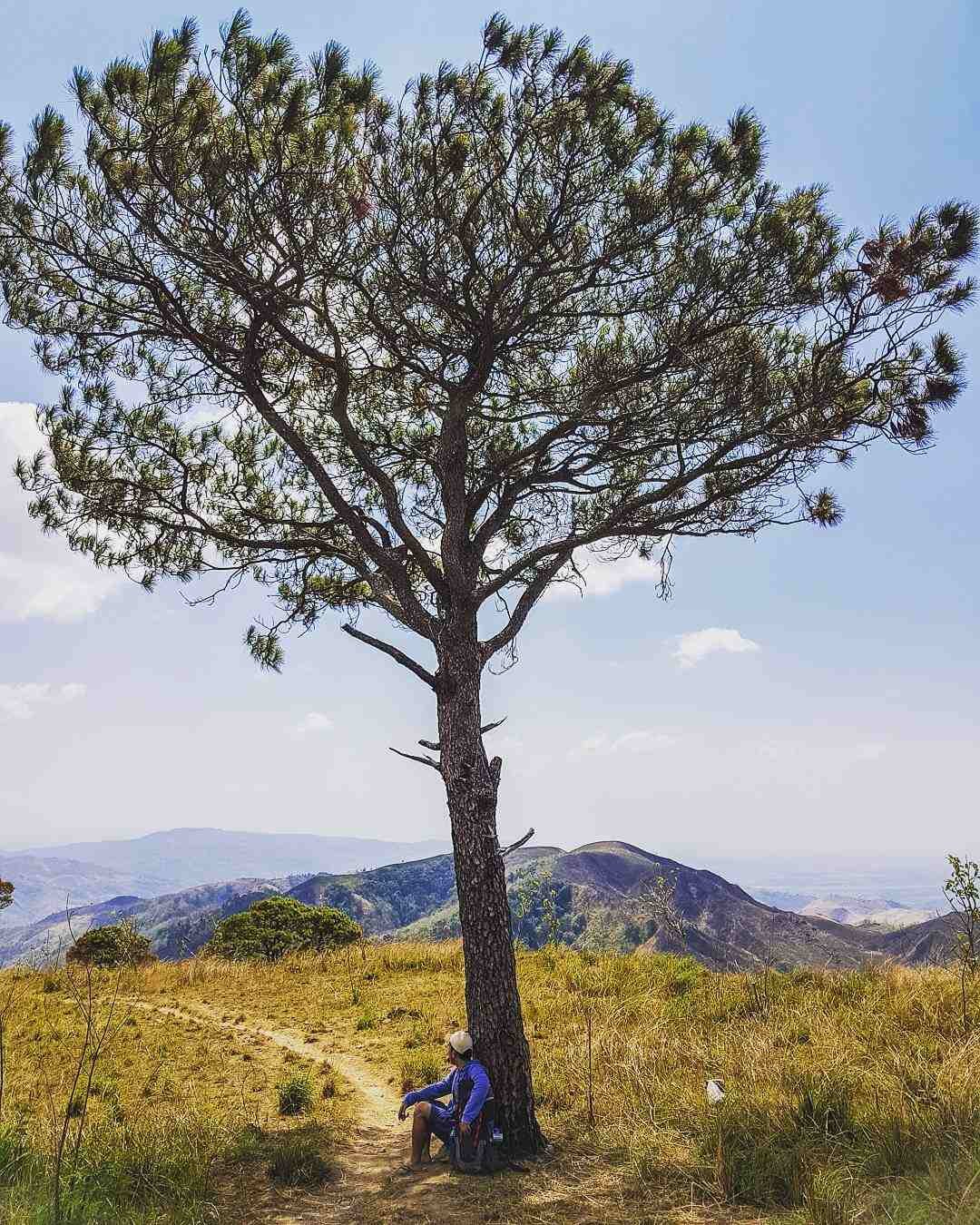
The summit area is marked by the Lover’s Tree, a solitary pine standing on the ridge. This is the primary rest stop and the most famous photo-op on the mountain.
Phase 3: The Technical Traverse (To Aloha Falls)
Warning: This is where the difficulty jumps from a chill 2/9 to a technical 4/9. The trail drops sharply into the ravine to reach the river.
The soil here is loose and pulverized dust (or slick mud if it rained recently). You will need to rely on installed ropes to rappel down near-vertical sections.
I cannot stress this enough: bring garden gloves. Without them, I’ve seen hikers get nasty rope burns trying to control their slide down the loose earth. The descent takes about 1.5 to 2 hours of careful maneuvering.
Phase 4: Aloha Falls & The Truck Ride
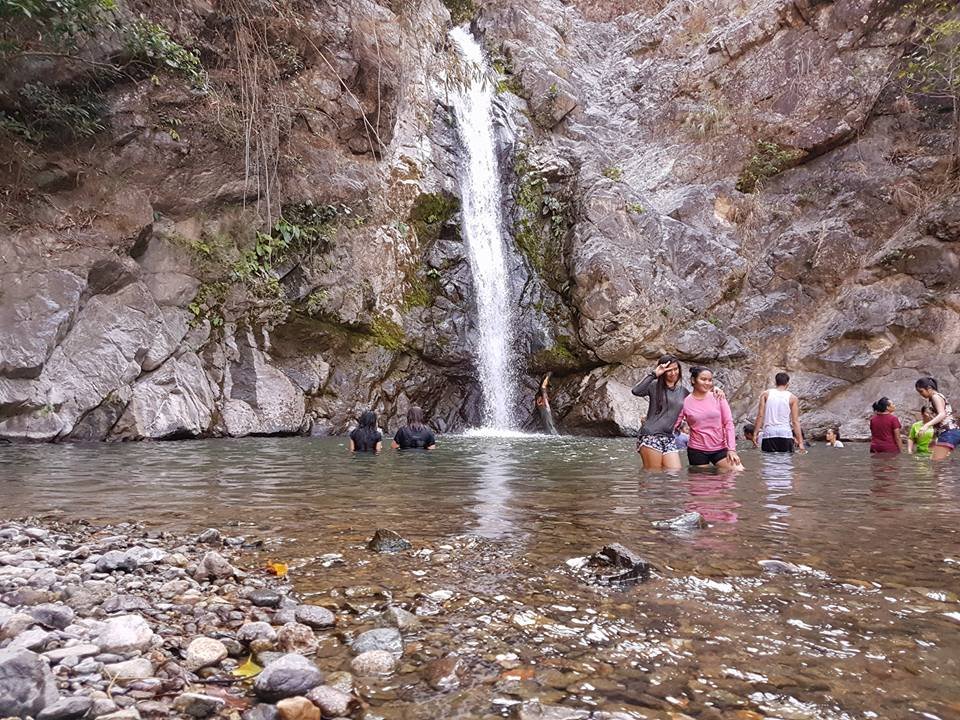
The punishment ends at Aloha Falls, a multi-tiered cascade nestled in the forest. The basin is deep enough for swimming. The water is freezing and incredibly clear—reminiscent of the cool waters found at the Guide to Calabasa River in Gabaldon, Nueva Ecija, making it perfect for washing off the thick layer of dust from the descent.
From the falls, do not walk the concrete road back to the highway—it is long, hot, and boring. We paid ₱50–₱70 per head for the “Elf” Truck Service. It’s a bumpy, open-air 15-minute ride that drops you right back at the KM 175 jump-off point for a shower and a meal.
Sample Mt. 387 Itinerary (Day Hike)
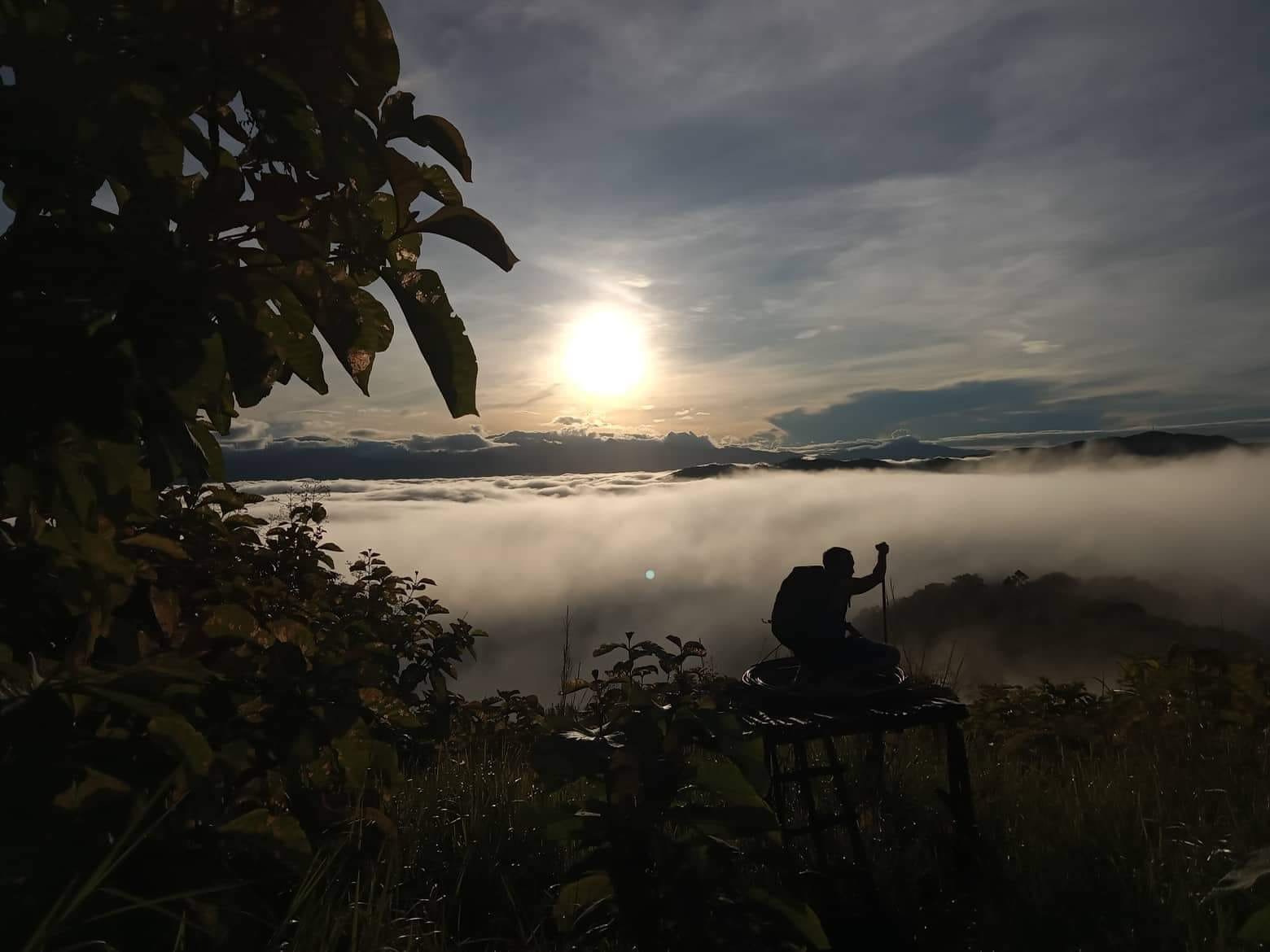
A typical DIY day hike starts with an 11:00 PM departure from Cubao, arriving at Brgy. Puncan by 4:00 AM for registration. The trek begins at 5:00 AM to catch the sunrise at the summit by 7:00 AM. After traversing to Aloha Falls for lunch, hikers take the “Elf” truck back to the jump-off by 1:00 PM and catch a bus home by 4:00 PM.
I strictly recommend following this “midnight run” schedule. The open cogon ridges at the summit offer zero shade, and the heat becomes unbearable by 10:00 AM, so you want to be descending into the shaded forest towards Aloha Falls by then.
If you start walking later than 5:00 AM, you will likely suffer from heat exhaustion on the “Chocolate Hills” section.
| Time | Activity |
| 11:00 PM | Depart Manila (Victory Liner / Five Star in Cubao) |
| 04:00 AM | Arrival at Brgy. Puncan / Registration / Briefing |
| 05:00 AM | Start Trek (Tree Planting Activity) |
| 07:00 AM | Arrival at View Deck / Summit (Photos at Lover’s Tree) |
| 08:30 AM | Start Descent to Aloha Falls (Technical Traverse) |
| 10:30 AM | Arrival at Aloha Falls (Lunch / Swim / Wash-up) |
| 01:00 PM | Ride “Elf” truck back to Jump-off (KM 175) |
| 02:00 PM | Final Wash up / Late Lunch at Jump-off carinderias |
| 04:00 PM | Wait for bus back to Manila along Maharlika Highway |
A Note on Going Home:
Getting back to Manila requires a bit of patience. There is no formal bus terminal at the jump-off; we had to stand by the side of the Maharlika Highway and flag down passing Victory Liner or Five Star buses coming from Cagayan.
We waited about 40 minutes before a bus with empty seats stopped for us, so don’t panic if the first few buses just fly past you.
Budget Breakdown (2025/2026 Estimates)
A complete DIY day hike to Mt. 387 costs approximately ₱1,500 to ₱1,800 per person. This budget covers roundtrip bus fares via Victory Liner or Five Star (~₱1,100), registration, the mandatory seedling fee, and your share of the guide fee. To be safe, bring ₱2,000 to cover extra meals or emergency tricycle transfers.
Prices have crept up recently due to fuel costs. When I last hiked in late 2025, the bus fare alone ate up the biggest chunk of the budget, costing around ₱500–₱550 one way.
Here is the actual expense list based on a group of 5 hikers sharing the costs. If you are hiking solo, try to join a group at the registration area to split the ₱600 guide fee; otherwise, you’ll shoulder that entire amount alone.
| Expense Item | Cost (PHP) | Notes |
| Bus Fare (Roundtrip) | ₱1,000 – ₱1,100 | Cubao to Puncan & back |
| Registration Fee | ₱100 | Includes Env. Fee & Brgy share |
| Seedling Fee | ₱30 | Mandatory for the “Luntian” project |
| Guide Fee (Shared) | ₱100 – ₱150 | Based on a group of 5-7 (Total fee is ₱600) |
| Truck Service | ₱50 – ₱70 | Ride from Aloha Falls exit to Jump-off |
| Shower Fee | ₱25 | Paid to local households |
| Total Safe Budget | ~₱1,500 – ₱1,800 | Excludes packed lunch & pasalubong |
Important Cash Tip:
There are no ATMs in Brgy. Puncan. The nearest withdrawal machine is way back in San Jose City, which is a 30-minute ride away.
I highly recommend withdrawing all your cash in Manila. Also, try to bring smaller bills (₱20s, ₱50s, ₱100s). We struggled to pay the ₱25 shower fee because the local owner didn’t have change for a ₱1,000 bill, and we had to scramble to find coins among our group.
Important Requirements & Contacts
Walk-ins are generally accepted for small groups (1-5 pax), but reservations are highly recommended for weekends to guarantee guide availability. You can book by messaging the “Tanaw Explorer” Facebook page or contacting Sir Roy Manuzon directly. A strict 1:7 guide-to-hiker ratio is enforced for safety.
Booking Policy & Official Contacts
For the 2025/2026 season, the booking system is a mix of digital and old-school coordination. While the jump-off at KM 175 is technically open 24/7, I strongly advise against showing up unannounced if you are a large group (more than 5 people).
The primary point of contact is Sir Roy Manuzon, the President of the local association. He manages the guide rotation and the seedling inventory.
-
Facebook Page: Search for “Tanaw Explorer” or “Mt. 387 – Batong Amat”.
-
Contact Person: Sir Roy Manuzon.
-
Response Time: They usually reply within a few hours, but signal in the mountains can be spotty.
The “Red Tape” Checklist
Documentation here is lighter compared to strict protected areas, but they still have rules.
-
Waiver of Liability: You must sign this upon arrival at the registration area.
-
Valid ID: Bring one government ID for age verification and the logbook.
-
Medical Certificate: If you are joining an organized tour (van joiners), organizers usually demand a “Fit to Climb” certificate. For DIY hikers like us, it isn’t strictly checked at the registration desk, but I always carry a copy just in case policies tighten.
The 1:7 Guide Ratio Rule
This is a non-negotiable rule you need to budget for: One guide is good for a maximum of 7 hikers.
If your group has 8 people, you will be forced to hire two guides. This isn’t a money-grab; it’s a safety requirement for the traverse. One guide cannot safely supervise 8 people rappelling down the rope sections simultaneously.
I’ve seen groups argue about this at the registration desk to save money—don’t be that group. The guides are local volunteers, and their fee ensures you don’t slip down the ravine.
What I Wish I Knew Before Climbing Mt. 387
The most critical tips for surviving Mt. 387 are to start your hike by 4:00 AM to beat the brutal Nueva Ecija heat, wear garden gloves for the rope segments to prevent friction burns, and carry at least 2-3 liters of water as there is absolutely no water source at the summit. Also, avoid flat sneakers; the soil is powdery and slippery.
I’ve hiked high-altitude peaks like Mt. Pulag, but Mt. 387 humbled me in a different way. It wasn’t the incline that got me; it was the specific environmental hazards I underestimated.
Here are the harsh realities I wish someone told me before I booked that bus ticket to Carranglan.
1. The Heat is deceptive (and dangerous)
Don’t let the “Minor Climb” rating fool you. Because the summit is only at 724 MASL, you don’t get that cool mountain breeze you feel in the Cordilleras.
The heat index in Nueva Ecija is notorious. By 10:00 AM, the open cogon ridges felt like a convection oven. I regretted starting our hike at 5:30 AM; we should have started at 4:00 AM to finish the exposed section before the sun peaked.
2. Gloves are not “optional”
For the traverse to Aloha Falls, gloves are mandatory equipment. The ropes installed by the local association are rough, and you will be holding onto them for dear life while sliding down near-vertical drops.
I saw a fellow hiker try to do this barehanded and ended up with friction burns within the first 10 minutes of the descent. Buy a cheap pair of rubberized garden gloves at a hardware store or check if the jump-off store has stock (usually ₱50 per pair).
3. The “Slide” factor
In the dry season, the trail soil turns into fine, powdery dust. We call this “The Slide” because there is almost zero traction if you are wearing flat-soled shoes like Converse or basic Nikes.
I slipped multiple times even with hiking shoes because the dust acts like marbles under your feet. Wear trail runners with aggressive lugs (deep tread) to dig into the loose earth.
4. Zero water at the top
There is NO water source at the summit or anywhere along the ridge. You are completely dependent on what you carry from the jump-off at KM 175.
I brought 1.5 Liters and ran out before we even reached the halfway point of the traverse. Bring a minimum of 2 to 3 Liters, especially if you sweat heavily. You can only refill once you reach the spring near Aloha Falls at the very end.
5. The “Talahib” Itch
The “Chocolate Hills” look soft from afar, but that Cogon grass (Talahib) is sharp and overhangs the narrow trail.
My legs were covered in micro-cuts and extremely itchy welts because I wore shorts. Wear leggings and arm sleeves. I also recommend packing an Antihistamine in your first aid kit in case you have an allergic reaction to the grass pollen.
Frequently Asked Questions (FAQ)
Mt. 387 is beginner-friendly if you stick to the backtrail (2/9 difficulty), but the traverse to Aloha Falls (4/9 difficulty) requires rope rappelling skills. Showers are available at the jump-off for ~₱25. Mobile data (Smart/Globe) is strong at the summit but non-existent during the descent. Note that the traverse is often closed during heavy rains due to slippery clay.
Is Mt. 387 safe for beginners?
A: Yes and No. The Backtrail (going up to the summit and back down the same way) is a 2/9 difficulty walk in the park—literally just a hot walk up a hill. It is perfectly safe for first-timers and kids.
However, the Traverse to Aloha Falls is a different beast. It is rated 4/9 because you have to rappel down steep ravines using ropes. I’ve seen beginners freeze up here because they lacked the upper body strength to hold their weight on the rope.
Is there a shower area at the jump-off?
A: Yes. The registration area at KM 175 has basic shower facilities. Additionally, many local households in Brgy. Puncan have opened their bathrooms to hikers for a fee.
We paid ₱25 per head to shower at a house right next to the registration booth. It wasn’t a luxury spa—just a bucket and dipper (tabo)—but the water was clean, and it was enough to scrub off the trail dust.
Is there mobile signal on the mountain?
A: Surprisingly, yes. Smart and Globe signals are strong (4G/5G) at the View Deck and Summit. You can easily upload your “Chocolate Hills” photos to Instagram or video call your family from the Lover’s Tree.
But be warned: the moment you start the descent towards Aloha Falls, the signal dies completely. Do not rely on mobile data for emergency communication once you enter the forest line.
Can I hike Mt. 387 when it’s raining?
A: You can hike the summit, but the Traverse will likely be cancelled. The local association and LGU are strict about this because the soil on the descent is clay-heavy.
When wet, that clay becomes incredibly slick—like greased mud. It becomes too dangerous for the rope sections, and the river crossing to Aloha Falls becomes prone to flash floods. If it rained the night before, expect to be diverted to the backtrail.
Conclusion: Is Mt. 387 Worth It?
Mt. 387 is hands down the best “high-reward, low-budget” day hike in Central Luzon. For a total spend of roughly ₱1,500, you get a trifecta of experiences: the rolling “Chocolate Hills” views, a technical rope course, and a swimming session at Aloha Falls. It is a must-climb for anyone wanting to level up from beginner peaks.
I have hiked dozens of mountains in the Philippines, but few offer this much variety in a single day. Usually, you have to choose between a “view hike” (like Mt. Ulap) or a “waterfall hike” (like Mt. Romelo). Mt. 387 gives you both, plus a fun truck ride to finish it off.
However, the real heart of this mountain isn’t the view—it’s the “Luntian” Project.
When you pay that ₱30 seedling fee, you aren’t just paying a tax. You are literally helping Sir Roy Manuzon and the local community rebuild the forest. I checked on the tree I planted during my last visit, and seeing it survive the harsh Nueva Ecija heat was more satisfying than the summit photo.
What’s Next? If you have an extra day in the province and want to swap the mountain ropes for limestone cliffs, I highly suggest checking out the Minalungao National Park entrance and room rates 2024. It’s the perfect way to cool down after conquering the heat of Batong Amat.
My Final Request: Please, respect the Leave No Trace (LNT) principles. The ridges are clean and grassy—let’s keep them that way. Do not throw your trash in the ravine during the traverse. Pack out everything, including your wet wipes and plastic wrappers.
Ready to hike? Save this guide and share it with your hiking buddy!