
By Aiden Kenzy, founder of Lakbay Pinas and a passionate Filipino travel writer dedicated to uncovering the hidden gems and iconic destinations across the Philippines. Since 2015 – Climbed: August 2026 – Published: September 2026
Mt. Daraitan is a 739 MASL limestone peak in Tanay, Rizal, that combines a technical karst summit with a river trek through the Tinipak. The LGU caps daily climbers at 300 persons, registration opens at 3:00 AM, and there is no online booking system, so arriving early is not optional.
Key Takeaways:
- The LGU environmental/entrance fee is PHP 100, plus a mandatory guide fee of PHP 750 per group of up to 5 for a day hike.
- November to April (dry season) gives the best trail conditions and highest chance of a sea of clouds at sunrise.
- The trail is rated moderately difficult overall, but the traverse descent to Tinipak rates 5 out of 5 for physical strain; total round-trip takes 8 to 10 hours.
- The Tinipak River and cave spelunking are the standout finishers after the summit, but the river can flash-flood with zero warning even on a sunny day.

Table of Contents
Where Is Mt. Daraitan Located?
Mt. Daraitan sits at the boundary of Tanay, Rizal and General Nakar, Quezon, inside the Sierra Madre Mountain Range. The summit rises to 739 MASL and the full traverse crosses into Quezon Province at the Tinipak River section. It functions as a critical watershed area for Metro Manila, which is part of why the PAMB and local LGU enforce strict visitor limits.
The mountain sits about 80 to 90 kilometers east of Manila by road. The destination is also the ancestral domain of the Dumagat-Remontado people, formally designated as the Subkal’n-Is’suwi Indigenous Community Conserved Area. That status shapes every regulation you will deal with on this hike.
How to Get to the Mt. Daraitan Jump-off Point
Getting there requires three public transport legs plus a habal-habal. Budget 3 to 4 hours from Manila under normal conditions.
Leg 1: Manila to Tanay Public Market
Board a UV Express van or jeepney from Shaw Boulevard, Mandaluyong or Cubao. The exact fare is PHP 70, and the ride takes about 1.5 to 2 hours through Pasig, Cainta, Taytay, Antipolo, Teresa, and Morong before reaching Tanay.
Leg 2: Tanay Public Market to Sampaloc
Transfer immediately to a jeepney bound for Sampaloc. The fare is PHP 26 via LTFRB matrix. From Cubao via Cogeo (Gate 2), the same leg runs PHP 45.
Leg 3: Sampaloc to Barangay Daraitan
Charter a habal-habal at the Sampaloc terminal. The shared fare is PHP 100 per person; a private charter costs PHP 300 for the whole tricycle. The ride takes 30 to 45 minutes on deteriorating dirt roads.
Leg 4: The River Crossing
If the community wooden bridge is intact, tricycles cross directly. If it has been dismantled due to high water, you ride a bamboo balsa raft for PHP 25 per person, then take a second tricycle for PHP 10 per person to the Barangay Hall. When the Bankerohan crossing is visibly flooded and the balsa is not running, the guides will hold departure until water levels drop. There is no alternate trail around it. Listen to your guide’s call on this one.
By private vehicle: Take the Marilaque Highway, then the Tanay-Infanta Road, and turn left onto the Makaira-Daraitan dirt road for the final 10 kilometers. High-clearance vehicles are strongly recommended. A bridge crossing fee of PHP 100 applies to four-wheeled vehicles. Parking in front of local homes costs PHP 100 per day.
One warning for those driving: departure from Daraitan in the afternoon follows habal-habal availability back to Sampaloc. There is no fixed last trip schedule, and drivers typically stop making runs by mid to late afternoon. If you finish your hike after 3:00 PM, confirm your return ride with your driver before you start the trail.
For nearby hikes before or after your trip, the Mt. Maynuba and Mt. Cayabu 8 waterfalls trail in Tanay is a solid complement in the same area.

Permits, Fees, and Guide Requirements at Mt. Daraitan
Registration is on-site only at the Barangay Daraitan Hall. There is no online booking, no advance reservation, and no digital payment. Bring cash.
The daily visitor cap is 300 climbers. On weekends and holidays, this fills before sunrise. The desk opens at 3:00 AM and once the cap is met, the summit trail closes. Late arrivals get redirected to the Tinipak River trek or nearby Mt. Mamara. Arriving at 3:00 AM is not early; arriving before 3:00 AM is.
All fees for 2026 (LGU-mandated):
| Expense | Cost (PHP) |
|---|---|
| Environmental / Entrance Fee | PHP 100 |
| Day Hike Guide Fee (up to 5 persons) | PHP 750 |
| Overnight Guide Fee (up to 5 persons) | PHP 1,500 |
| Tinipak River Entrance Fee (Quezon boundary) | PHP 30 |
| Cave Spelunking Fee | PHP 70 |
| Internal Tricycle (Barangay Hall to Tinipak swim area) | PHP 30 |
| Balsa Raft Crossing (if bridge is out) | PHP 25 |
| Parking (day hike) | PHP 100 |
| Bridge Crossing (4-wheel vehicles) | PHP 100 |
| Shower / Wash-up (residential facilities) | PHP 30 |
A guide is mandatory for every visitor, no exceptions. The LGU enforces a 1 guide per 5 climbers ratio. Independent hiking is not allowed. This is a safety and livelihood rule enforced by the barangay, and your guide’s knowledge of the trail, flash flood signs, and limestone hazards is genuinely worth more than the fee.
What Is the Mt. Daraitan Trail Like?
The full loop covers 8 to 9 kilometers of tough terrain: a forest ascent, a limestone scramble, a summit push, a steep traverse descent, and a river finish at Tinipak. It is a closed loop, not an out-and-back.
The trail has no potable water source between the barangay and the Tinipak River. Carry all your water from the jump-off. There are no refilling stations, no vendors, and no springs on the ascent.
Stage-by-Stage Trail Breakdown
Stage 1: Agricultural Approach (Difficulty 2/5)
Flat dirt paths through farms and residential areas from the Barangay Hall (approx. 120 MASL). Lasts 30 to 40 minutes. Good for warming up. Gets dusty in summer and mildly muddy in the wet season.
Stage 2: Primary Forest Ascent (Difficulty 4/5)
The trail enters dense dipterocarp forest and the gradient goes steep fast. Local guides call it the “unli-ahon” (unlimited ascent). Lasts 45 to 60 minutes of nonstop climbing over giant exposed roots. No real switchbacks. This section spiked my heart rate immediately when I climbed in August.
Stage 3: Limestone Scramble (Difficulty 4/5)
Above approximately 500 MASL, soil disappears and sharp karst rock takes over. Lasts 30 to 45 minutes. You haul yourself up using your hands as much as your legs. The rock is razor-edged. A slip means lacerations, not just bruises.
Stage 4: Summit Push (Difficulty 3/5)
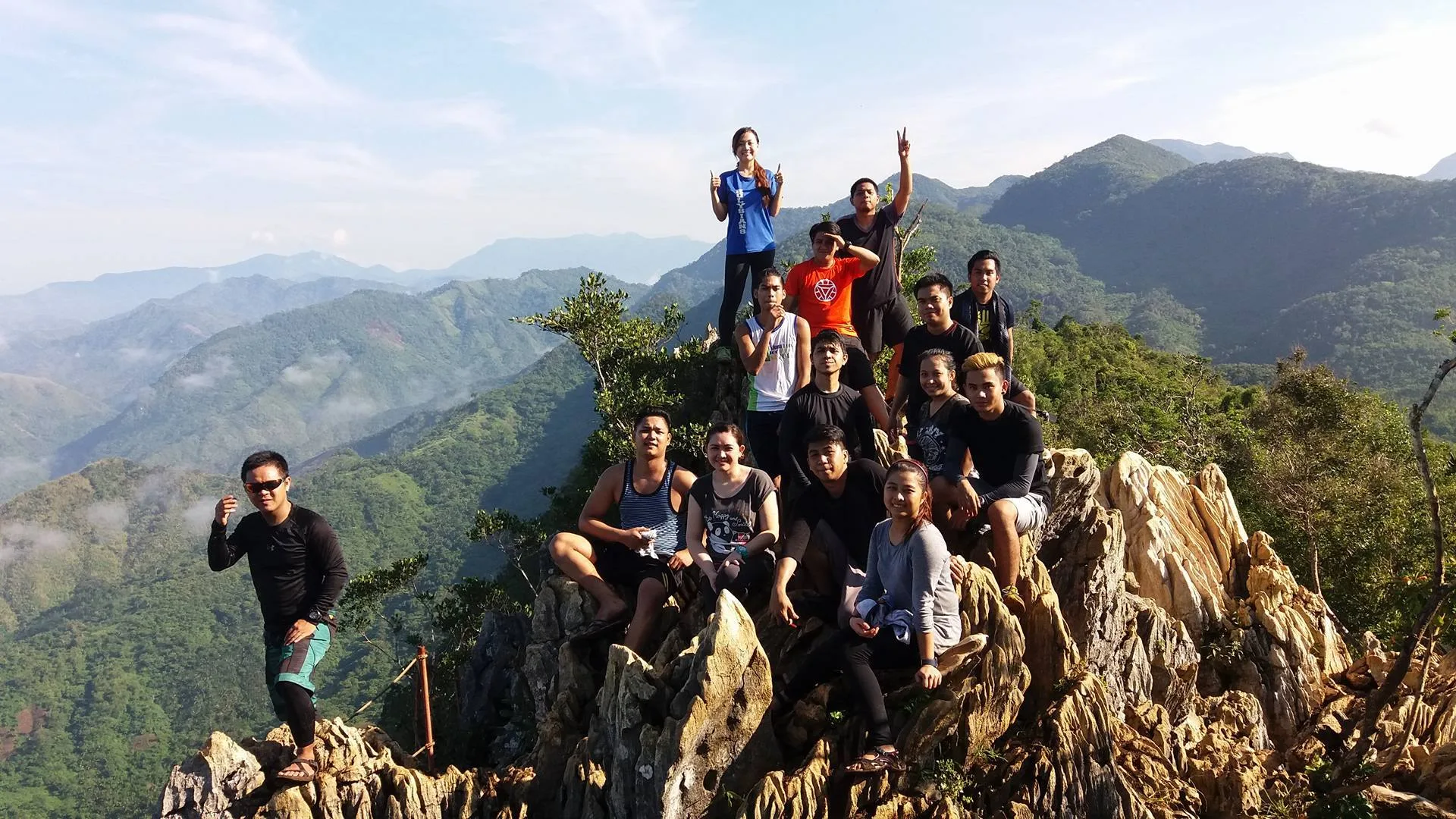
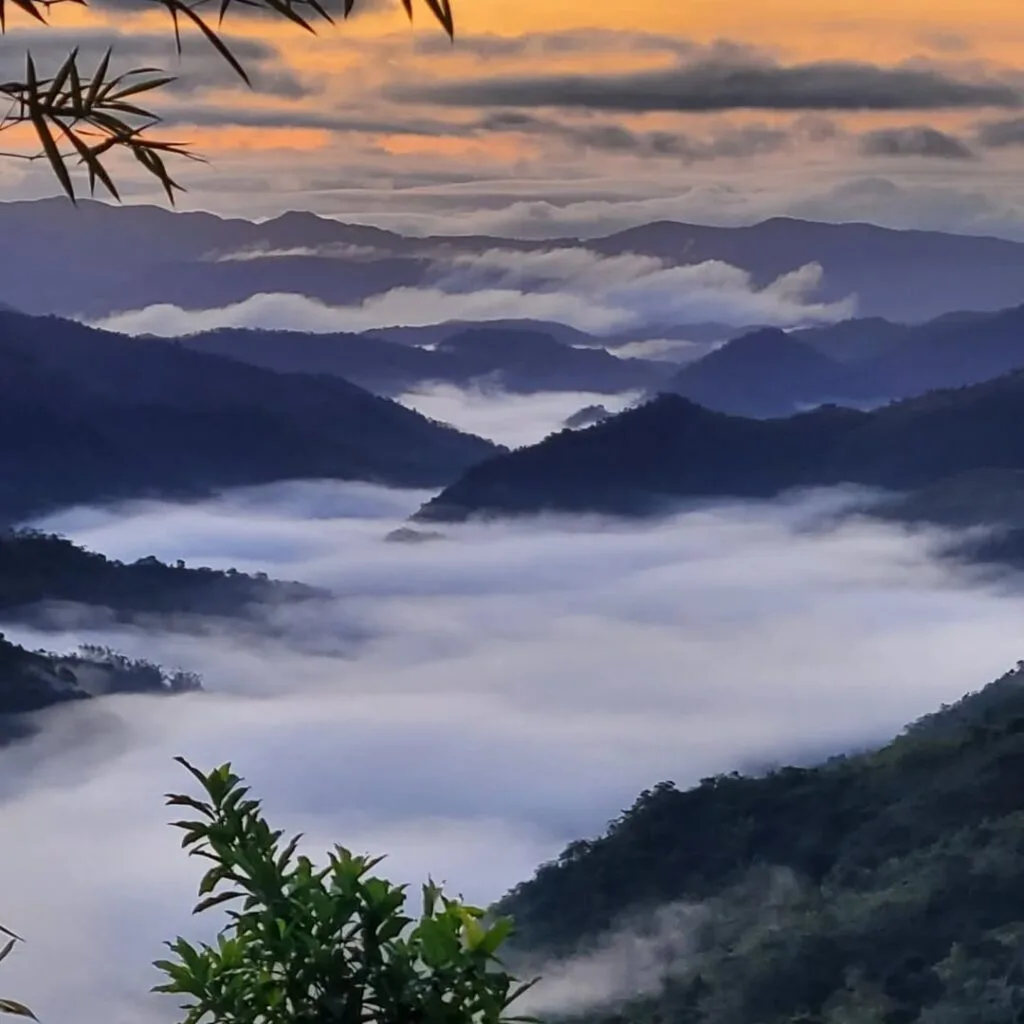
A shorter, final 20 to 30-minute push through thinning canopy to the summit at 739 MASL. The view opens to a 360-degree panorama: Sierra Madre to the east, the Daraitan River below, and Laguna de Bay to the south. The sea of clouds appears between 5:30 AM and 6:30 AM after overnight rain, and it is worth every step of the pre-dawn climb. After 8:00 AM, the white limestone reflects direct UV radiation intensely and the summit becomes genuinely punishing without shade.
Stage 5: Traverse Descent to Tinipak (Difficulty 5/5)
This is the hardest stage, full stop. Nearly 600 meters of elevation loss compressed into a near-vertical descent lasting 1.5 to 2.5 hours. In the wet season, the limestone becomes frictionless. You will downclimb backward, gripping roots and vines, not walking. My legs were shaking by the time I reached the river in August. Trekking poles are not optional here; they are load management tools.
For reference on what a more beginner-friendly climb looks like in the same region, see this guide to beginner-friendly minor climbs in the Philippines.
What I Would Do Differently Next Time
I would skip the Gore-Tex boots. My waterproof hiking boots were soaked within the first river approach, and they stayed soaked for the entire hike. Aggressive trail runners with mesh uppers would have drained instantly and given me better grip on wet limestone. I would also bring one extra liter of water beyond what I thought I needed. In August humidity, two liters was barely enough and I was rationing by Stage 3.

Best Time to Hike Mt. Daraitan
November to April is the best window for hiking Mt. Daraitan. Trails are drier, the limestone scramble has real friction, and the probability of catching a sea of clouds at sunrise is highest in the cooler months.
June to October is the wet season and it changes everything. I climbed in August and the trail was deep mud from Stage 2 onward. The root staircases became slick poles, and the karst scramble required three-point contact on every move. Limatik leeches appear in the forest understory during these months. They track body heat and CO2, and they find you before you find them. Remove them with salt, alcohol, or a sharp flick. Do not pull.
The wet season is manageable with the right gear, but it is not recommended for first-timers. For the sea of clouds specifically, dry season mornings after cold nights give the best inversion conditions. Check out these sea of clouds spots in Tanay, Rizal if that is your main target.
Monitor PAGASA advisories for the Tanay area before departure. Thunderstorm warnings can make the open limestone summit dangerous and river flash floods more likely.
Budget Breakdown for Climbing Mt. Daraitan
| Expense | Cost (PHP) |
|---|---|
| Entrance / Environmental Fee | 100 |
| Day Hike Guide Fee (per group up to 5) | 750 |
| Tinipak River Entrance | 30 |
| Cave Spelunking | 70 |
| Habal-habal Sampaloc to Daraitan (shared) | 100 |
| Habal-habal return (Daraitan to Sampaloc, shared) | 100 |
| Jeepney Tanay to Sampaloc | 26 |
| Jeepney Manila to Tanay (UV Express) | 70 |
| Balsa crossing if bridge is out | 25 |
| Internal tricycle at Tinipak | 30 |
| Wash-up fee | 30 |
| Food (bring your own; no stalls on trail) | 100 to 200 |
| Estimated Total Per Person (DIY) | PHP 700 to PHP 1,100 |
No ATMs exist near Barangay Daraitan. Withdraw cash in Tanay town or before leaving the city. I had a cup of instant Pancit Canton at the barangay before the ascent, bought from a small sari-sari near the hall. That and a pack of crackers was my pre-climb meal. There are no food stalls on the trail itself.
What to Pack for Mt. Daraitan
| Item | Essential? |
|---|---|
| Trail runners with mesh uppers (not Gore-Tex boots) | Yes |
| Rubber-dipped construction gloves | Yes |
| Headlamp (200+ lumens, waterproof) | Yes |
| 2.5 to 3 liters of water | Yes |
| Oral Rehydration Salts (ORS) | Yes |
| Synthetic moisture-wicking shirt and tights | Yes |
| Dry bag (2L to 3L) for phone and valuables | Yes |
| Trekking poles | Strongly recommended |
| Rain jacket or poncho | Yes (wet season) |
| Salt or alcohol (leech removal) | Wet season yes |
| Packed food (no stalls after jump-off) | Yes |
| Cash only, no cards accepted | Yes |
Cotton clothing is a real problem in this environment. The forest holds humidity above 90% and cotton will not dry. It causes chafing on the ascent and cold on the windy summit. Wear synthetic fabrics.
Safety Tips for Climbing Mt. Daraitan
Register before 3:00 AM on weekends or accept that you may not make the summit. The 300-climber daily cap is absolute. There is no appeal process once the list is full.
Never pull leeches off by force. The jaw stays lodged and causes infection. Use salt, alcohol, or a firm flick.
Watch the Tinipak River water color. If it turns brown suddenly, get off the river and climb the limestone banks immediately. Flash floods arrive from General Nakar’s upper watershed with minutes of warning, even on a clear day. Your guide will call the evacuation. Move when they say move.
Do not swim in deep sections of Tinipak. Areas deeper than 11 feet are cordoned off due to underwater karst sinkholes and strong currents. Stay in the designated shallow zones.
Inform your guide of any knee or ankle issues before you start. The traverse descent places extreme eccentric load on the quadriceps and patellar tendons. This is not the climb to ignore a pre-existing injury.
If you want a less physically demanding Tanay hike to build up first, the Nagpatong Rock Formation in Tanay is a good warm-up. Mt. Sembrano in the same corridor is another accessible option to benchmark your fitness before committing to Daraitan’s full traverse.

Frequently Asked Questions About Mt. Daraitan
Is Mt. Daraitan suitable for beginner hikers?
It is possible for a physically fit beginner, but it should not be the first hike on your list. The Mt. Daraitan trail for beginners gets complicated at Stage 3’s limestone scramble and the Stage 5 traverse descent, which rates 5 out of 5 for difficulty. If you have done at least two shorter hikes and can handle steep, uneven terrain for several hours, you should be fine with a competent guide. Anyone with knee problems should think hard before committing to the descent.
How many hours does it take to reach the summit of Mt. Daraitan?
Starting at 3:30 AM from the Barangay Hall, expect to reach the summit between 5:30 AM and 6:30 AM under normal trail conditions. That is a 2 to 3-hour ascent. In the wet season with muddy trails, add another 30 to 60 minutes. The full round-trip loop including Tinipak River takes 8 to 10 hours total.
What is the best time of year to hike Mt. Daraitan?
November to April gives the best overall experience for the Mt. Daraitan hike. Trails are drier, the karst rock has real friction, and the cool pre-dawn air makes the ascent significantly more manageable. The wet season from June to October is hikeable with the right gear, but mud, leeches, and flash flood risk make it a harder experience. February and March are the sweet spot for first-timers.
Do you need a guide to climb Mt. Daraitan?
Yes, a registered local guide is mandatory for all visitors with no exceptions. The LGU enforces a 1-guide-per-5-climbers ratio and independent hiking is strictly prohibited. The day hike guide fee is PHP 750 per group of up to 5 persons, paid at registration. Beyond compliance, the guide’s knowledge of safe scrambling routes, flood signs, and swimming zones is genuinely useful on this mountain.
Can you swim in Tinipak River after hiking Mt. Daraitan?
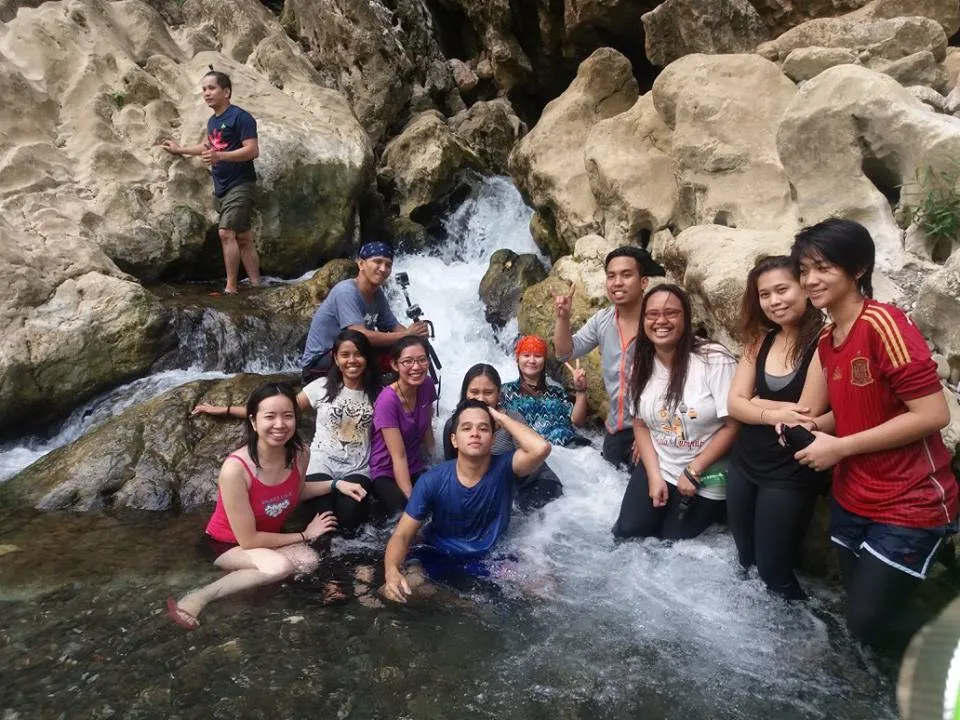
Yes, swimming in the designated shallow zones is one of the best parts of the Mt. Daraitan and Tinipak River combo hike. The river runs clear and cold after the descent. Pay the PHP 30 Quezon boundary entrance fee and the PHP 70 cave spelunking fee at the river crossing point. Stay strictly within the marked swimming areas, as deep sections beyond 11 feet are prohibited due to underwater karst sinkholes. Watch for sudden water discoloration, which signals an incoming flash flood from upstream.

Final Verdict: Should You Climb Mt. Daraitan?
4 out of 5 for intermediate hikers; 3 out of 5 for first-timers. Mt. Daraitan delivers one of the most rewarding sunrise and river combinations within a day trip from Manila, but the traverse descent is physically brutal and the pre-dawn logistics are unforgiving. Go with cash, go early, and respect the mountain’s flood behavior and you will have one of the better hiking days the Sierra Madre offers.

Hi, thanks a lot for the tips here since they were helpful. Just to let you and the other readers know, the fees have already increased as follows (based on what I can remember from our day hike last 23 March 2025):
– Bridge crossing fee for vehicles (if the river is not swollen and thus no need to do bamboo raft crossing to reach the barangay hall for registration): ₱100 for four-wheeled vehicles; I think ₱80 for three-wheeled vehicles and ₱50 for 2-wheeled vehicles.
– Mt Daraitan entrance fee = Environmental fee to support conservation efforts = ₱100 per person
– Day Hike Guide Fee (for every 5 persons): ₱750
– Overnight Hike Guide Fee: ₱1500
– Parking fee for day hike visitors: ₱100
– Tinipak river entrance fee (when doing a traverse hike since that part of the trek is already located in the boundary of Quezon): ₱30; doing spelunking in the nearby cave: ₱70
– Tricycle fare from Barangay Hall to portion of river reserved for swimming for hikers (after hike): ₱30
Hi! Thanks so much for sharing these updated rates and your recent experience from your day hike on March 23, 2025! 😊 This information is super valuable and will definitely help future hikers plan their trip more accurately. It’s great to have firsthand insights from someone who recently visited Mt. Daraitan.
It seems like the fees have indeed increased a bit, especially for the guide services and parking. Good to know about the bridge crossing fee details, too. I’ll update the information accordingly to make sure everyone has the latest details.
Thanks again for sharing and happy hiking on your future adventures!
I’ll add to that.. the trike fare is 100/3 persons.. it was also a fun adventure but you really got to have great stamina and patience! Love your site btw!
Hi there, thanks for the informative post! Would you know if a guide/booking of some sort is needed for a trip to Tinipak River only? Trying to organize a trip to the river but not so sure where to start or who to contact (if any). Any help would be much appreciated! Thank you!