The Parrot’s Beak in the “New Normal”
Mt. Pico de Loro (664 MASL) in Cavite operates under strict conservation regulations in 2026. The park is open Wednesday to Saturday ONLY, with a daily hard cap of 90 hikers. Online booking is mandatory; walk-ins are strictly denied at the gate. While the iconic Monolith is closed for climbing due to safety risks, the summit view deck remains accessible for 360-degree views.
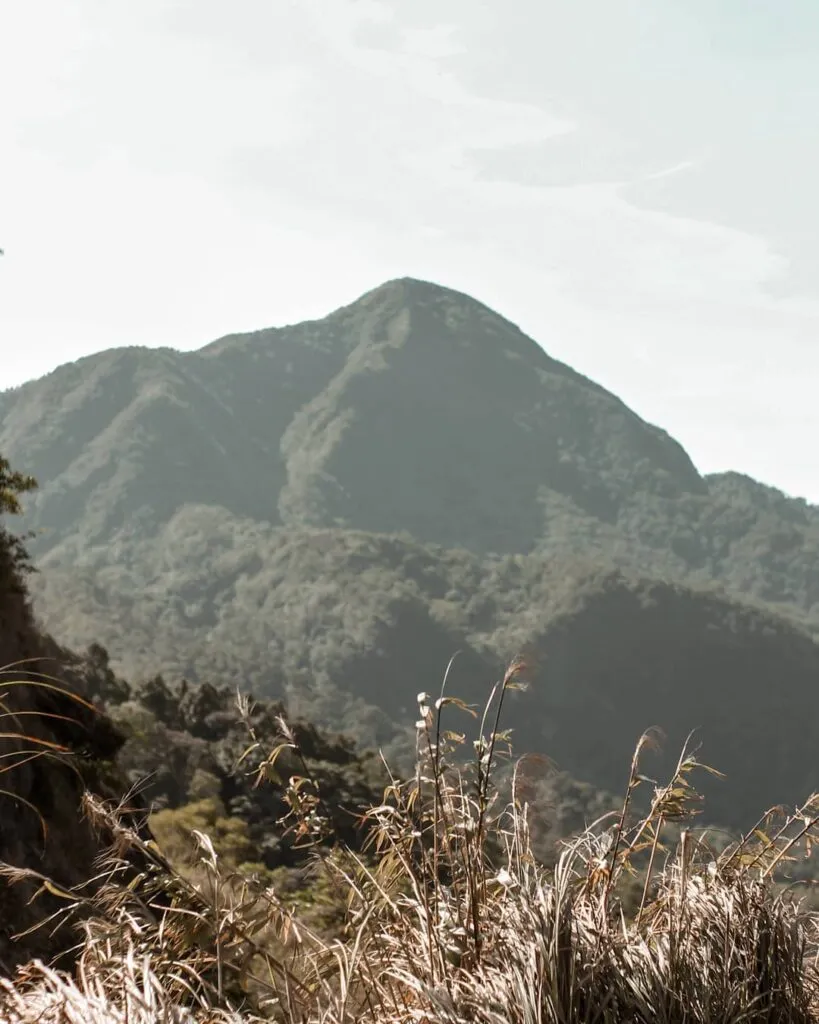
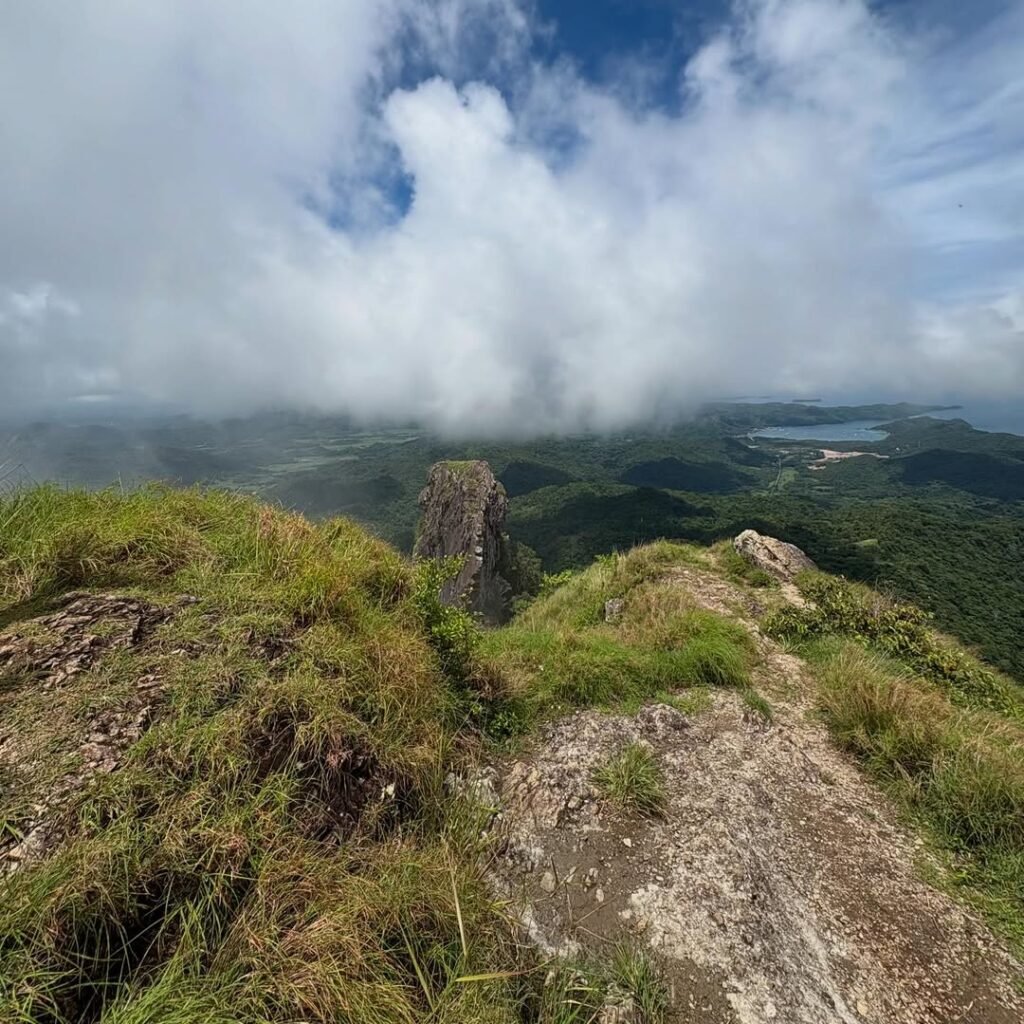
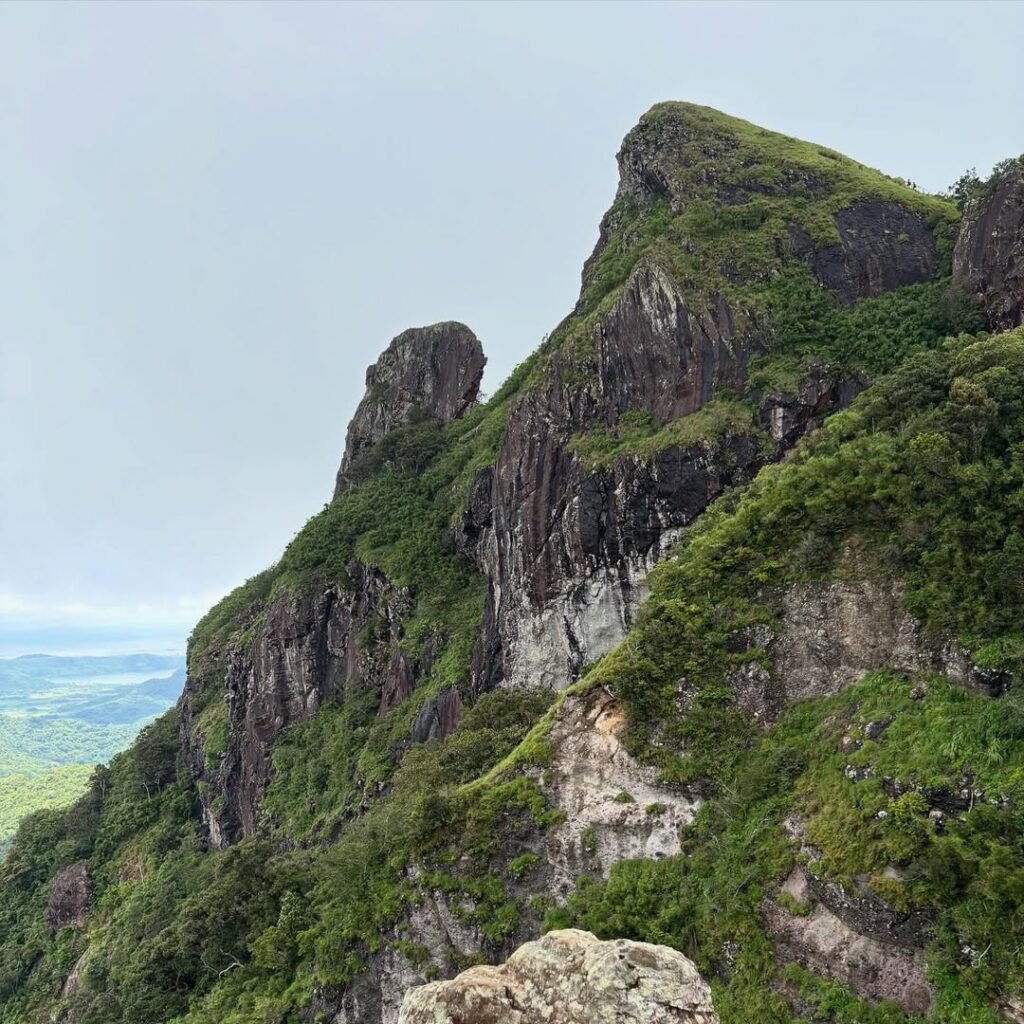
If you are looking for an updated Mt. Pico de Loro Hiking Guide, you first need to forget the “old” Pico days of spontaneous road trips. Located within the Mts. Palay-Palay Protected Landscape (MPPMNGPL), this mountain has shifted from a mass-tourism destination to a highly regulated ecotourism zone. The iconic rock spire—the “Parrot’s Beak”—still towers over Ternate, serving as a historic navigational marker for galleons entering Manila Bay and a natural wind barrier shielding the province from the South China Sea.
However, the “New Normal” here is defined by Artificial Scarcity.
Here is the hard truth for 2026: The Department of Environment and Natural Resources (DENR) strictly enforces the 90-hiker daily limit. If you drive to the DENR station in Ternate without a confirmed QR code from the online portal, or if you attempt to hike on a Sunday, Monday, or Tuesday, you will be turned away by security. The experience is now cleaner, quieter, and more organized, but it requires significantly more planning than any other day hike near Metro Manila.
Table of Contents
Quick Specs & Difficulty (2026 Profile)
Mt. Pico de Loro Difficulty Level & Elevation
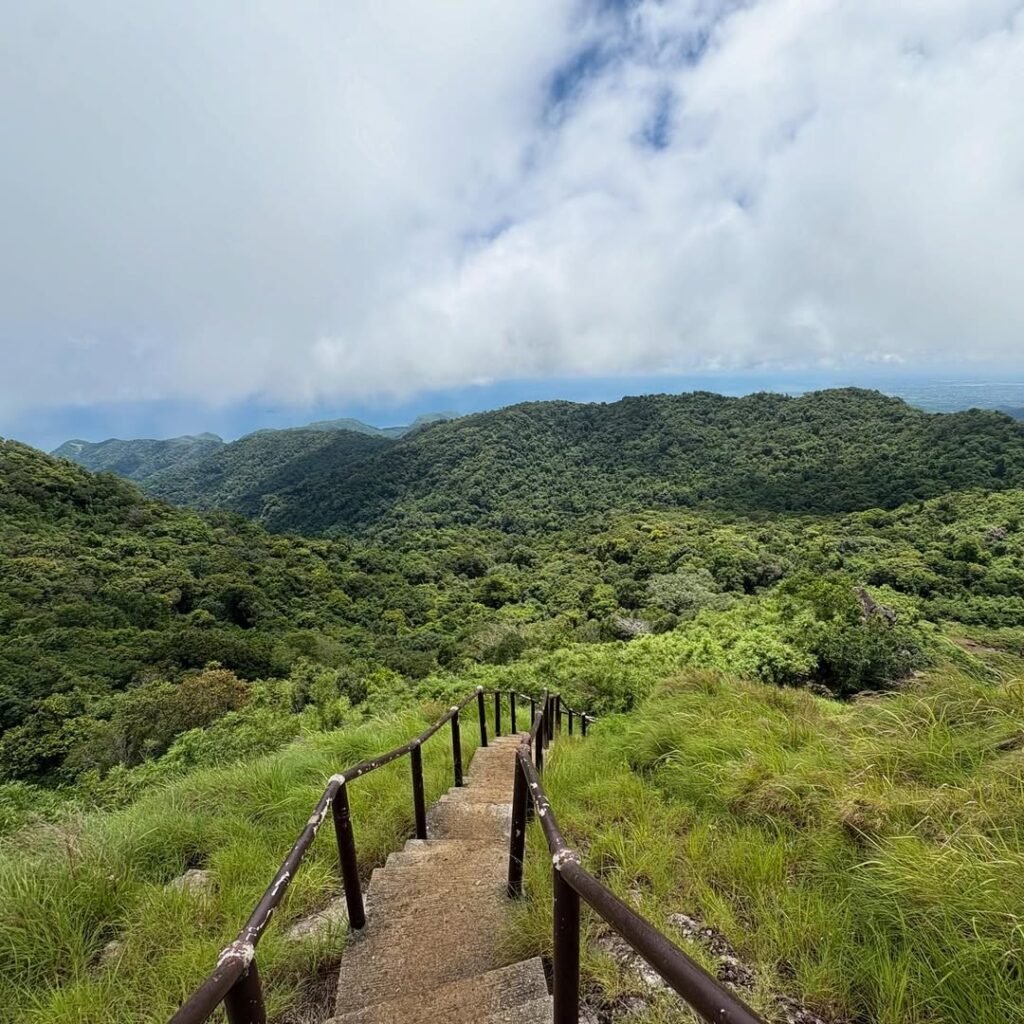
The hike to Mt. Pico de Loro is rated Difficulty 3/9 (Minor Climb) with a Trail Class of 1-3. The “New Trail” (reopened 2023) features extensive concrete staircases, making it technically easier but cardiovascularly demanding (“Stair-master” terrain). The summit sits at 664 MASL. Total trek time is 2-4 hours to the summit.
Quick Hike Statistics
| Spec | Data |
| Elevation | 664 MASL (Meters Above Sea Level) |
| Difficulty Level | 3/9 (Beginner Friendly / Minor Climb) |
| Trail Class | 1-2 (Established Path/Stairs), Class 3 (Summit Assault) |
| Hours to Summit | 2 to 4 Hours (Depending on pacing on stairs) |
| Jump-off Point | DENR Station, Magnetic Hill, Ternate, Cavite |
| Cell Signal | None on Trail / Strong (4G/5G) at Summit |
| Limatik Presence | Rare (Mainly present during heavy Habagat season) |
The “Stair-Master” Reality
When we say “New Trail,” we mean it literally. The DENR and Mts. Palay-Palay Protected Landscape (MPPMNGPL) management replaced the old eroded soil paths with hundreds of meters of concrete and reinforced earthen stairs. If you hiked here before 2016, forget what you know. You won’t be scrambling over roots in the first leg; you will be doing a sustained “leg day” workout.
While the Mt. Pico de Loro Difficulty Level remains a manageable 3/9, do not underestimate the cardiovascular demand. I’ve seen fit gym-goers struggle here more than on rugged trails because the repetitive motion of climbing stairs spikes your heart rate faster than a gradual slope.
The trail starts at the DENR Station (Magnetic Hill) with a gentle walk through the Dipterocarp forest. About 45 minutes in, the “stairway to heaven” begins. This relentless ascent leads to the View Deck (the old campsite), where the forest canopy finally breaks.
Insider Tip: Because of the hard concrete surface, leave your heavy trekking boots at home. I strongly recommend wearing cushioned trail running shoes. The rigid soles of hiking boots will hurt your feet on the concrete steps. Also, manage your hydration; even though it’s shaded, the humidity in the Cavite lowlands is suffocating.
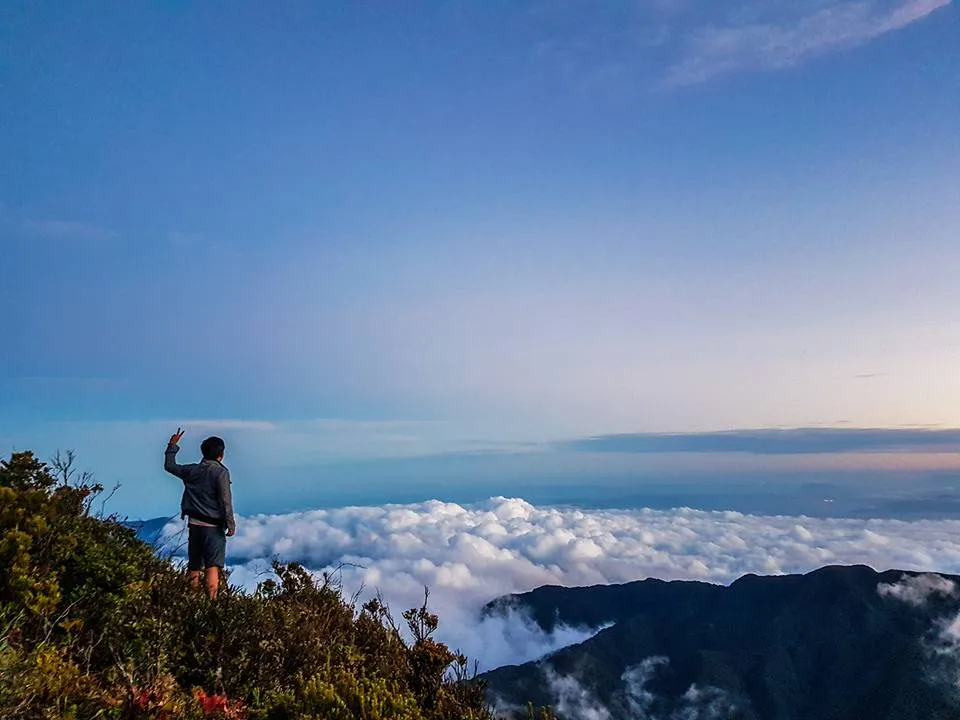
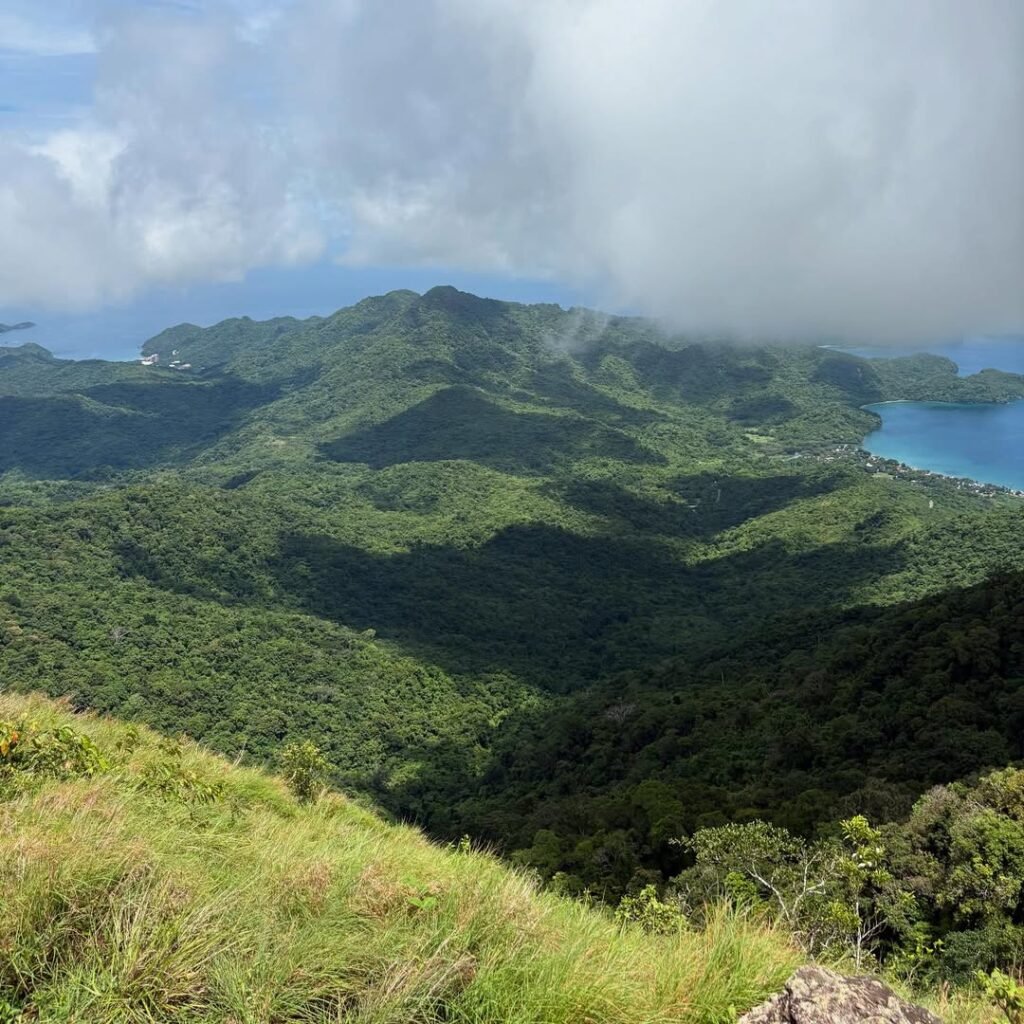
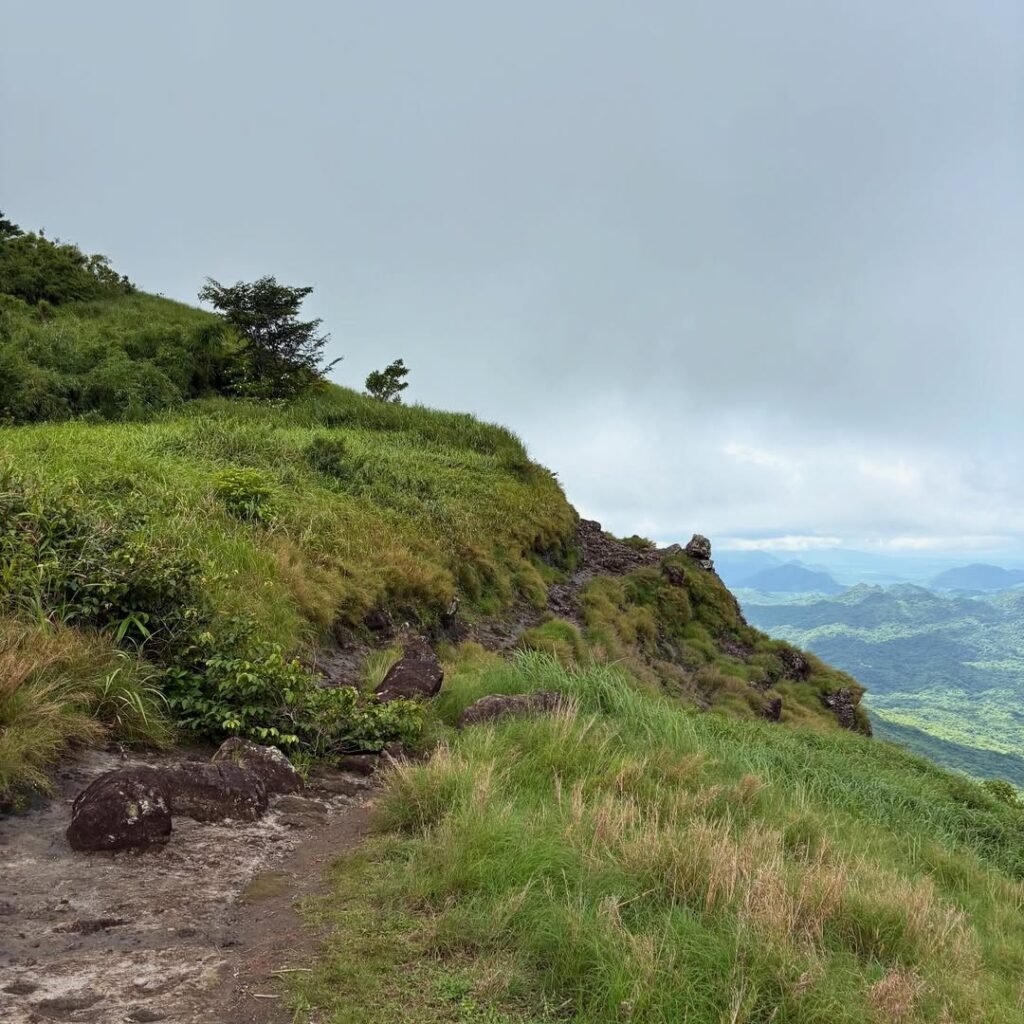
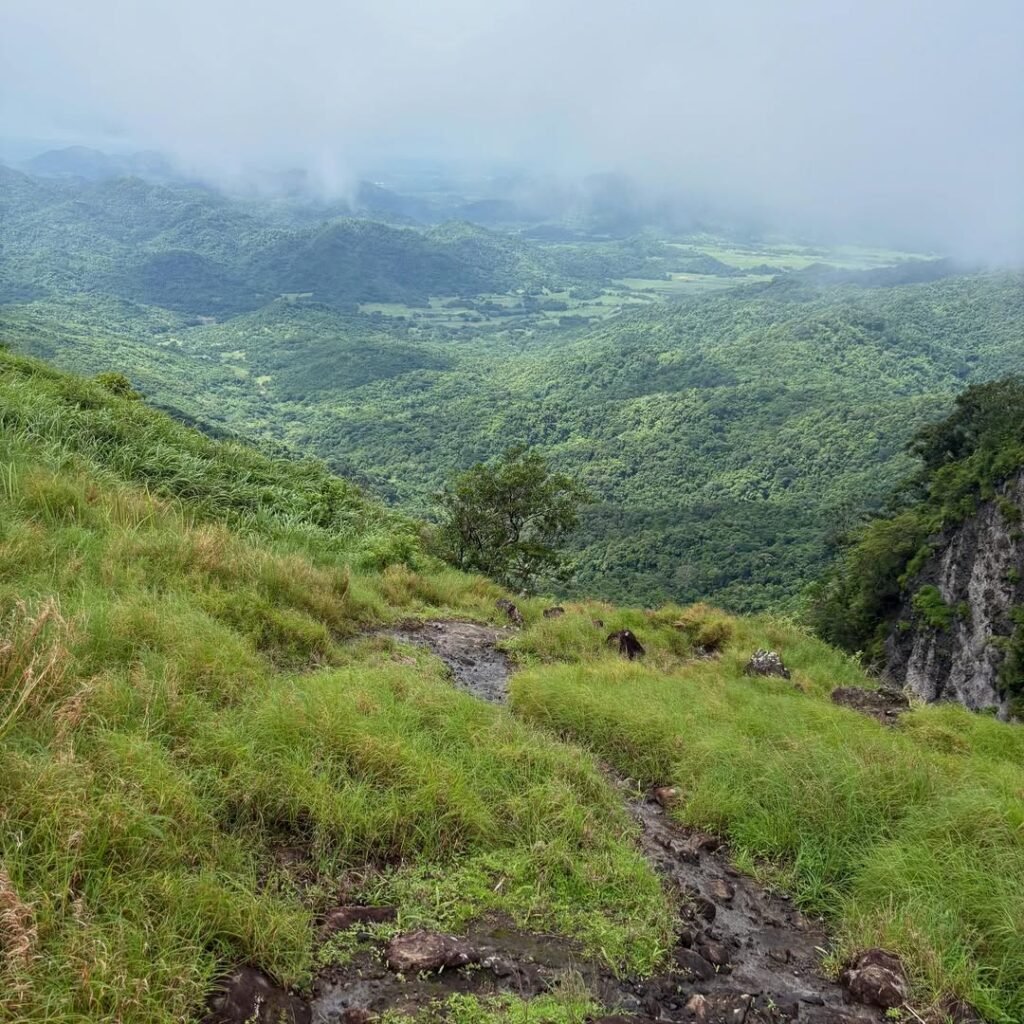
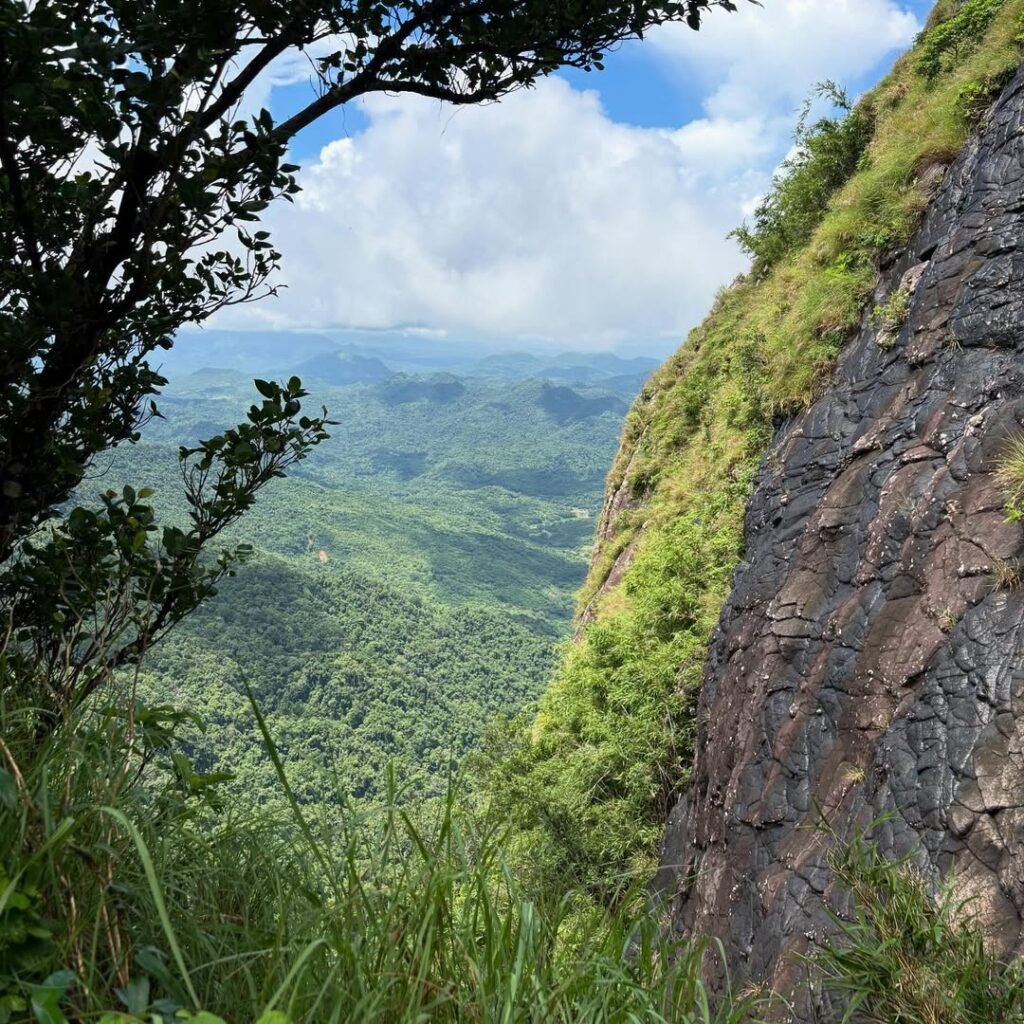
At the Summit View Deck, the terrain shifts back to natural rock and loose soil. This is the only technical part where you need to watch your footing. From here, you get the famous view of the Monolith (Parrot’s Beak) and the coastline of Nasugbu, Batangas.
Mt. Pico de Loro Online Booking & Requirements 2026
Yes, online booking is mandatory for Mt. Pico de Loro via the official portal, mppmngnp.com. Walk-ins are strictly prohibited at the DENR gate. The park operates ONLY from Wednesday to Saturday with a hard daily cap of 90 hikers. You must secure your slot 2-3 weeks in advance. Payment is typically settled in cash at the jump-off, but the reservation is non-negotiable.
Navigating the “Artificial Scarcity”
The days of waking up and deciding to hike Mt. Pico de Loro on a whim are over. The 90-person daily limit is strictly enforced by the Protected Area Management Office (PAMO). Security personnel at the DENR Station in Ternate hold a printed manifest derived from the online database; if your name isn’t on it, you don’t hike.
Here is the only way to legally secure a slot:
Access the Portal: Go to https://mppmngnp.com/. Do not transact with random Facebook pages offering “guaranteed slots” unless they are accredited tour operators with their own block bookings.
Select Your Date: Look for open dates on the calendar (Wednesday-Saturday only). If a date is grayed out, the 90 slots are full.
Input Hiker Details: You need the full names and ages of everyone in your group.
Save the QR Code: Once registered, the system generates a confirmation QR code or reference number.
Insider Tip: Screenshot your booking confirmation/QR code while you are still in Manila. The mobile signal at the DENR Jump-off (Magnetic Hill) is notoriously weak (Edge/3G only). I have seen hikers panic at the registration desk because they couldn’t load their email to prove their booking.
Strict Park Rules (The “Don’ts”)
The Mts. Palay-Palay/Mataas-na-Gulod Protected Landscape (MPPMNGPL) is a biodiversity corridor, not just a playground. The PASu (Protected Area Superintendent) enforces these rules strictly:
No Overnight Camping: This is strictly a Day Hike operation. Tents and heavy packs are flagged at the entrance.
No Pets Allowed: Do not bring dogs. This is to prevent disease transmission to the resident Long-tailed Macaques and to keep the wildlife wild.
No Alcohol: Consumption of liquor is prohibited within the park premises.
Rest Days: The park is closed on Sundays, Mondays, and Tuesdays to allow the ecosystem to recover.
Verified Contact Channels
If you encounter issues with the website, you can try contacting the DENR PENRO Cavite directly. However, based on my experience, email is slow. Calling the landline during office hours (8:00 AM – 5:00 PM, Mon-Fri) is your best bet.
Landline: (046) 430 5201
Mobile (PASu Office): 0995-167-0106 / 0908-194-3573
Email: admin@mppmngnp.com
How to Get There (PITX to Ternate)
To get to Mt. Pico de Loro from Manila, head to the Parañaque Integrated Terminal Exchange (PITX) Gate 6 (Ground Floor). Board a Saulog Transit or St. Anthony bus bound for Ternate (Fare: ₱100 – ₱150). Alight at the Ternate Bus Terminal in the town proper. From there, hire a tricycle for a “Special Trip” to the DENR Jump-off at Magnetic Hill (₱300 – ₱400 per trike). Total travel time is 2-3 hours.
Step 1: The Commute from PITX
For 2026, the Coastal Mall terminal is obsolete for this route. You must go to PITX. The buses for Ternate and Naic are stationed at Gate 6 on the Ground Floor. Ticketing is at Booth 4, but conductors often issue tickets at the bus bay for faster dispatch.
I highly recommend catching the 5:00 AM trip. This route utilizes CAVITEX and the Antero Soriano Highway, bypassing the heavy traffic of Bacoor. If you leave later than 6:00 AM, you risk getting stuck in the Tanza/Rosario choke points, pushing your arrival to nearly noon.
Step 2: The “Last Mile” Friction (Ternate to DENR)
The bus terminates at the Ternate Bus Terminal in the Poblacion (Town Proper). Do not alight at the highway junction for the Kaybiang Tunnel; get off at the terminal to secure a ride.
Here is the reality check: The tricycle drivers here operate like a cartel for tourists. While standard municipal rates exist, they enforce a “Special Trip” (Pakyaw) rate for hikers going to the DENR Station.
Cost: ₱300.00 – ₱400.00 per tricycle (One Way).
Capacity: Good for 3-4 hikers.
Strategy: Group up with other solo joiners on the bus to split this cost.
Insider Tip (Critical): The DENR Jump-off is located at Magnetic Hill, inside a forested area roughly 7-10km from town. There are zero roving tricycles there. Before you pay your driver at the drop-off, get their mobile number (Smart/TNT preferred) and arrange a specific pick-up time (e.g., 2:00 PM). If you forget this, you will be stranded and forced to hitchhike with random motorcycles.
For Private Vehicles
If you are driving, set your Waze or Google Maps to “DENR Park Station, Ternate”. The drive is straightforward via CAVITEX and Governor’s Drive.
Parking Fee: ₱100.00 for Cars/SUVs; ₱50.00 for Motorcycles.
Warning: The road leading to the jump-off is popularly known as the “Marilaque of the South.” On weekends, it is swarming with high-speed motorcycle riders. Exercise extreme defensive driving on the blind curves near the Kaybiang Tunnel approach.
The New Trail Features & Monolith Restrictions
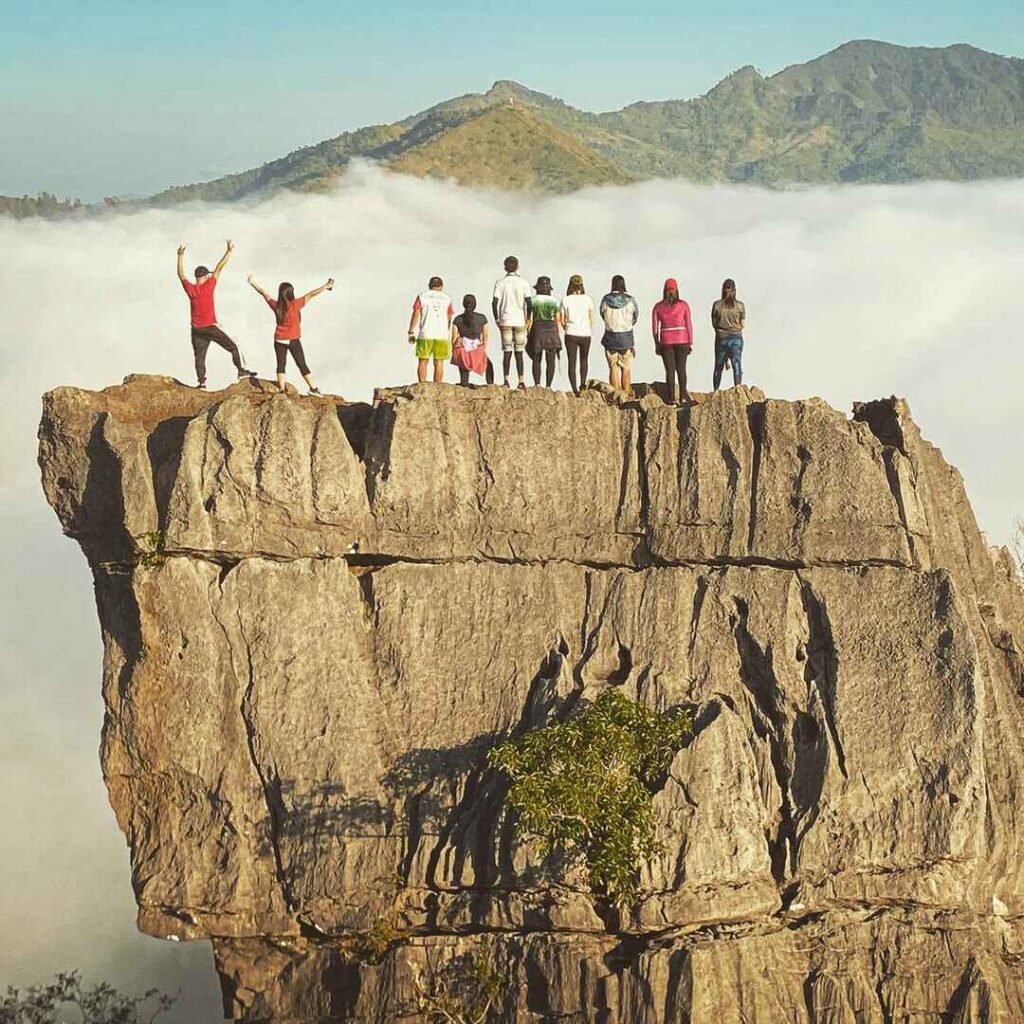
As of 2026, the iconic Monolith (Parrot’s Beak) is strictly CLOSED to climbing due to geological instability. While you can hike to the Summit View Deck (664 MASL) for a close-up view and photos, accessing the land bridge or climbing the rock spire itself is prohibited by the DENR-PAMO for safety.
Terrain Analysis: The Three Phases
The “New Trail” implemented by the MPPMNGPL management is a massive departure from the old root-climbing days. It is engineered for sustainability, but that doesn’t mean it is easy.
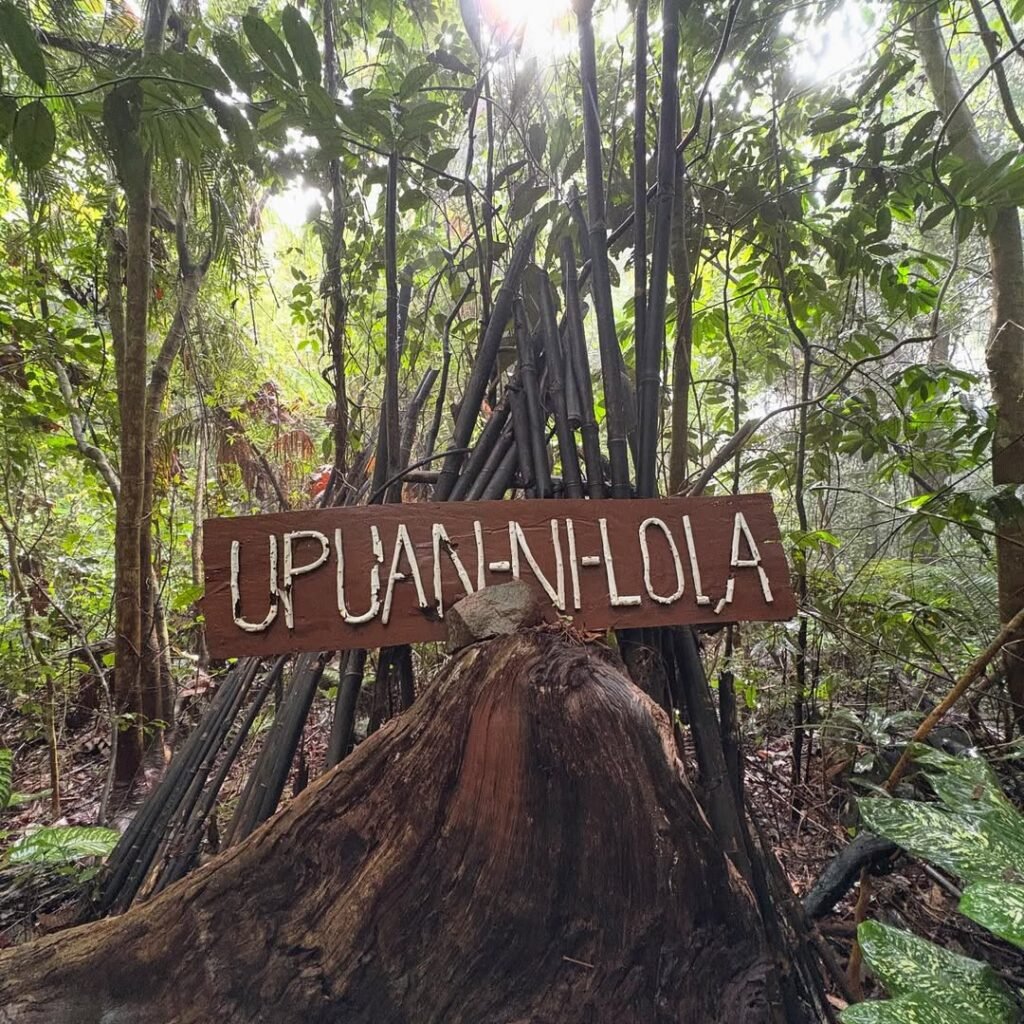
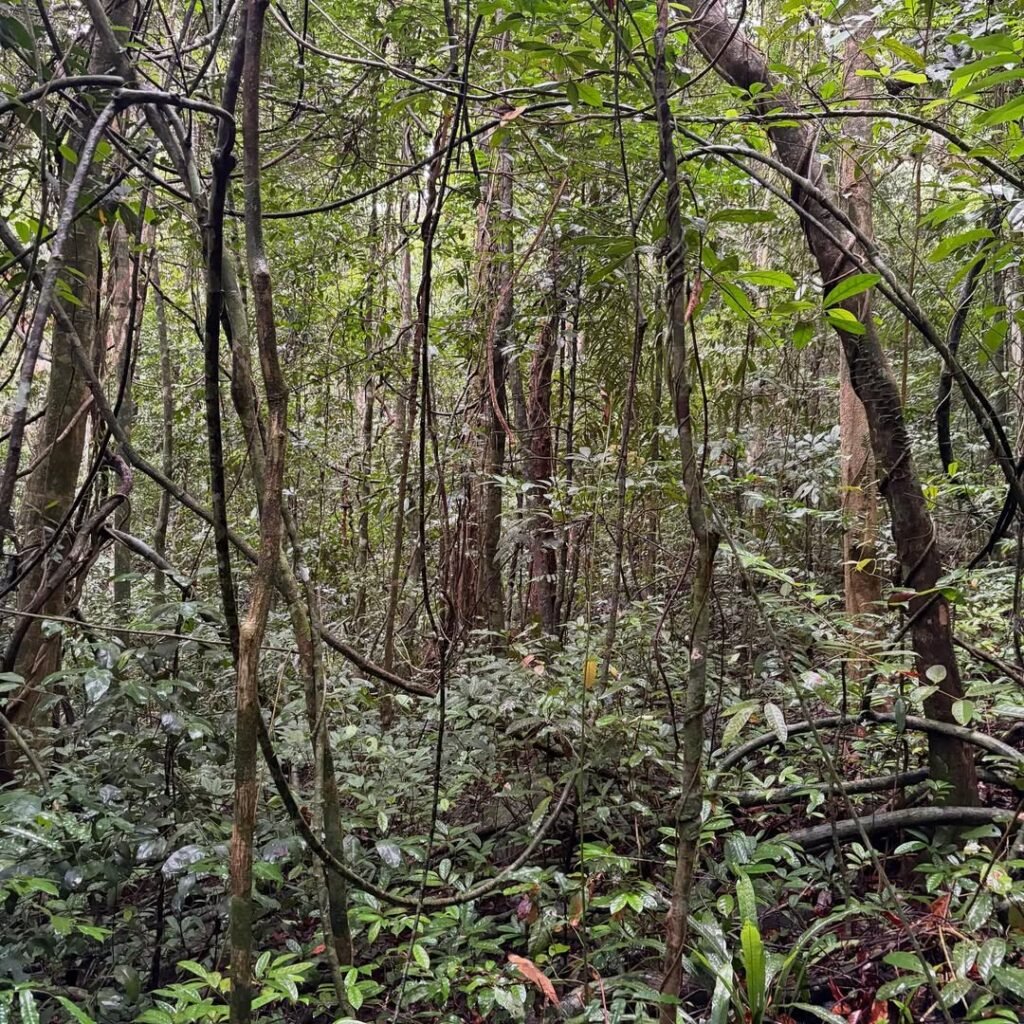
Phase 1: The Dipterocarp Approach From the DENR Station, the first kilometer winds through a dense lowland rainforest. The path is wide, compacted soil, often reinforced with bamboo handrails in muddy sections. It’s a humid, shaded warm-up that feels like a standard walk in the park.
Phase 2: The Concrete “Stair-Master” This is where the Mt. Pico de Loro difficulty kicks in. To prevent soil erosion, the steep assault sections have been paved with concrete and earthen stairs. While this removes the need for technical scrambling, it demands serious leg endurance. I found this section surprisingly exhausting because the steps force a repetitive cadence that burns the quads faster than a natural slope.
Phase 3: The View Deck (False Summit) The forest canopy breaks at the View Deck (formerly the Old Campsite). Here, the terrain shifts to exposed cogon grass and bamboo scrub. This is your final rest stop before the rocky push to the peak.
Critical Resource Warning: No Water Sources
I cannot stress this enough: There are zero potable water sources on the trail. The natural springs we used to rely on years ago are either dried up or deemed unsafe. You must be self-sufficient. Pack at least 2.0 to 3.0 Liters of water per person, especially if you are hiking during the dry months of March to May.
Wildlife Hazards: The Macaques & Lipa Trees
The protected landscape is home to troops of Long-tailed Macaques. These monkeys have become habituated to humans and can be aggressive if they see food.
Insider Tip: Keep your trail snacks (trail mix, jelly ace) hidden inside your bag. If you hold a plastic wrapper crinkling in your hand, they will approach you. Do not feed them.
Also, keep an eye out for Lipa Trees (Dendrocnide meyeniana) lining the trail. The leaves have stinging hairs that cause severe itching if they brush against your skin. I recommend wearing arm sleeves or a lightweight long-sleeved shirt to avoid “poison ivy” style rashes.
Recommended Mt. Pico de Loro Itinerary
Mt. Pico de Loro is strictly a Day Hike destination; overnight camping is prohibited. A standard itinerary spans 6-8 hours, starting with a 4:30 AM bus from PITX to maximize the cool morning weather. The summit is best reached before 11:00 AM to avoid the intense midday heat on the exposed “New Trail” stairs.
Disclaimer: These itineraries assume a public transport (DIY) pace. If driving, subtract 1 hour from travel times.
Option A: The “Sunrise Chaser” (Beat the Heat)
This is the standard Mt. Pico de Loro itinerary for serious hikers. The goal is to hit the trail by 7:30 AM to reach the summit before the sun is directly overhead.
| Time | Activity | Notes |
| 04:30 AM | Depart PITX (Gate 6) | Take first trip to Ternate/Naic. |
| 06:30 AM | Arrival Ternate Town Proper | Buy packed lunch/supplies here. |
| 07:00 AM | Tricycle to DENR Station | Arrange return pickup now! |
| 07:30 AM | Registration & Briefing | Present QR Code. |
| 08:00 AM | Start Trek | Phase 1: Forest Line. |
| 10:30 AM | Summit / View Deck | Photo ops with Monolith. |
| 11:30 AM | Start Descent | Take care on steep stairs. |
| 01:00 PM | Back at Jump-off | Wash up at DENR (₱20). |
| 02:00 PM | Tricycle to Town / Lunch | Try Lolo Claro’s. |
| 03:00 PM | Bus to PITX | Catch afternoon trip. |
| 06:00 PM | Arrival Manila | ETA depending on CAVITEX traffic. |
Option B: The “Relaxed Hiker” + Beach Side Trip
If you are not a morning person or want to maximize the trip to Cavite, this itinerary combines the hike with a visit to Katungkulan Beach Resort (Boracay de Cavite) inside the Marine Base.
| Time | Activity | Notes |
| 06:00 AM | Depart PITX | Sleep on the bus. |
| 09:00 AM | Start Trek | Expect heat on the stairs. |
| 11:30 AM | Summit (Quick Lunch) | Find shade near the View Deck. |
| 01:30 PM | Descent / Back at DENR | Do not wash up here yet. |
| 02:00 PM | Tricycle to Katungkulan Beach | Entrance: ~₱100-₱200. |
| 02:30 PM | Swimming / Wash Up | Cleanest water in Cavite. |
| 05:00 PM | Tricycle back to Terminal | Last trip of trikes is usually 6 PM. |
| 05:30 PM | Bus to Manila | Last bus is around 6:00-7:00 PM. |
| 08:30 PM | Arrival Manila | Late dinner in Pasay. |
Insider Tip: If you choose Option B, bring an umbrella or a wide-brimmed hat. The View Deck is completely exposed, and hiking at 11:00 AM means the sun will be punishing. Also, the mobile signal at Katungkulan Beach is spotty, so ensure your tricycle driver knows exactly what time to fetch you from the Marine Base gate.
Mt. Pico de Loro Hiking Expenses 2026
A safe budget for a DIY solo hiker is approximately ₱1,500 – ₱1,800. The major cost drivers are the “Special Trip” Tricycle fare (₱300-₱400 per way) and the Mandatory Guide Fee (₱500 per group of 5), both of which you shoulder alone if hiking solo. Organizing a group of 4 significantly lowers the expense to around ₱900 – ₱1,100 per head by splitting the shared costs.
The Cost of “Artificial Scarcity”
Hiking Mt. Pico de Loro is no longer cheap compared to other minor climbs in CALABARZON. The strict regulation means no more haggling with guides or cheap habal-habal rides. The prices are fixed by the PAMB (Protected Area Management Board) and the local tricycle association.
Here is the breakdown of the Mt. Pico de Loro hiking expenses for 2026. Notice how the “Solo Penalty” hits hard on the transport and guide fees.
| Expense Item | Cost (Solo Hiker) | Cost (Per Person in Group of 4) |
| Bus Fare (PITX-Ternate RT) | ₱300.00 | ₱300.00 |
| Tricycle (Ternate-DENR RT) | ₱700.00 (You pay full) | ₱175.00 (Split 4 ways) |
| Ecological/Entrance Fee | ₱200.00 | ₱200.00 |
| Guide Fee (1:5 Ratio) | ₱500.00 (You pay full) | ₱125.00 (Split 4 ways) |
| Food & Water (Packed) | ₱300.00 | ₱300.00 |
| Wash-up Fee | ₱50.00 | ₱50.00 |
| TOTAL ESTIMATE | ~₱2,050.00 | ~₱1,150.00 |
Hidden Costs & Cash Rules
There are no ATMs in Ternate Town Proper near the terminal, and absolutely none at the DENR Jump-off. You must withdraw cash in PITX or Manila before departing.
Parking Fee: If you bring a private car, prepare ₱100.00 for the parking fee inside the DENR compound.
Wash-up Fee: The showers at the jump-off are privately owned by locals or the DENR canteen. Expect to pay ₱20 (pail system) to ₱50 (shower) per head.
Sari-Sari Store Markup: Prices at the jump-off stores are inflated. A 1.5L bottle of water can cost ₱50-₱60, and Gatorade hits ₱70. Buy your supplies in the town proper or bring them from Manila to save money.
Insider Tip: If you are a solo hiker on a budget, try to “adopt” a group at the Ternate Bus Terminal. Ask other hikers if you can hitch a ride in their tricycle to split the ₱300 fare. Most groups are happy to lower their cost per head. However, for the Guide Fee, the DENR strict 1:5 ratio makes merging groups at the gate difficult unless you pre-arranged it online.
Essential Packing List for Mt. Pico de Loro
Since there are absolutely no water sources on the trail, self-sufficiency is the rule. Pack at least 2.0 to 3.0 Liters of water per person. For footwear, leave the heavy trekking boots at home; the concrete stairs are best navigated with cushioned Trail Running Shoes. Wear arm sleeves to protect against the stinging Lipa trees lining the narrow path.
The “Stair-Proof” Loadout
Hiking the “New Trail” of Mt. Pico de Loro requires a specific setup. You aren’t preparing for mud and roots as much as you are for heat and hard impact. Based on my recent climbs here, this is the non-negotiable gear list:
Hydration System (3 Liters): I cannot emphasize this enough: the old water source at the campsite is gone. If you run out of water halfway up the “Stairway,” you are in trouble. I carry a 2L bladder and a spare 1L bottle for emergencies.
Footwear (Cushioning is Key): The hundreds of meters of concrete steps will hammer your knees and heels. Rigid hiking boots are overkill and will feel clunky here. Use Trail Running Shoes (like Hoka or Salomon) or decent rubber shoes with thick foam soles to absorb the shock.
Skin Protection (Arm Sleeves): The trail is narrow in parts and lined with Lipa Trees (Dendrocnide meyeniana). Grazing these leaves causes an intense, burning itch that lasts for days. Wear arm sleeves or a lightweight long-sleeved drift shirt.
Sun Protection: Once you reach the View Deck and the Summit, there is zero shade. The Cavite heat at 11:00 AM is brutal. A wide-brimmed hat or a cap with a neck cover is essential to prevent heat exhaustion.
Tech & Power: The mobile signal at the DENR Jump-off and along the trail is weak to non-existent, which forces your phone to constantly “search for signal,” draining your battery rapidly. Bring a 10,000mAh Powerbank so you have juice left for photos when you finally get a strong 5G signal at the summit.
Whistle: Standard safety gear. If you get separated or injured on the trail, a whistle blast carries further than a shout in the dense Dipterocarp forest.
Insider Tip: Bring a small pack of wet wipes or a face towel. The humidity in the lower forest (Phase 1) is suffocating, and you will be drenched in sweat before you even hit the stairs. You’ll want to freshen up before the summit photo ops.
Post-Climb Food & Side Trips
Where to Eat & Side Trips in Ternate
For the best post-hike meal, head to Lolo Claro’s Restaurant in Maragondon (along the highway back to Manila) for their signature Fried Chicken and authentic Batangas Lomi. For a refreshing side trip, visit Katungkulan Beach Resort (“Boracay de Cavite”) inside the Gregorio Lim Marine Base. It is just a 15-minute tricycle ride from the DENR station (Entrance: ₱100-₱200).
The Culinary Reward: Lolo Claro’s
After burning calories on the “Stair-Master,” you shouldn’t settle for generic fast food. My go-to recovery meal is always at Lolo Claro’s Restaurant. They have branches in Maragondon and Naic, which are directly along the bus route back to PITX.
While Ternate is technically in Cavite, it sits on the border of Batangas, so the Lomi culture here is strong. Lolo Claro’s serves a thick, overload-style Lomi that rivals the best in Lipa. Pair it with their famous Fried Chicken, which locals claim is better than the leading commercial brands. Expect to spend around ₱200 – ₱300 per person for a heavy meal.
Insider Tip: If you are commuting, ask your tricycle driver to drop you off specifically at the Lolo Claro’s branch in Maragondon town proper instead of the bus terminal. You can easily flag a Saulog bus bound for Manila right in front of the restaurant after you eat.
The “Mountain-to-Sea” Side Trip
If you finished the hike by 1:00 PM, do not head home yet. The Katungkulan Beach Resort, often called “Boracay de Cavite,” is arguably the cleanest beach in the province because it is located inside a military reservation—the Gregorio Lim Marine Base.
Access: It is open to civilians, but you pass through military checkpoints. Bring a valid ID.
Entrance Fee: ₱100.00 – ₱200.00 depending on the season.
Facilities: They have decent shower rooms.
I actually prefer washing up here rather than at the crowded DENR makeshift showers. The saltwater is refreshing after a sweaty hike, and the facilities are generally better maintained. You will need to negotiate an additional ₱100 – ₱150 with your tricycle driver to take you here from the jump-off before heading back to the town terminal.
FAQs About Mt. Pico de Loro
Mt. Pico de Loro is strictly CLOSED on Sundays, Mondays, and Tuesdays for ecological rest. Hiking operations run from Wednesday to Saturday only, with a hard cap of 90 hikers per day. Walk-ins are categorically prohibited; you must secure an online appointment via the DENR portal. While beginner-friendly (Difficulty 3/9), the new stairs require good cardiovascular endurance.
Can I hike Pico de Loro on a Sunday?
No. This is the most common mistake hikers make. Under the 2026 PAMO regulations, the park is strictly designated for rehabilitation on Sundays, Mondays, and Tuesdays. If you arrive on a Sunday, the gates at the DENR Station will be locked, and security will turn you away regardless of how far you traveled.
Is Mt. Pico de Loro beginner-friendly?
Yes, but with a caveat. It is rated Difficulty 3/9 (Minor Climb), which technically suits beginners. However, the “New Trail” is 80% concrete stairs. While you won’t need technical skills to scramble over roots, the continuous upward stair-climbing is exhausting. I’ve seen fit marathon runners winded here. It’s less “dangerous,” but more physically tiring than the old trail.
Are there limatik (leeches) on the trail?
Rarely. Unlike Mt. Makiling or Mt. Halcon, Mt. Pico de Loro is generally dry. You might encounter them during the peak of the Habagat season (July-September) in the damp Dipterocarp forest section (Phase 1). The bigger “pest” concern here is actually the Long-tailed Macaques. They are smart, aggressive, and will snatch plastic bags thinking they contain food.
Can I bring my dog or pet?
Absolutely not. The MPPMNGPL prohibits all pets to prevent the spread of diseases (like distemper or parvo) to the wild wildlife population. Security checks bags and vehicles at the entrance; leave your fur babies at home.
Is there a mobile signal at the summit?
Yes, and it is strong. The forest trail is a complete dead zone, but once you pop out at the Summit View Deck (664 MASL), you have a direct line of sight to the cell towers in Nasugbu and Cavite. I usually get full bars on Smart 5G and decent Globe 4G at the peak, making it perfect for uploading real-time Instagram stories.
The “Premium” Hiking Era
The Mt. Pico de Loro experience in 2026 is defined by exclusivity and order. It is no longer the chaotic mass-hike destination of the past, but a strictly regulated “Premium” Ecotourism zone. With a 90-hiker daily cap and operations limited to Wednesday-Saturday, the real challenge is no longer the climb itself, but securing an online appointment 3 weeks in advance via the PAMO portal.
A Cleaner, Quieter Peak
If you hiked here a decade ago, the difference is jarring. The “New Trail” is undeniably artificial with its concrete stairs, but the trade-off is a pristine environment. Gone are the candy wrappers tucked into tree roots and the noise of hundreds of hikers fighting for a selfie spot.
The Department of Environment and Natural Resources (DENR) and the Protected Area Management Office (PAMO) have successfully rehabilitated the landscape. The Dipterocarp forest is lush, the Macaques are thriving (albeit cheeky), and the view of the Monolith remains arguably the best visual reward in Cavite for a day hike.
Your Final Checklist
To ensure your Mt. Pico de Loro DIY Guide is complete, remember this sequence:
-
Book Early: Visit
mppmngnp.comat least 21 days before your target date. -
Screenshot Everything: Save your QR code and return trip driver’s number offline.
-
Respect the Rules: No alcohol, no smoking, and no pets.
As we mountaineers always say, let’s keep the Mts. Palay-Palay Protected Landscape wild for the next generation.
“Take nothing but pictures, leave nothing but footprints, kill nothing but time.”
See you on the trail!
Read Next: Explore Batangas & Beyond
If you enjoyed the view from Mt. Pico de Loro, you are just scratching the surface of what the Cavite-Batangas corridor has to offer. Since you are already near the Nasugbu border, why not extend your adventure? Whether you want another mountain to conquer or a beach to cool down in, check out these detailed guides:
⛰️ More Hiking Adventures
Travel Guide to Mt. Gulugod Baboy (2025) – If you loved the sea views at Pico, this hike in Anilao offers a similar stunning “sea-to-summit” panorama but with rolling green hills.
Top Beginner-Friendly Hikes & Minor Climbs – Looking for your next climb? Browse our curated list of mountains perfect for building your endurance.
🏖️ Best Beach Side Trips (Post-Hike Recovery)
Ultimate Guide to Fortune Island – Just a boat ride from Nasugbu, explore the abandoned Grecian ruins and cliff diving spots.
Little Boracay (Calatagan) Guide – Prefer relaxing on a floating cottage? This sandbar paradise is the perfect place to rest your legs.
Masasa Beach DIY Itinerary – Head to Tingloy Island for pristine, crystal-clear waters away from the mainland crowd.
Guide to Anilao Diving (2025) – Swap your hiking boots for fins and explore the world-class coral reefs of Mabini.
📸 Sightseeing & Landmarks
36 Must-Visit Batangas Tourist Spots – The complete bucket list for exploring the province.
Monte Maria Shrine & Glass Walk – Visit the towering Mother of All Asia monument and test your nerves on the glass walkway.